Artist Interviews 2025
Adam Fuss - My Ghosts and the Visual Resonance 
By Julia Siedenburg

Since I was spending some time in Buffalo New York this Fall, it is easy to assume I visited the local art museum more than once; it is honestly a beautiful museum. AKG ( named after three major donors: John J. Albright, Seymour H. Knox, Jr., and Jeffrey E. Gundlach) stretches over three buildings that are connected by glass bridges and walkways. With recent renovations complete, the visitors are now able to enjoy every corner of the impressive campus.
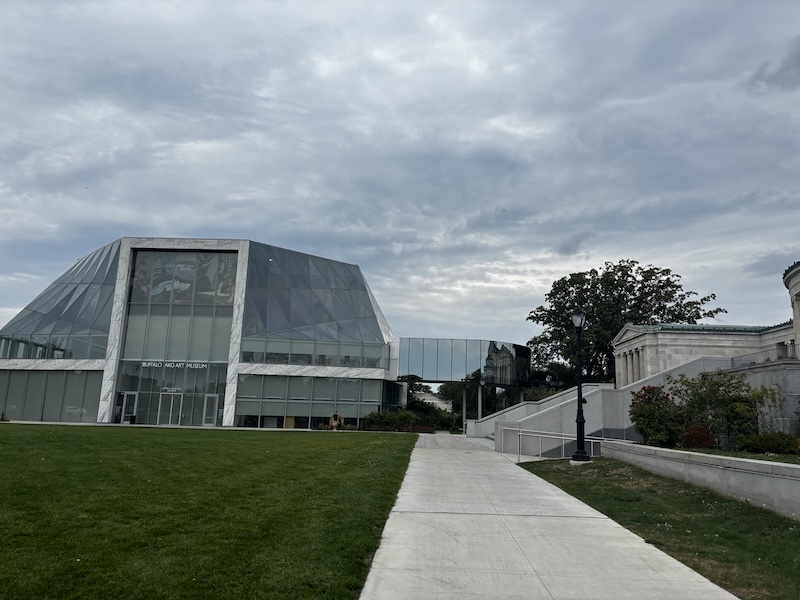
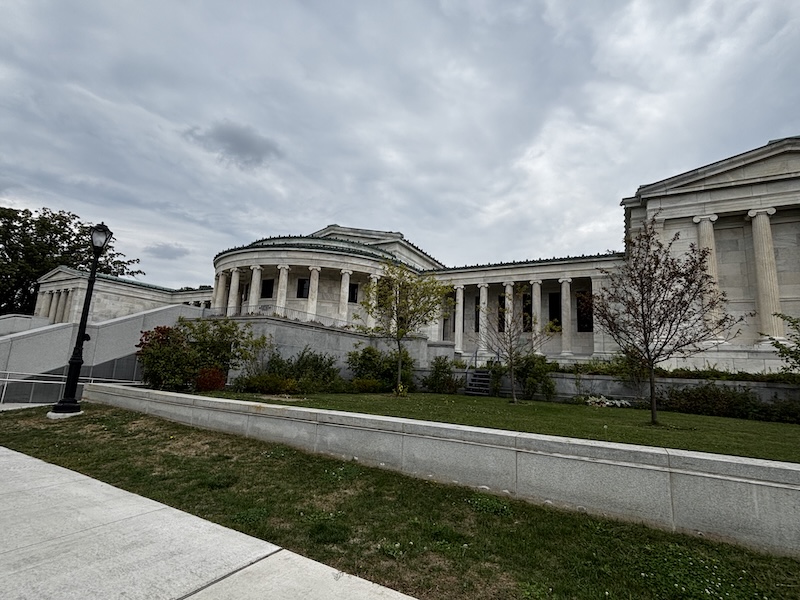
Each building is vastly different in architectural design yet when you look at the museum from afar it harmonises so well. The museum was first created in 1905, though it went under a different name at first. It is currently showcasing a wide range of amazing collections from a Northern lights exhibit and a Yayoi Kusama section to the “classics” such as Rothko, Frida Kahlo, Clifford Still to Monet, Picasso, and Matisse. Even though some would say those just mentioned are what draw people to these museums and their presence is what stays with them most, I was intrigued by a different collection.
As I made my way through the oldest part of the museum, which is a beautiful, neoclassical, stone-and-marble structure with a big open space in the center and many smaller connected rooms surrounding it, I stumbled upon pieces from Adam Fuss. The part of his collection that caught my interest were the photographs part of his series My Ghost.
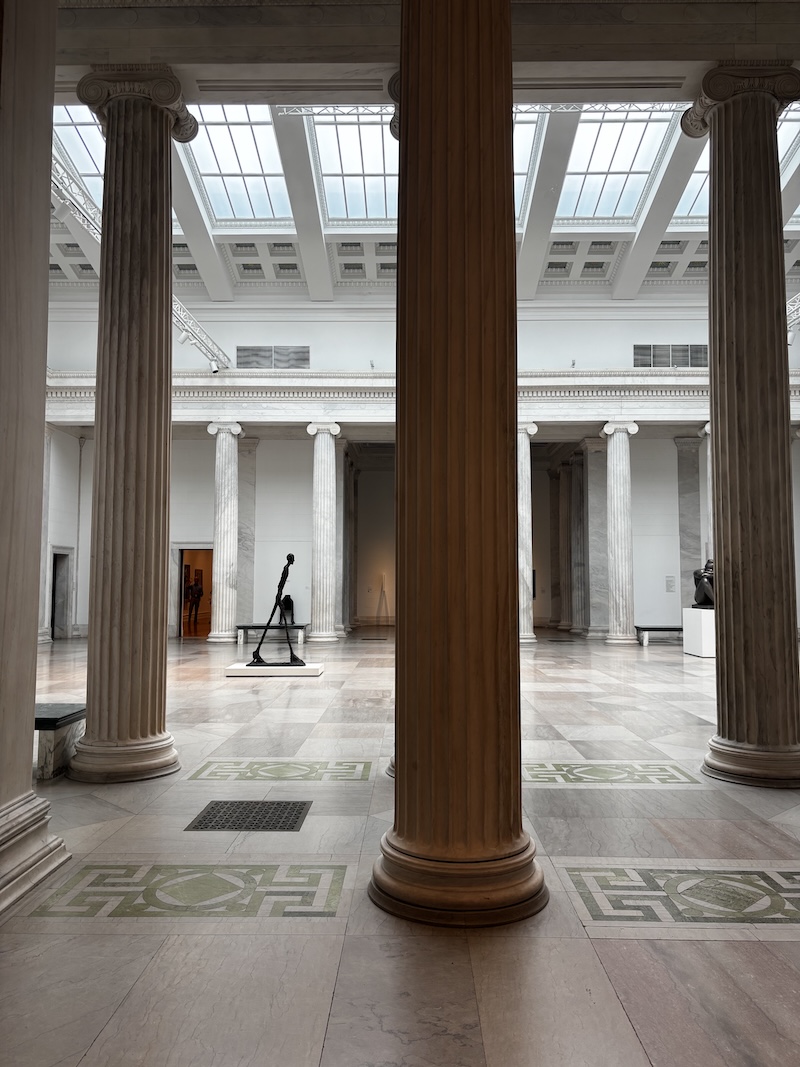
The complete exhibit was called Adam Fuss: Visual Resonance and ran at the AKG until last month. “The exhibition brings together thirty years of Fuss’s work, with a major focus on his series My Ghost (which he began in the early 1990s) and extends into more recent work (including a series called Theia)”. Buffalo AKG Art Museum
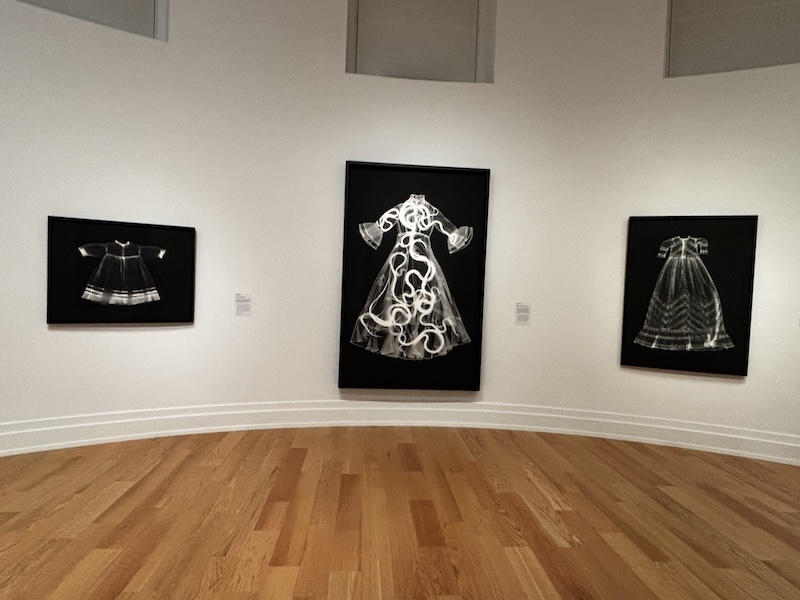
His work is intriguing and stunning yet there is something eerie about it. I first saw a photograph that showed the shape of what resembled a big bunny stuffed animal. Then as I made my way into the next room I was greeted by multiple tall images portraying silhouettes of what appeared to be formal dresses.
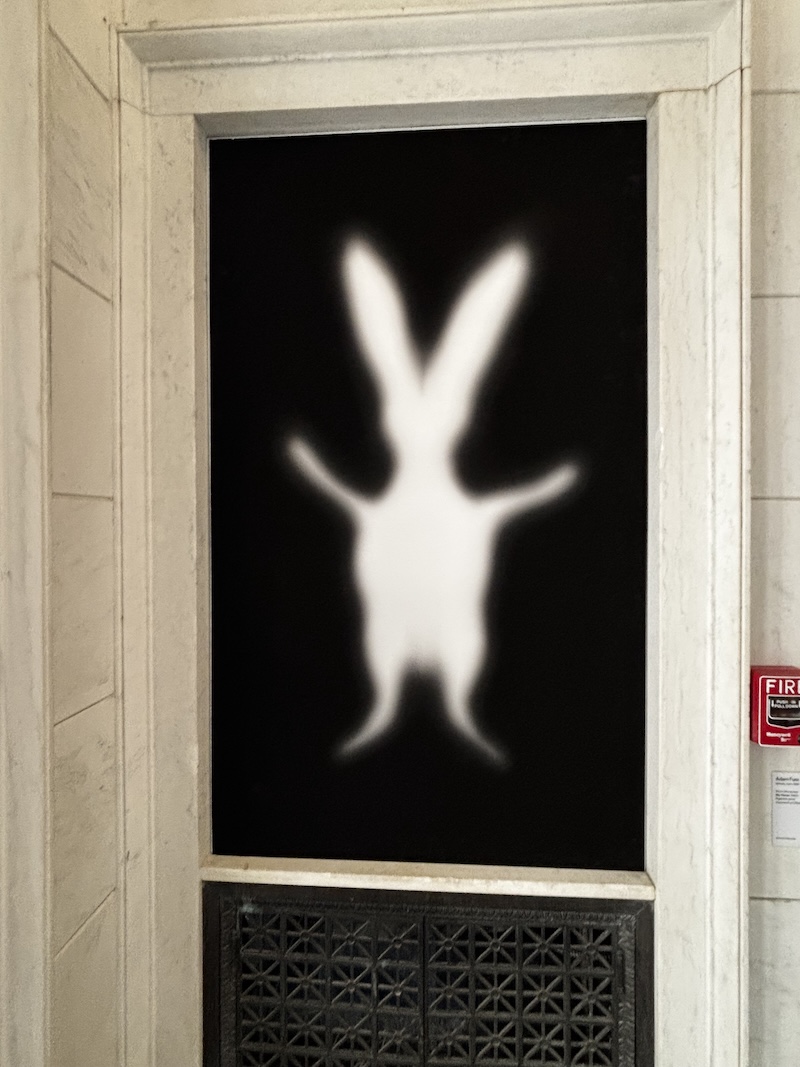
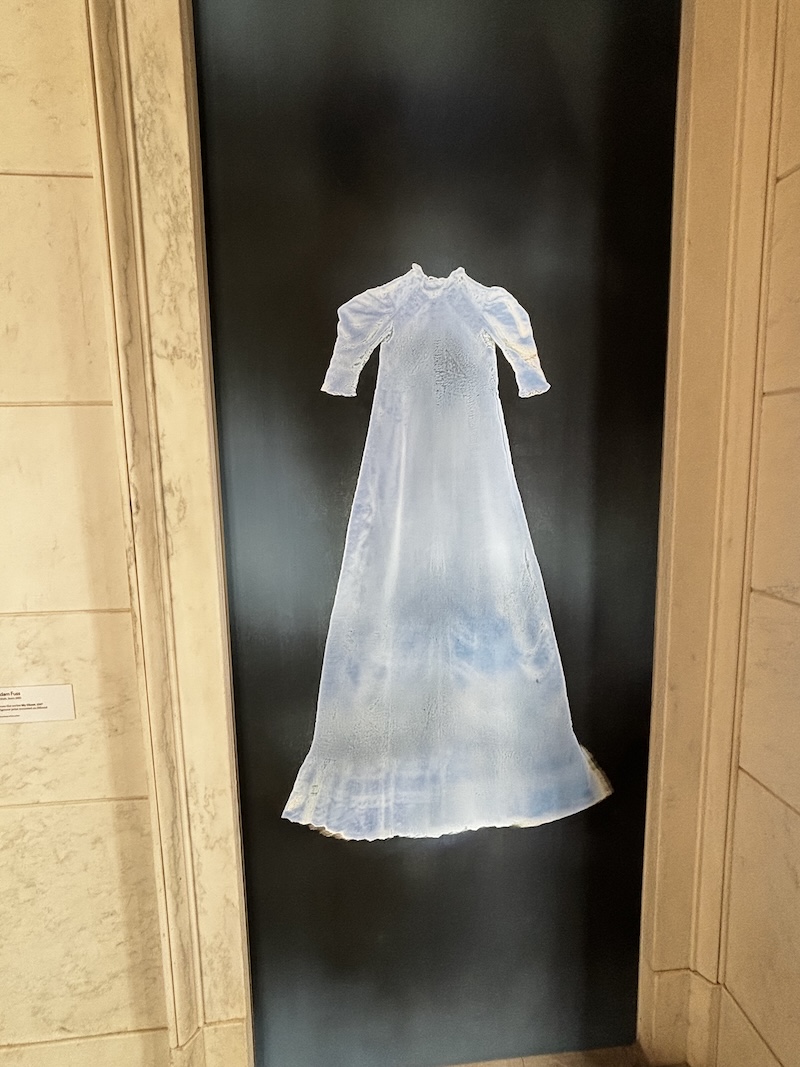
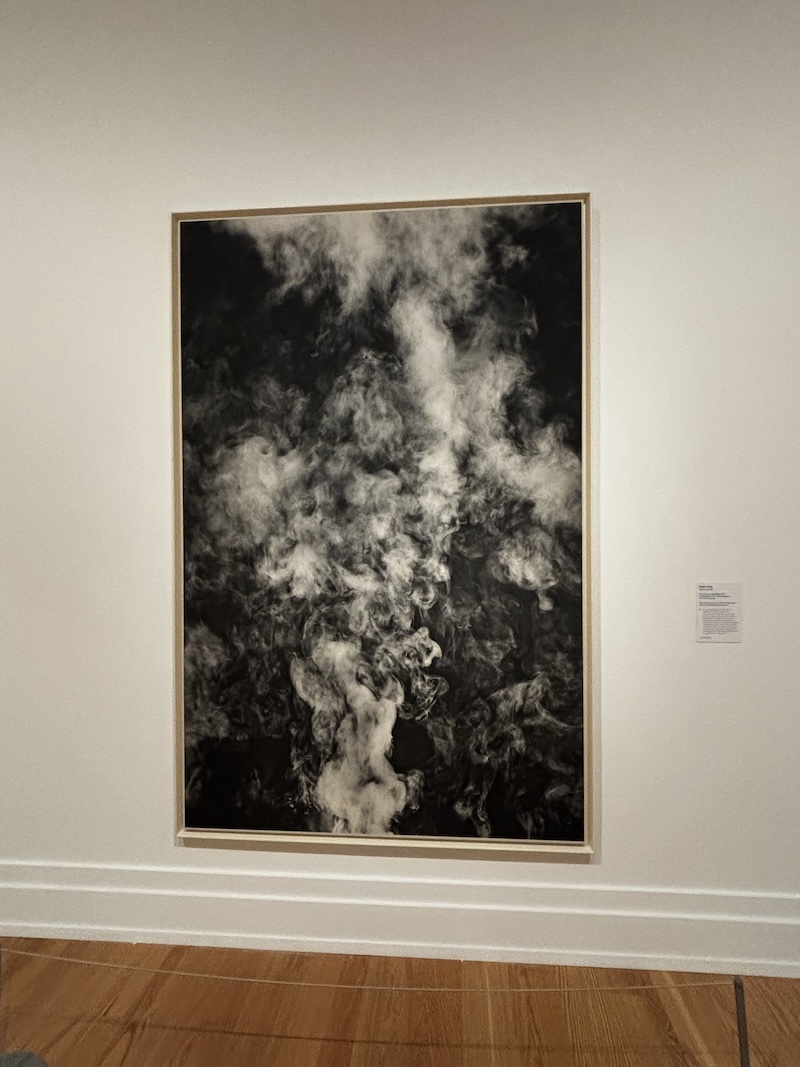
Now you probably wonder how he is able to achieve this effect; here is a good explanation I found for you: “ Fuss uses historical or camera-less photographic processes and is interested in capturing an aspect of reality that is “otherwise fleeting” — the exhibition description says his images capture the energy between life and death”. The show at the AKG features large scale panels, including a seven-foot photogram of smoke, burnt documents/ash, etc and more. Fuss’s notion of ghosthood is not just supernatural but a metaphor for “presence of an absence” or emotional “in between” states.
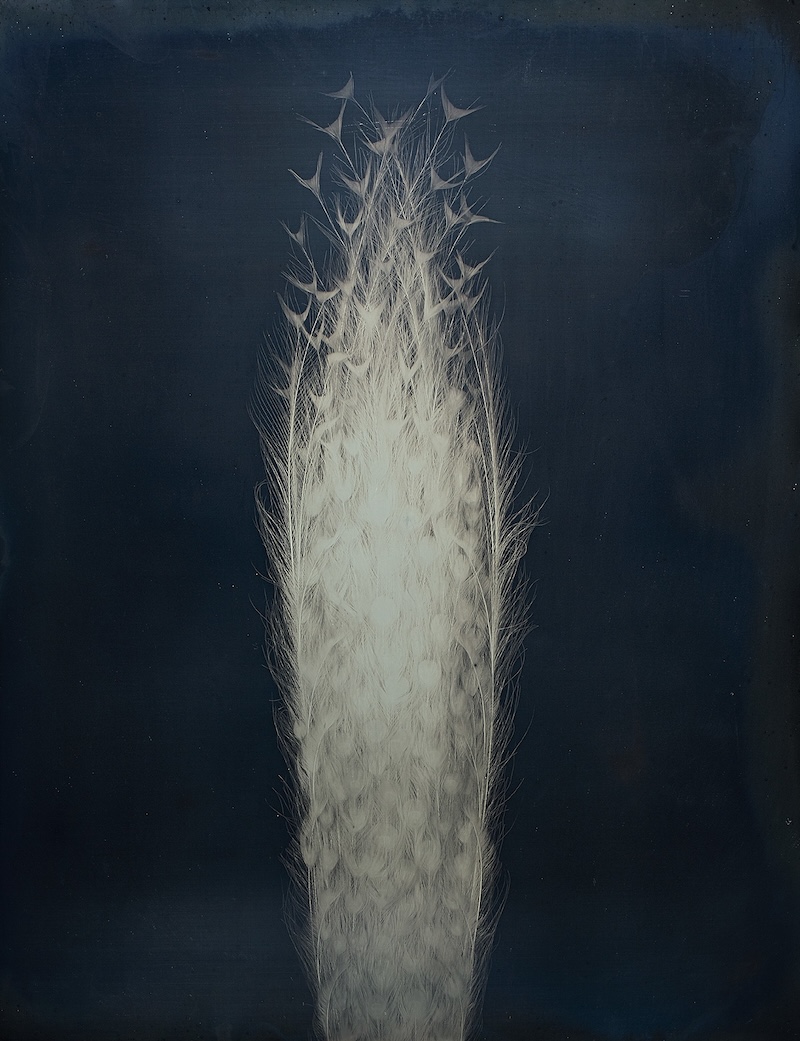
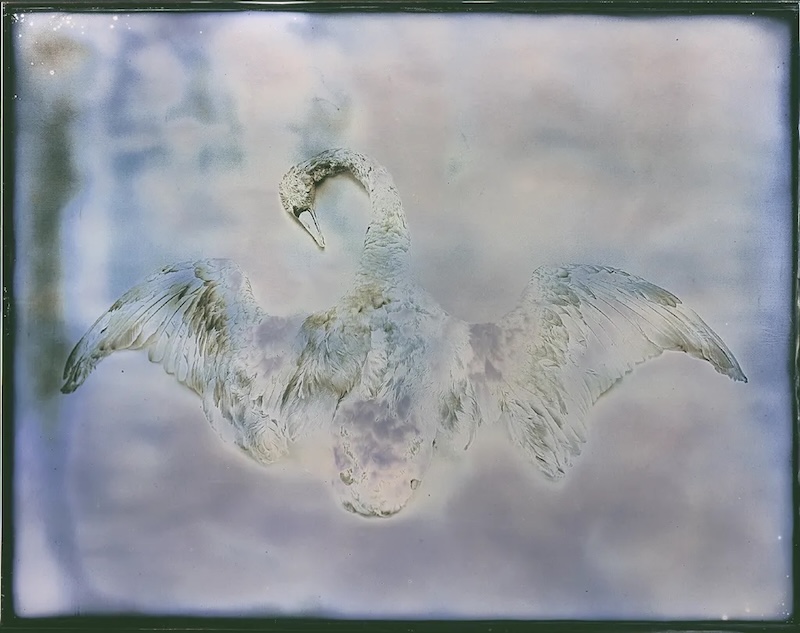
Photograms: these are created without a camera. Objects, or in some cases natural phenomena (smoke, water, etc.) are placed, or allowed to act, on light-sensitive paper, then exposed and processed. The result is often something ghostly, high-contrast, with luminous edges. Fuss’s photograms in My Ghost frequently have the “negative” or silhouette of the object (for example a dress or smoke) and show a kind of illuminated trace in darkness. Daguerreotypes: some works in My Ghost use this early photographic process, which by virtue of its reflective surface and singularity (often unique rather than editioned) brings a sense of “presence” and “pastness” – that is, you are looking at something fixed, yet ephemeral in feel. For example the gallery statement for the 1999 show mentions this process as integral. Cheim & Read
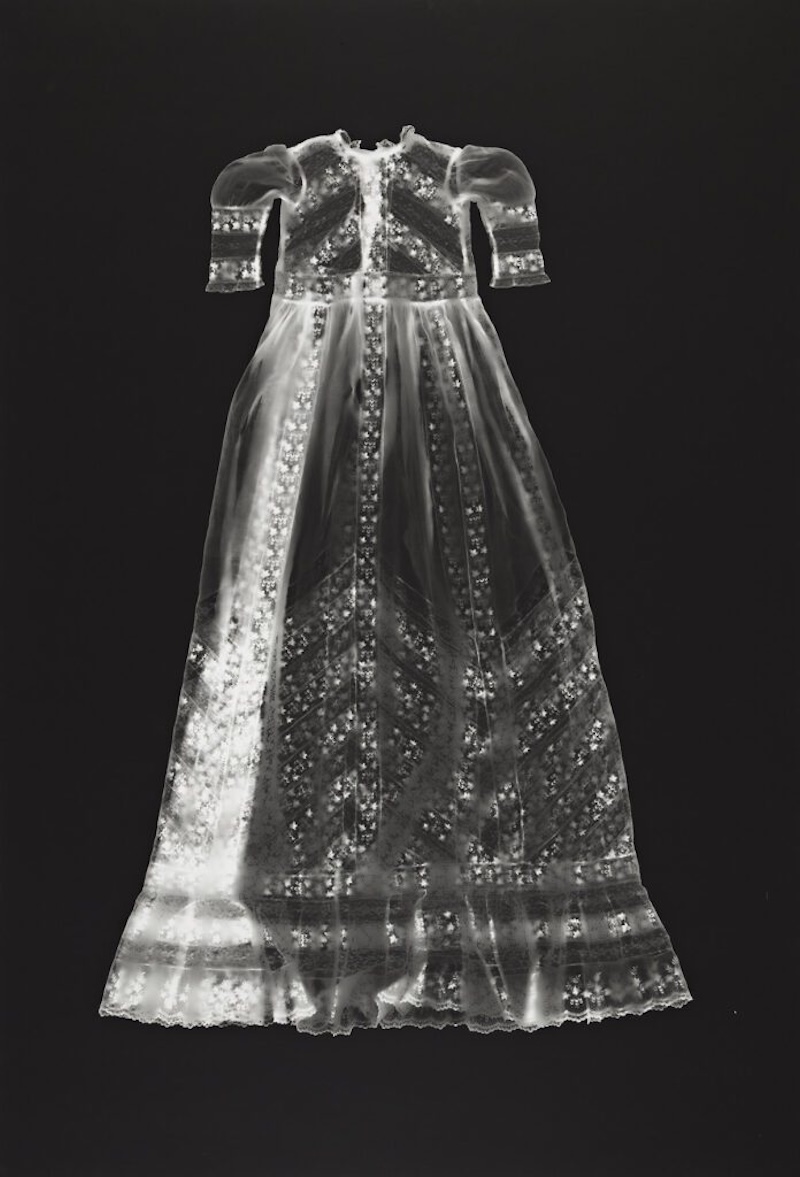
“My Ghost is an attempt to describe the state … the passage from something solid, going through a stage of vaporising, becoming invisible, being dispersed, ascending from the earth to the sky and then becoming nothing.”
Through this specific photogram technique and the manipulation of light, his images seem to be showcasing floating spirits. As if he was able to capture the glimpse of faceless ghosts dressed in beautiful gowns as they are drifting through the world right past us. Most of the dress photographs focus on the details of the dresses, yet there is one print that has a little bit more to offer.
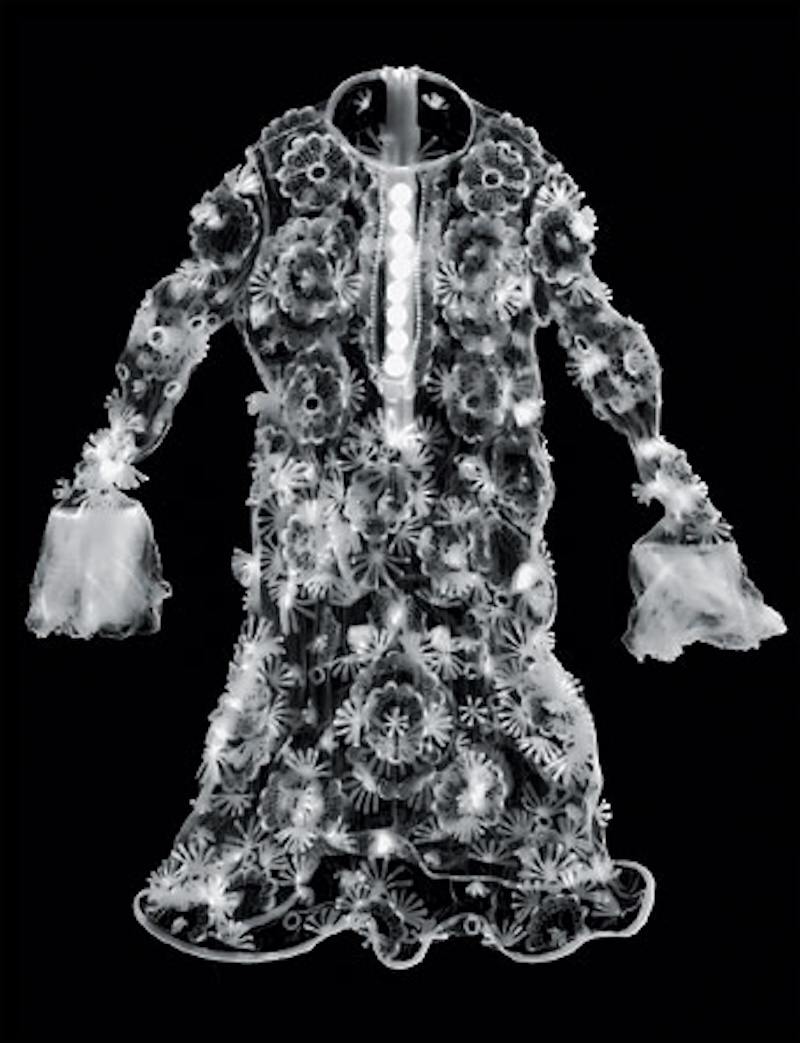
As I looked closer at the images it became clear that there were live animals placed under the dress, specifically snakes. This is what the artist had to say : “The Medusa story seemed inaccessible to me … Then my life transpired, and I completely got it. … I was invited to a party, and the theme of the party was Brides and Grooms, so I bought some wedding dresses for my girlfriend, and pretending to be a bride must have tipped her over the edge. … A couple of hours later … I had this thought of putting the snakes in the wedding dress, so I came back to New York and made the picture of the snakes in the wedding dress”.
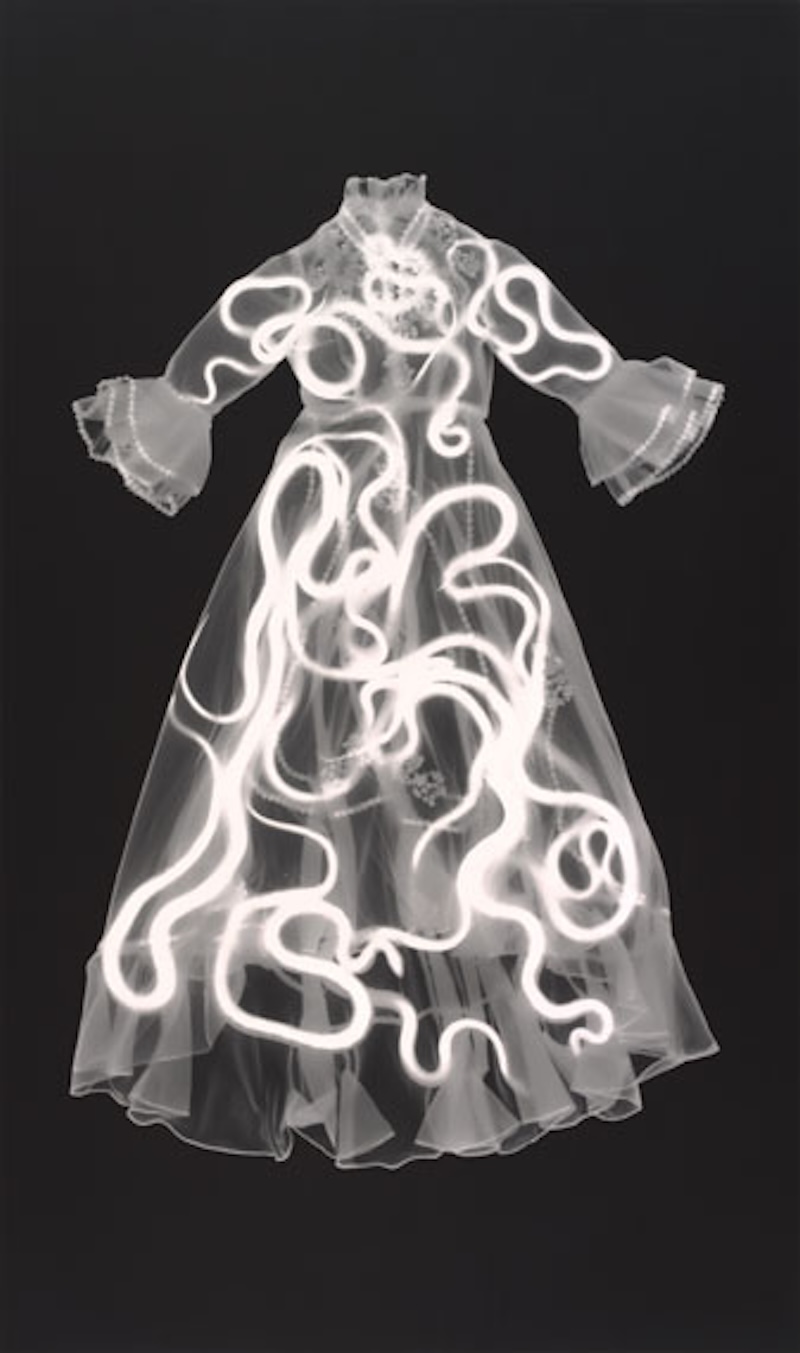
As it tunes out, the snake filled dress images are not the only time he used snakes as a major part of his work: “For the past two decades Fuss has been using living things — from mushrooms to babies — in his photograms, allowing the chance effects of their movement to help generate the picture’s design. For this work, he let loose half a dozen snakes on a large sheet of photographic paper dusted with a fine coating of talcum powder. Over time, as the paper was exposed to light, the movement of the snakes ‘drew’ the image by more or less delicately shifting the powder into fan- and swag-shaped forms.”
Fuss actually began to utilize snakes in his work over two decades ago in order to achieve his unique photographic vision: “It was around then, in the late 1980s, that he placed water and a live snake on top of photosensitive paper, then exposed the concoction to a flash of light. It has become one of Fuss’s most iconic images.”
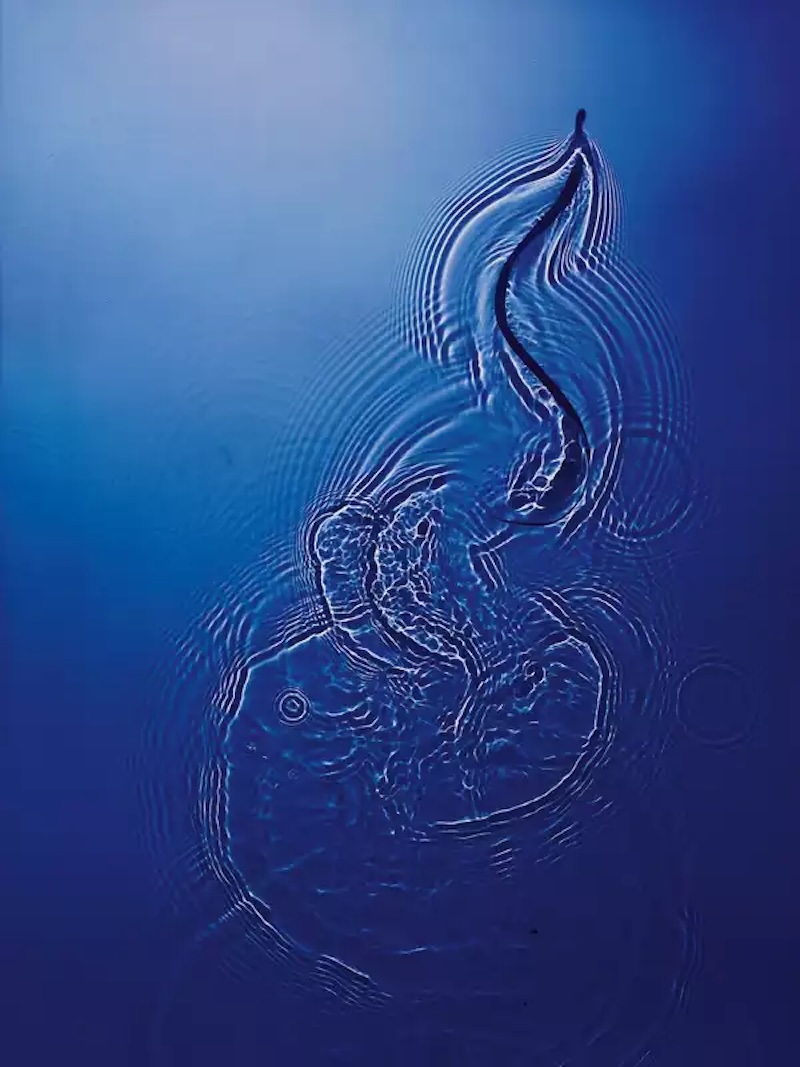
Fuss began working on the series Ghost in the mid- to late-1990s (often cited as starting around 1994) and continued through the early 2000s and beyond.
I do not know if it was the excitement for the arrival of fall or my interest in lightly spooky imagery but his work stayed with me long after the visit at the museum. It seemed I had no other choice but to write about it in this issue. After all, is it not a perfect addition to our October issue? I think so, and I hope you enjoyed his work as much as I did.
A little more about the artist:
Adam Fuss (born 1961) is a British-born, Australia-raised photographer who lives and works in New York. His practice is notable in that he often abandons the standard camera and instead uses historical or “archaic” photographic processes — for instance the daguerreotype, photogram (objects placed directly onto photosensitive paper and exposed), platinum, gelatin silver prints, etc.
Fuss is considered part of the lineage of photographers who, while using modern sensibilities, reference early photographic experiments (for example, the work of László Moholy‑Nagy or Man Ray) in his cameraless images.
In his own description, he is not simply interested in “taking pictures” of the visible world, but in exploring deeper metaphors of time, presence/absence, memory, transformation, and the materiality of photography itself.
So in short: he’s a contemporary artist using older photographic methods to create poetic, evocative images that probe existential themes.
The Series: My Ghost
Basic Facts & Materials
• The series began in the mid- to late-1990s (often cited as starting around 1994) and continues through the early 2000s and beyond. Cheim & Read+2Enlighten Theses+2
• Titles such as From the series “My Ghost” appear on works, e.g., one piece at the Metropolitan Museum of Art dated 1999 in gelatin silver print. The Metropolitan Museum of Art
• The materials vary: photograms (i.e., no camera, objects or phenomena put directly on photosensitive paper and exposed), daguerreotypes, photogravures, gelatin silver prints, mounted on muslin in some cases. The Art of the Photogravure+1
• The size of works in this series can be quite large (for example: one piece described in the collection of the Buffalo AKG Art Museum is 86½ × 56¾ inches (≈ 219.7 × 144.2 cm) gelatin silver print photogram mounted on muslin. Buffalo AKG Art Museum
Why “My Ghost” Matters / Its Impact
• The series is a powerful example of how photography can transcend mere representation (i.e., “this is a photograph of that”) and become a metaphor for states of being — absence, transformation, memory.
• Technically, Fuss revives and re-uses archaic photographic processes in an era dominated by digital and mechanical imaging, thereby emphasising the materiality of photography (light, chemistry, paper) and time. According to the Museum of Fine Arts, Boston (MFA) show description: “At a moment in time when large format, digitally manipulated color photographs compete with paintings for our attention, Adam Fuss continues to make pictures of unrivalled beauty and mystery with traditional and historical photographic techniques.” Museum of Fine Arts Boston
• Conceptually, My Ghost invites reflection. The works beckon the viewer to consider what is implied but absent (the wearer of the dress, the movement of the smoke, the bird in flight) — evoking feelings of longing, passing, and the ephemeral nature of existence. One commentary notes: “That christening dress, while spectral-looking and empty, is also startlingly present… A ghost may be made of vague vapors, but it is always experienced viscerally.” The Art of the Photogravure
• In terms of art-history, Fuss’s series positions itself in the lineage of camera-less photography and invites a reconsideration of what a photograph can be: a trace, an imprint, a memory, as opposed to just a depiction.
• It has exhibited widely (e.g., the MFA show, and galleries) and pieces are held in major collections (Met, Buffalo AKG, etc.).
Sources:
Cheim & Read
Fraenkel Gallery
The Met Museum
Xavier Hufkens
Holden Luntz
Whitney Museum
Munich University PDF
Musée Magazine
Museum of Fine Arts, Boston
Photogravure
Buffalo AKG
|
|