Artist Interviews 2025
Ania Illustrations 
By Julia Siedenburg
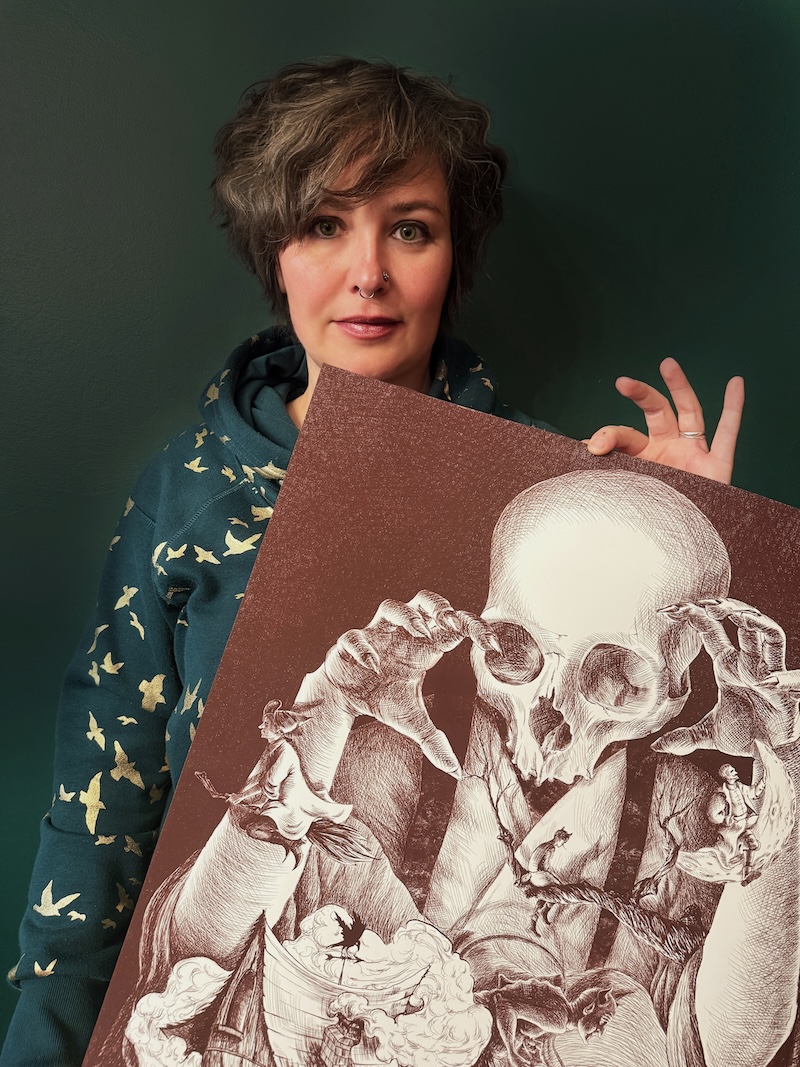
Polish artist Ania Illustrations creates enchanting, whimsical worlds where folklore, fantasy, and everyday life intertwine. Rooted in a lifelong connection to the arts, her work blends delicate storytelling with a touch of the mystical—inviting viewers into scenes that feel both timeless and deeply personal. Whether illustrating books, crafting magical creatures, or designing her charming “cabinet card” portraits, Ania’s art radiates curiosity, love, and a sense of wonder.
I really enjoyed getting lost in her imagery and it was pure joy learning about her inspiration and her craft. I am so grateful that her and I got to connect and I hope you feel the same, dear reader.
What does creating art mean to you? Is it a way to escape day-to-day life or more of a meditative task for you?
This is one of those almost existential questions I never quite know how to answer. I grew up in a family of artists, so for me it has always felt like a natural part of life. Sometimes it offers an escape or a moment of meditation, but it can just as easily be practical - or simply fun, a new skill to learn. On one hand, I honestly can’t imagine existing without some kind of creative outlet. On the other, I hesitate to call myself an “artist” or to label what I do as “Art.” It’s such a loaded word, heavy with expectations I’m not sure I meet - or even want to meet.
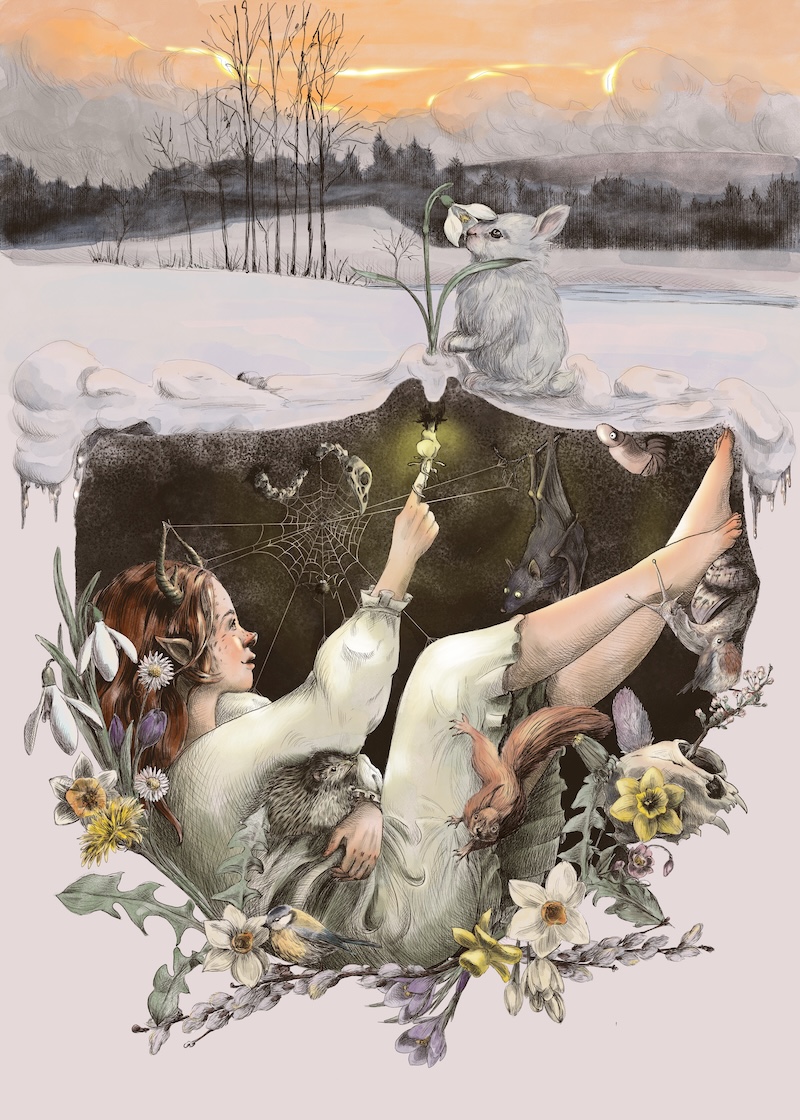
Sometimes there’s an idea I want to put into the world, and sometimes I just want to let my mind wander while my hands stay busy. In that way, all my creative pursuits feel equally valuable to me - whether it’s a traditional painting, a digital illustration, or a slightly wonky clay bowl.
Why do you think having a creative outlet is so important for people, especially children?
I can’t imagine anything more grim than ordinary, everyday life - with all its stress, worries, and chores - without a creative outlet. I think children (and really, people in general) are naturally creative beings. The idea that art - and creativity by extension - is “childish” or somehow not serious or productive enough has always baffled me.
To me, having art in your life is important, but maybe even more important is seeing creativity as more than just art - as an attitude. Not everyone has to paint or play an instrument to feel fulfilled. I don’t see the point in forcing someone to draw if they don’t enjoy it. But creativity can be woven into almost anything: gardening, cooking, mending clothes. Those things can feel like chores, but if they spark something in you, they can become a wonderful outlet.
The real tragedy is that so many people lose that spark - or have it beaten out of them by social expectations.
Who is your biggest artistic inspiration?
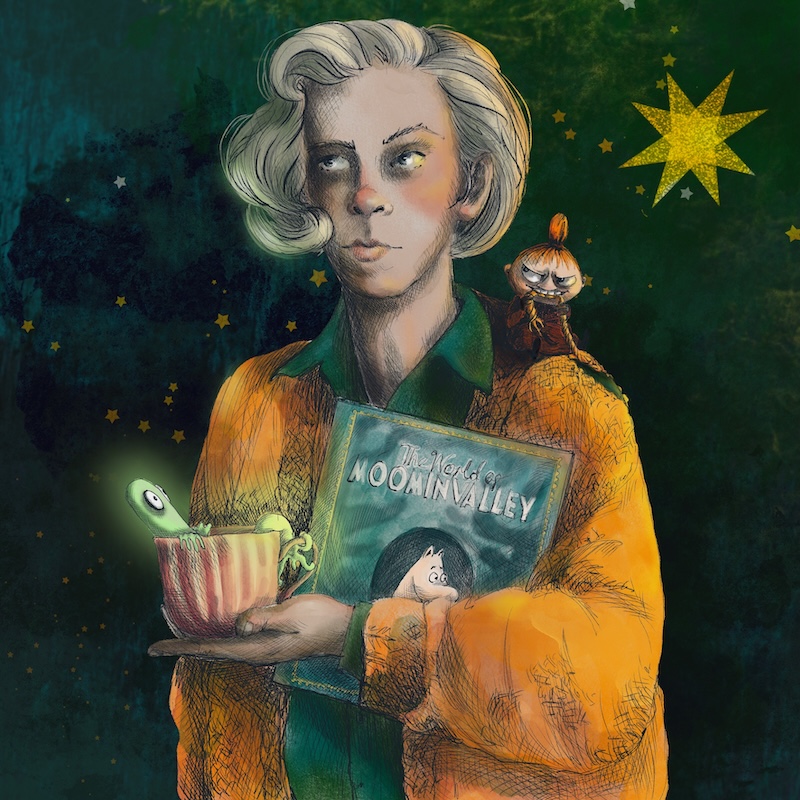
I don’t think I can name just one. I’ve always admired artists like Egon Schiele, Amadeo Modigliani, Edward Gorey, Amrita Sher-Gil, and Tove Jansson, and of course, their work has shaped me in different ways. But I find literature just as important to my process as visual art. When you’re inspired by another artist, you often consciously think about how they use color, light, or form, and how you might bring that into your own work. With words and stories, it’s different - the images they spark arrive more freely, organically.

Your talent is showcased in a few different styles. Do you have a favorite series you have created? If so, why?
For me, it’s hard to separate a finished piece from the creative process - and even from the time and place where it was made. With that in mind, I think my favorite would be a small series I created after taking a long break from visual art. It leaned more toward illustration than anything I had done before and set me on the path of fantastical, whimsical imagery that I still follow today. I made it during a residency, and the drawings were inspired by local Polish folklore and legends. The palace where the program took place became the stage, but I filled it with magical creatures. I’ve recently revisited the theme during the same program, which makes it feel even more special to me.
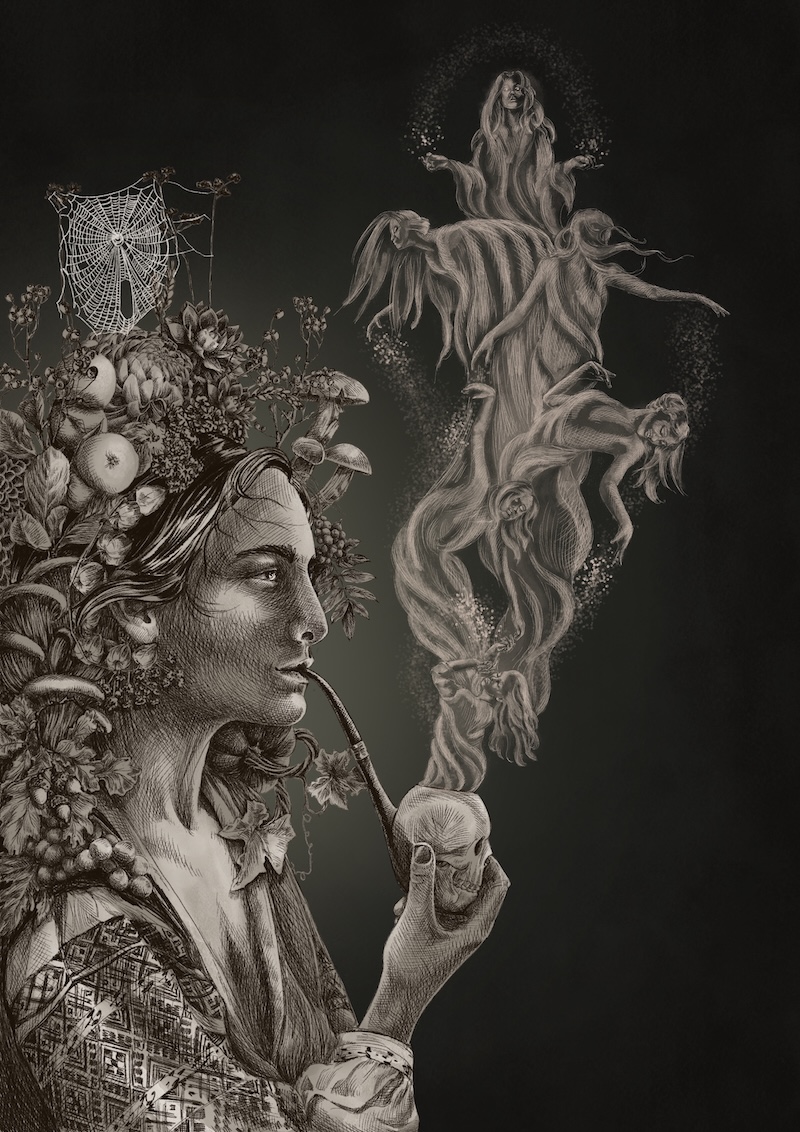
Some of your imagery showcases scenes from day-to-day life, but the majority of your work is more whimsical and fantastical. A few remind me of characters from a witchy, mystical world. What draws you to that world?
You asked earlier about escapism in art - this is exactly why. I enjoy fantasy and folklore, and I’d much rather get lost in a world where you have to battle a dragon or a sorcerer than a pile of bills and a sink full of dishes.
Most of my work, even when it isn’t tied to a specific text, is illustrative in nature. I don’t always tell a full story on the page, but there are always stories running in my head. I love playing with archetypes and literary tropes - twisting them, flipping them on their heads, and seeing what new shapes they take.
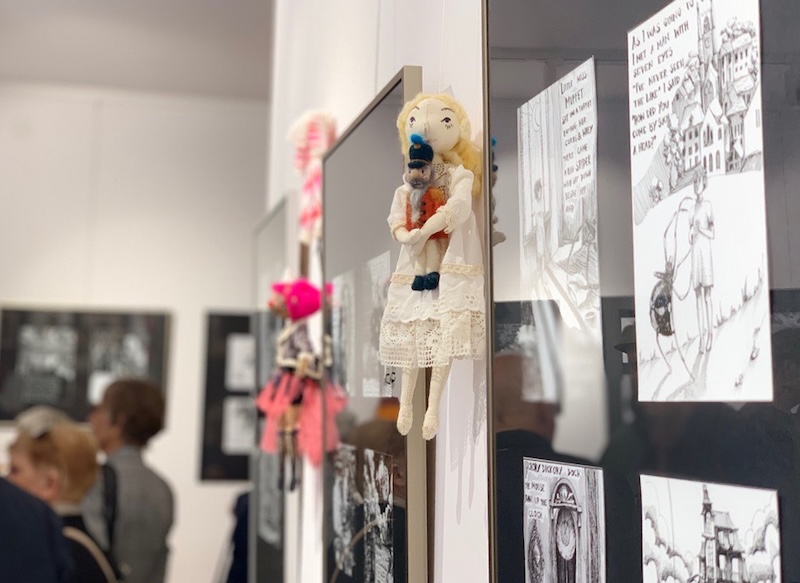
Please tell us a bit about your background and upbringing. Where did you grow up? Was art always an important part of your life? What else interests you?
I grew up in Kraków, Poland, in a family of artists. I probably spent more time in art studios than on playgrounds. Holiday trips were usually planned around visiting museums or art events, and I’m fairly sure I learned how to prepare an exhibition before I ever learned how to do laundry.
My interests and education have always been eclectic, but they all orbit around creativity in one form or another. I completed primary music school as a violin student, then continued on to art high school while also attending piano and classical/jazz vocal classes. Later, I studied fashion design while on a scholarship in Delhi, India, for classical Indian dance.
Since then, I’ve focused on illustration but have also dabbled in graphic design, doll-making, and art books.
I can honestly say there isn’t a craft I wouldn’t at least want to try. Right now, I’ve got my eyes set on learning jewelry-making whenever the opportunity presents itself.

Besides your beautiful illustration images, you have also designed book covers. Please tell us how this opportunity came about and how you approach a collaborative/commission process.
Like most things these days, opportunities tend to find me through social media.
When it comes to illustrating books, I see my role as bringing the author’s world to life. In those situations, my own creative vision takes a step back - it’s not about showing off what I want to say, but about creating something that fits the story and speaks to its readers.
I always think back to a children’s illustration biennale I once visited. Alongside the awards from publishers and art institutions, there was one chosen by the children themselves. While the official juries leaned toward whatever style was fashionable at the time, the kids picked something completely different. It was a good reminder that trends and artistic experiments have their place, but so does listening to your audience. That perspective helps me keep space for the author’s vision and the reader’s experience.
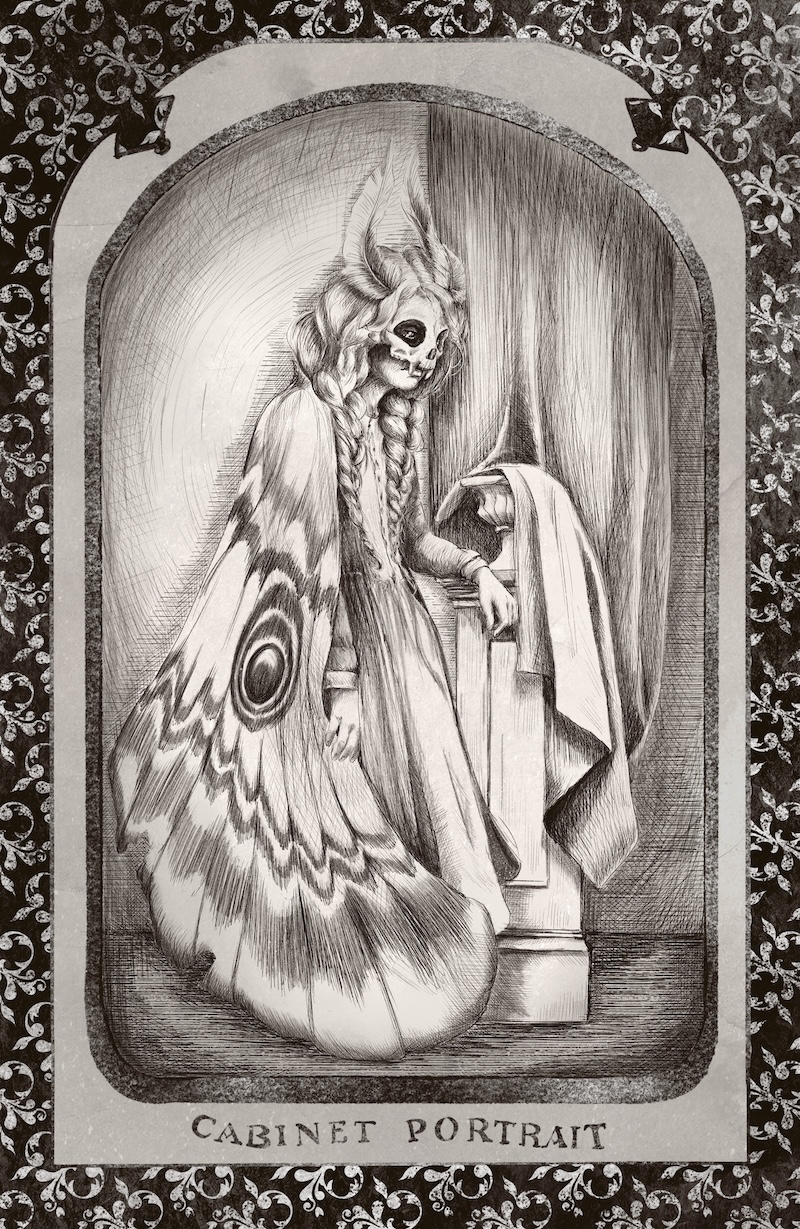
What was the influence behind your cabinet card drawings?
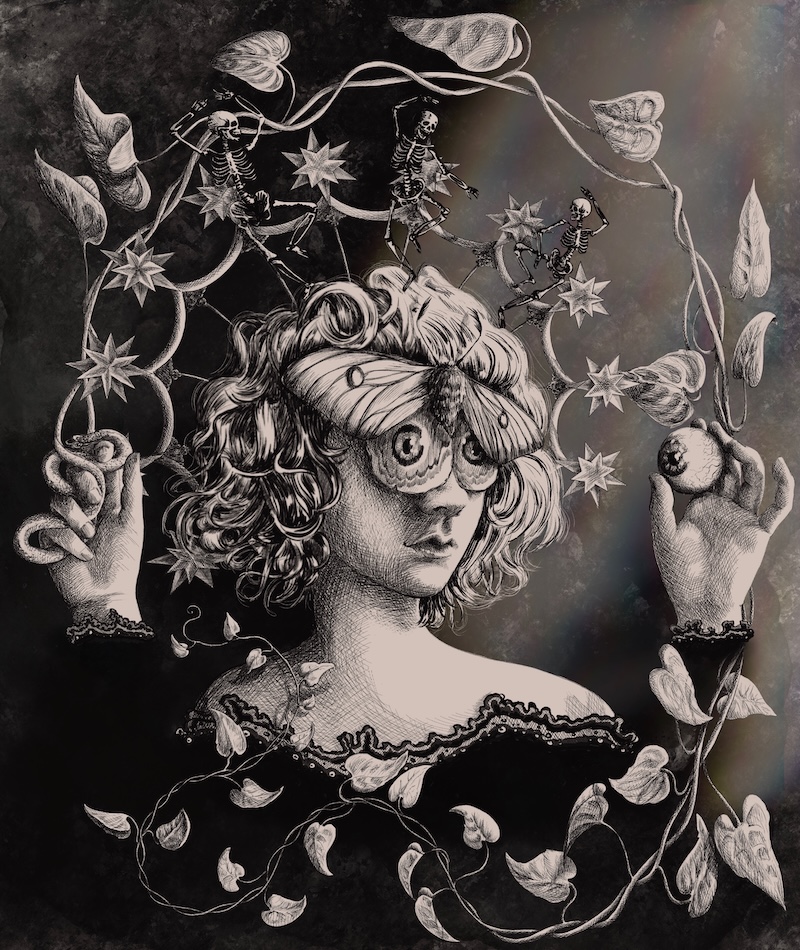
I’ve always been drawn to cabinet card photography - there’s something almost otherworldly about those portraits. The elaborate photo sets, the clothes, and even the way the paper itself ages all add to the effect, but the medium has a unique quality of its own. I’m also fascinated by photographs of old costumes which, to our modern eye, can look grotesque - sometimes even downright creepy.
That mix of beauty and strangeness inspired me to start a series of faux cabinet portraits featuring magical creatures. They’re dressed to the nines and posed in that stiff, old-time fashion. I’m planning to display them as a kind of fantastical family album.

You call yourself an illustrator, crafter, and vintage lover on Instagram. What type of vintage art or objects interests you?
I love wandering through flea markets and little junk shops tucked away in forgotten corners - the kind of places where you have to dig for unexpected treasures. While I truly appreciate museum-quality artifacts, what really draws me in are the objects that carry traces of everyday lives. Things that were touched, used, and kept close for decades - sometimes longer. I like to think about my little collection as a cabinet of curiosities. It might sound a bit grandiose, since it’s mostly made up of worn-out, mundane objects, but there is something magical about handling them. (And yes, I do own a slightly haunted doll, so I feel completely justified.)
As I mentioned before, I always keep an eye out for old photographs. They make wonderful souvenirs - tiny fragments of someone else’s world, preserved in paper and time.
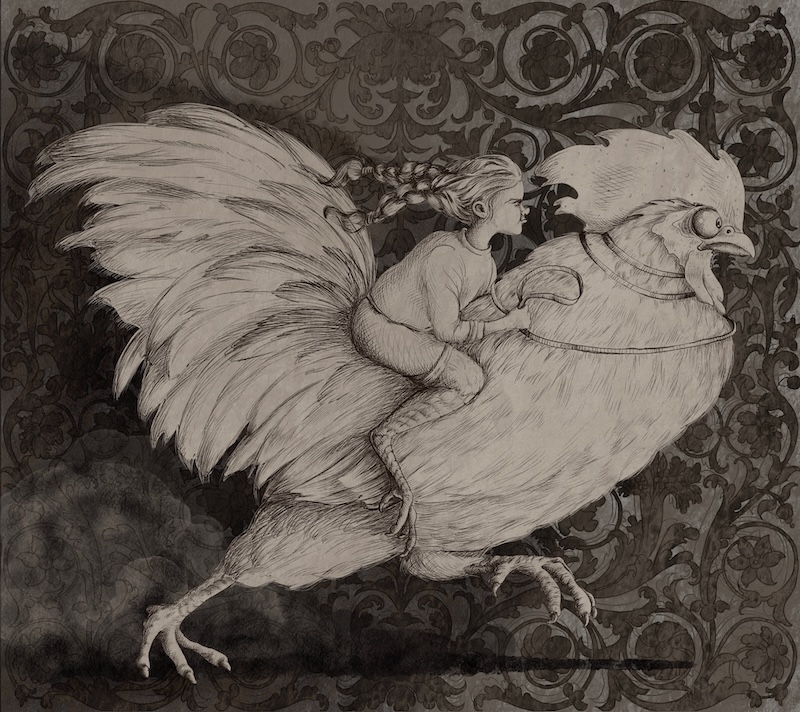
What are your plans for the future? Any shows/ collaborations coming up?
Right now, I’m finishing work on a philosophy book series for preschool-age readers - a bit of a stylistic departure for me, but a fun challenge. I also have a couple of group shows on the horizon, and I’m preparing for my next solo exhibition in the coming year. Beyond that, I’m trying (as always) to strike a balance between being creative and actually remembering to show up on social media.
|
|