Artist Interviews 2025
Christophski 
By Julia Siedenburg
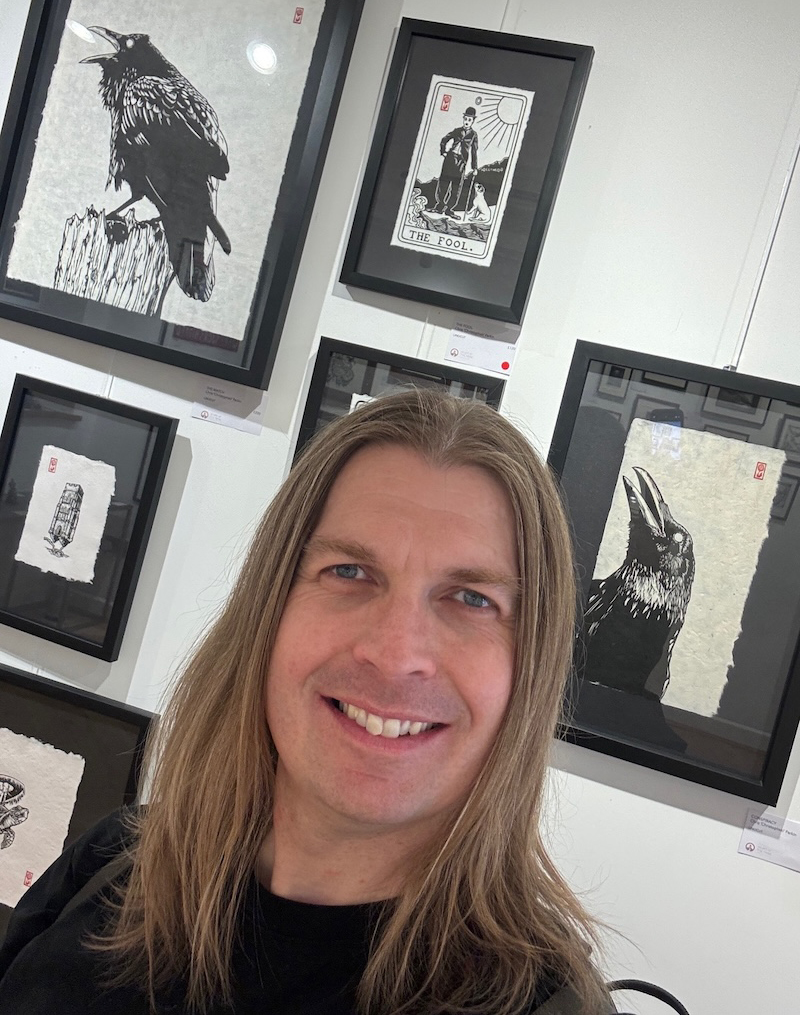
Working under the name Christophski, this talented British printmaker brings fresh energy to the classic art of linoleum printing. Choosing lino over wood, he creates beautifully detailed prints that capture animals, people, and architecture with a unique sense of depth and character. Each piece is finished with his beautiful signature logo stamp—a mark of both creativity and personality. Discovering his work online feels like stumbling upon a hidden gem in the world of printmaking that I got to learn so much more about, thanks to this interview .
I am so grateful he took the time to teach us more about this unique form of art and I hope you enjoy this interview as much as I did, dear reader.
Why do you think art is so important in our daily lives?
I've been trying to become more comfortable with thinking of myself as an artist and why I find art important is something I’ve reflected on quite a bit. I often read interviews or articles about other artists and find myself feeling inadequate by comparison. Many seem driven by a desire to be political, rebellious, or to make bold statements. Their work often carries complex meanings or aims to reveal some deeper “truth.”
That’s not what drives me.
I don’t create with the intention of making grand declarations. My work doesn’t come from a place of protest or philosophical depth. But I do believe art holds an important place in our daily lives - as a way to connect. Whether it's to a person, a moment, a place, or a feeling, art helps us form meaningful links to the world around us.
As both a creator and a consumer of art, I see it as a bridge - connecting us to the subject, to the artist, and to each other. Through that connection, we gain a deeper understanding of ourselves, our communities, and the world.
You are described as a Linocut Artist. Can you please explain to our viewers what that means?
I'm a relief printmaker, which means I carve designs into linoleum sheets - often called "blocks" - to create prints. The process involves applying ink to the surface of the carved block and pressing paper against it to transfer the image. It’s similar to traditional woodcut printmaking, but linoleum is a softer, more pliable material, which makes it a bit easier on the arms and more forgiving to carve.
I’ve tried woodcut once and really enjoyed it. I definitely plan to explore it further. That said, it was more time-consuming and physically demanding compared to working with lino, so for now, lino remains my go-to medium.
=
I love your work, and I cannot imagine what it takes to create one of those images! Each piece is so fun to look at, and combined with the texture of the paper, it creates this unique dimension. What brought you to printmaking, and why is it so special for you?
I’ve always been a lifelong doodler, but I hadn’t done much art since leaving school nearly 30 years ago. Drawing was something I loved, but I gradually fell out of the habit of making time for it. Every now and then I’d pick up my pencils and start sketching, but it never lasted - life just kept getting in the way.
That changed during the COVID pandemic. My kids were very young at the time, and like many parents, we were constantly looking for ways to keep them entertained. My wife came across a daily art challenge on Instagram, and before long, we were all taking part. For me, it quickly became a daily obsession. I loved creating - starting with some very questionable pencil drawings - and then began experimenting with other materials like watercolours and acrylics.
The prompt account we followed offered themed art supply boxes through a quarterly subscription. I signed up and tried a variety of mediums, including pastels and inks. One of those boxes included a basic linocut starter kit - and that was the turning point. Before I knew it, I was exclusively creating linocut prints.
With printmaking, I found my medium. Not only did I discover a talent for it, but I also found the process incredibly therapeutic. Carving is cathartic, and the rhythm of it brings a sense of calm and focus. But what makes printmaking truly special to me is that it’s the medium through which I became an artist - something I never imagined I’d call myself.
As I mentioned earlier, it’s taken time to feel comfortable with that label. If you’d told me five years ago that I’d be selling my art and exhibiting in galleries, I’d have laughed. But it’s been an incredible journey. I’ve built a supportive following on Instagram, and through sharing my work and engaging with prompts, I’ve made some truly wonderful friends.
And as I say this, I’m reminded again of what art means to me: connection. It’s not just about creating - it’s about sharing, growing, and connecting with others through the process and the finished piece.
Your maker’s stamp symbol is so pretty. What does the symbol mean to you, and when did you know that it would become your signature?
As I became more familiar with the medium and started exploring the work of other printmakers, I began to notice a few conventions. Many artists titled and signed their prints in pencil, created numbered editions, and used a maker’s stamp. I later learned that this tradition - especially the use of stamps or “chops”- has deep roots in Chinese and Japanese art, where artists used them to sign their work.
That idea really appealed to me for a few reasons. First, I’ve never liked my handwriting. And second, I often felt like a bit of a fraud signing my work - I wasn’t yet comfortable calling myself an artist. So I decided not to write titles on my prints and thought a stamp would be a meaningful alternative to signing them.
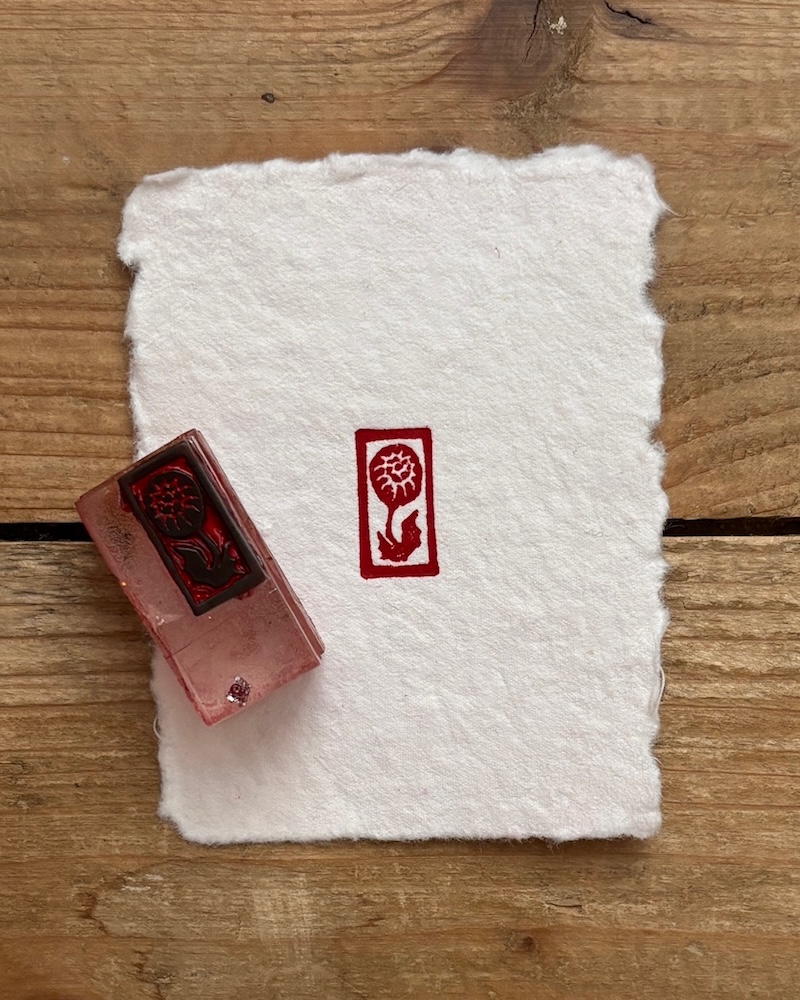
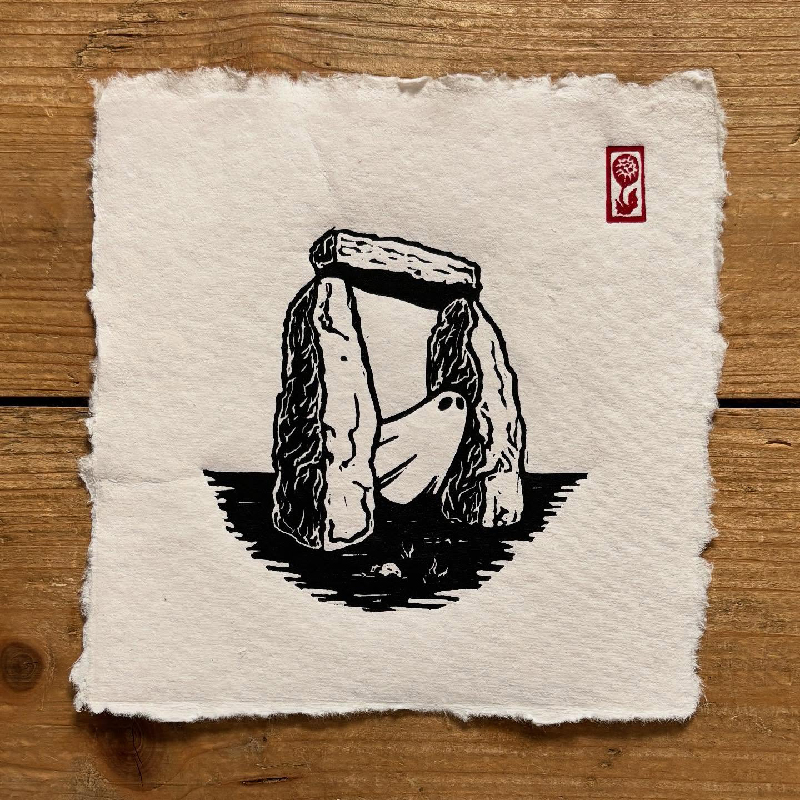
I hand-carved the stamp myself. The first version of the design came about in November 2020, shortly after I began printmaking. I refined it in January 2021 when I got some finer tools that allowed for more precise carving. The current version was created about six months later, when I needed something smaller for a particular print - and I’ve stuck with it ever since. It’s roughly 2cm by 1cm and mounted on a set of rectangular resin blocks kindly made for me by my daughter. Before that, it was mounted on the bottom of a cork, but that made alignment tricky. The resin works much better.
As for the design, it’s a stylised closed chrysanthemum - a playful nod to my name. It curves like a “C” for Christopher, and the flower itself is vaguely “P”-shaped for my initials, CP. (I may have overthought it a bit!) But the chrysanthemum also holds personal meaning. It was my grandad’s favourite flower - he used to grow them in his garden - and it’s one of my mum’s favourites too. Whenever we see one when I’m with her, she reminds me, “That was your grandad’s favourite… he used to grow them in his garden.”
Please tell us what the process was like to create your prints. How long does it take to create them?
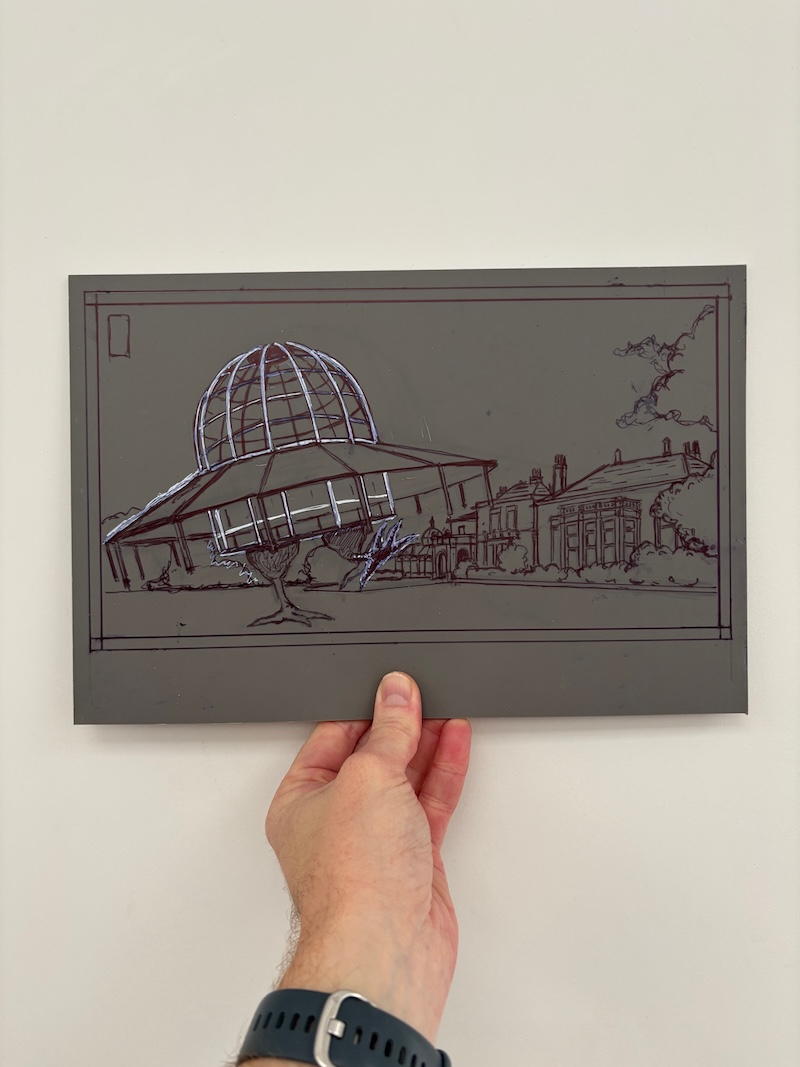
When starting a print, I might begin with a fairly detailed design, which I carefully transfer onto the lino - often by tracing. Other times, I’ll sketch a rough composition and refine it directly on the lino as I go. Sometimes it starts with a doodle or a vague sketch made up of rough shapes, just to get a sense of how the elements might work together. And occasionally, I’ll draft the image straight onto the lino without any prior design at all.
The first step is always getting the image down in pencil. I then go over it in biro, as I’ve found biro ink adheres to the surface of the lino better than anything else I’ve tried. Even at that stage, the drawing isn’t necessarily very detailed - I don’t plan out every carve. I prefer to get a feel for the image as I carve, often making changes along the way from what I originally envisioned.
Next comes the carving. The time it takes varies depending on the size and complexity of the piece. A tiny mini print might take just a few minutes, while larger, more intricate designs can take several hours - sometimes spread over multiple days. That said, I prefer to complete a print in one sitting if I can. From conversations with other printmakers, I’ve learned I’m actually quite fast. I think that’s because once I start, I settle into a rhythm and don’t overthink things - the process just flows.
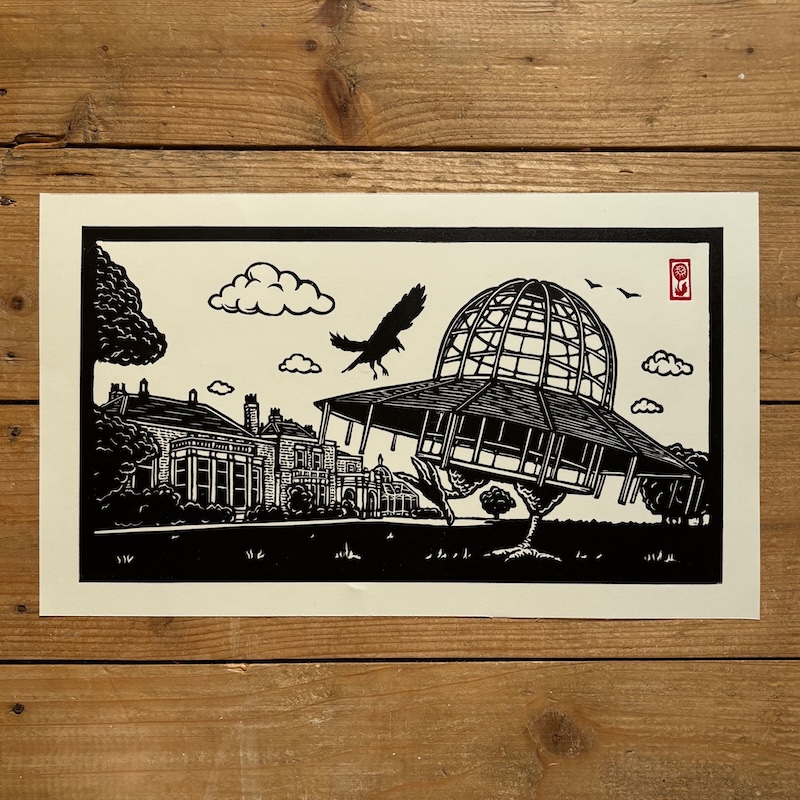
Once carving is complete, I move on to printing. Ironically, it’s often the part I enjoy least, though I do love seeing the final print come to life. To print, I roll ink onto the lino block using a brayer, then place paper on top and press. When I first started, I hand-burnished my prints using a wooden spoon or baren to transfer the ink. These days, I use a lever press, though many prints - especially those on thicker or textured paper - still require some degree of hand burnishing.
From animals and buildings to real historic figures and fictitious movie characters, your work has it all. How do you choose your subjects? Where do the ideas come from?
A lot of my inspiration comes from what is becoming recurring theme in my answers: connection. For instance, when I watch a film or TV show that really resonates with me, I often feel the urge to make a print. It’s a way of prolonging that sense of enjoyment, processing the experience, or simply sharing how much it meant to me with others.
Similarly, moments of nostalgia often spark ideas. If something reminds me of a past experience or feeling, I’ll create a print to hold onto that memory a little longer. That desire to connect - with a moment, a feeling, or other people - is a big part of what drives my work.
Art prompts have also been a major source of inspiration. I rediscovered my love for art during lockdown by following daily prompts online, and I still follow a few prompt accounts today. There’s a great sense of community in seeing how different artists interpret the same theme. It’s not competitive - it’s collaborative and fun. I especially enjoy subverting prompts when I can, which often leads me down unexpected and playful creative paths.
Sometimes inspiration just strikes out of nowhere - whether it’s from a casual doodle, a daydream, or something happening around me. I often draw from my family and the artists I admire. One recent print, for example, was inspired entirely by my son drawing a panda. It was a simple moment, but it sparked something creative in me.
Most of your prints you keep in black-and – white. But occasionally, you seem to enjoy a pop of color. Why did you specifically choose those images to add color to?
I generally prefer working in black and white. That’s always been my natural inclination, going back to the pencil drawings I enjoyed when I was younger. I’m drawn to the contrast between dark and light - it’s where I feel most comfortable, and perhaps it’s just how my brain processes visual information.
That said, every now and then I’m struck by inspiration to introduce colour.
I don’t follow any strict rules when it comes to using colour. Sometimes I’ll add it if I feel the print lacks enough contrast and would feel unbalanced without it. Other times, a single colour - or a small group of colours - dominates the subject, and it feels natural to include them. And occasionally, it’s simply a spontaneous decision, sparked by a moment of inspiration.
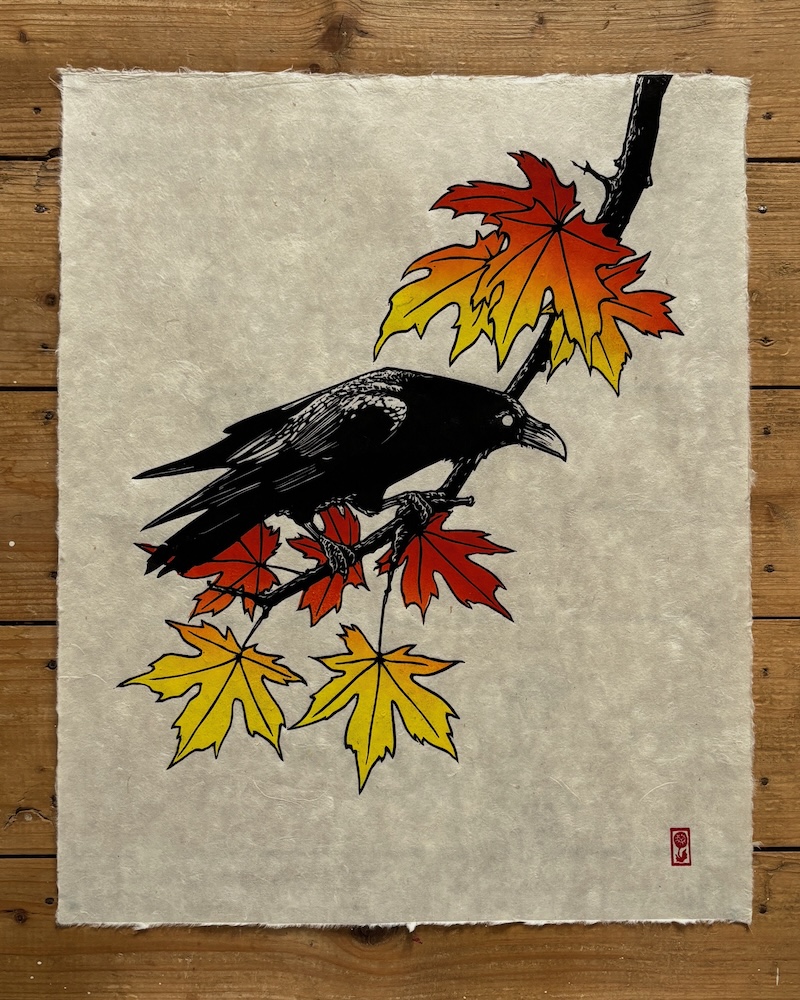
Returning to that theme of connection, I recently made a print of a raven perched on a tree branch, with leaves in rich autumnal colours. I was inspired by the fiery reds, oranges, and yellows I’d been seeing in the trees around my home. I wanted to celebrate that seasonal beauty and capture the joy I felt in witnessing it - using colour as a way to connect with the autumn.
Tell us about your background and upbringing. Where did you grow up? When and how did you find your way to the artist life? What else do you enjoy doing?
I grew up in the 80s and 90s. I was born in Yorkshire in the North of England, where most of my extended family still live. Around the age of 11, I moved further north to Washington - the original one, known as the ancestral home of George Washington. I’ve stayed in the North East ever since, though I now live a little further south in Teesside with my wife, two children, and our cat.
I stopped studying art after high school and went on to study Biology at university, earning a bachelor’s degree. I’ve always loved science and would have loved a career as a biologist, but the thought of years more study and mounting debt put me off. So, somewhat reluctantly, I took a job training as an accountant.
I’ll admit, I don’t love telling people I’m an accountant - mostly because of the “boring” and “dull” stereotypes. Depending on the situation, I’ll just as often say I’m an artist now, which feels far more reflective of who I am.
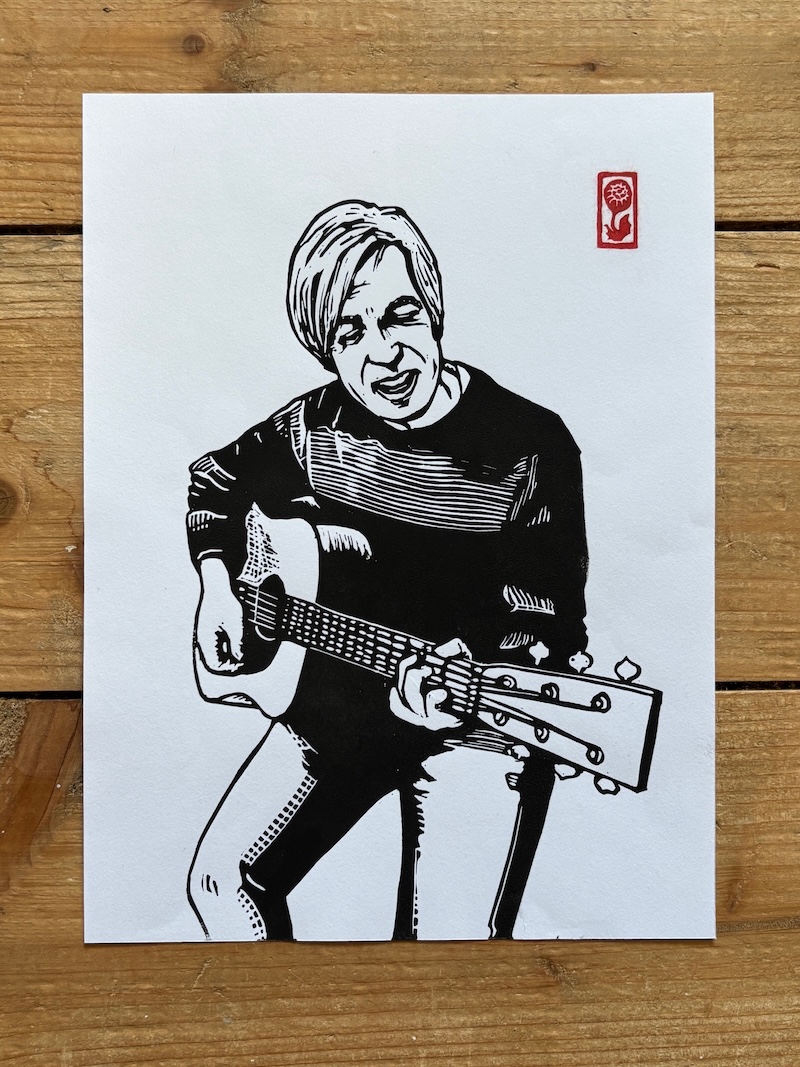
Outside of art, I’m passionate about music. I sing and play guitar and ukulele. I was in bands throughout my teens and early twenties, and even started a ukulele band in my thirties. These days, I mostly play music with my wife and daughter, who also sing and play guitar, and with my son, who I’ve been teaching. I’ve volunteered at a local youth music group that my daughter attends for the past four or five years, and I regularly perform with the kids - which I absolutely love.
I also love to travel. While there are still plenty of places I’d love to visit, I’ve been fortunate to see some incredible sights and experience some unforgettable moments along the way.
Do you have a favorite series or subject that you have done? Which piece was the hardest and which was the most fun to create?
I have a number of favourite subjects and themes that I return to regularly in my artwork.
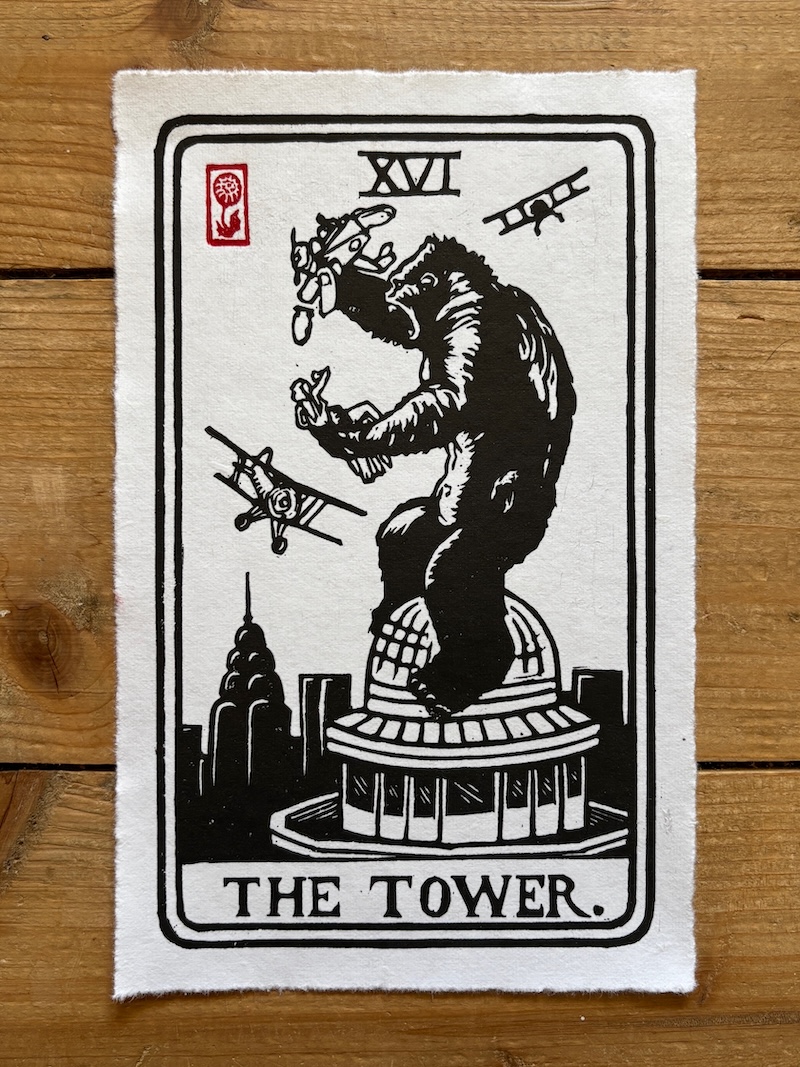
One of the earliest recurring characters in my work was King Kong. During lockdown, before I discovered linocut, I created a pen and watercolour drawing of Kong hanging off the Empire State Building in response to a prompt. The next day’s prompt was “pea pod,” which felt a bit flat after the fun I’d had with Kong - so I drew Kong bursting out of a pea pod. That sparked something. From then on, whenever a prompt didn’t inspire me, I’d ask myself, “What would Kong be up to in this one?” and suddenly I’d have a fun idea. I wasn’t particularly a fan of King Kong before, but I’ve developed a real fondness for him. That experience taught me how having a recurring subject can be a great way to unlock creativity and bring energy to a piece.
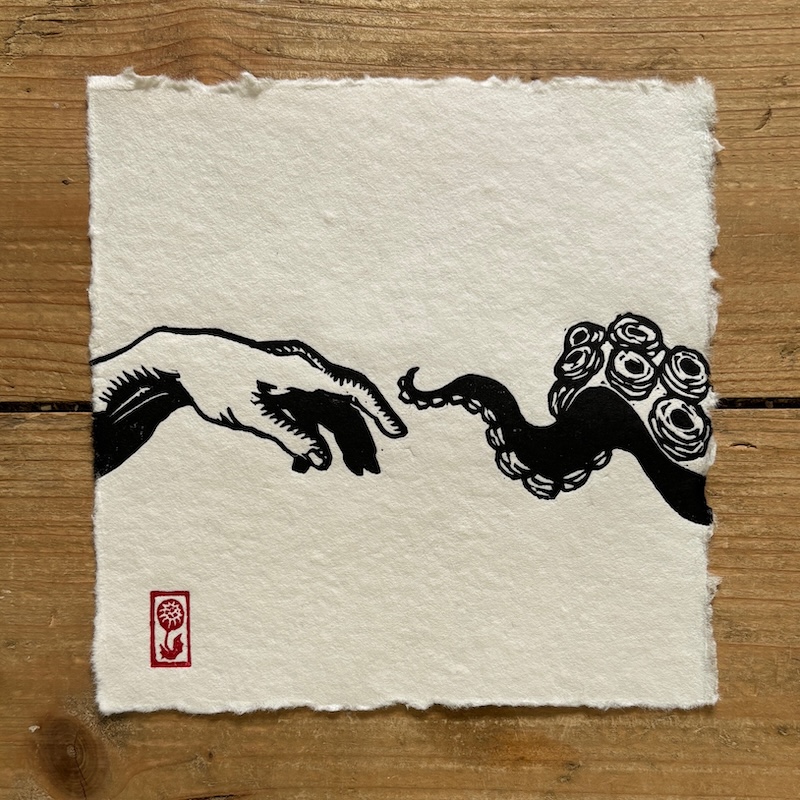
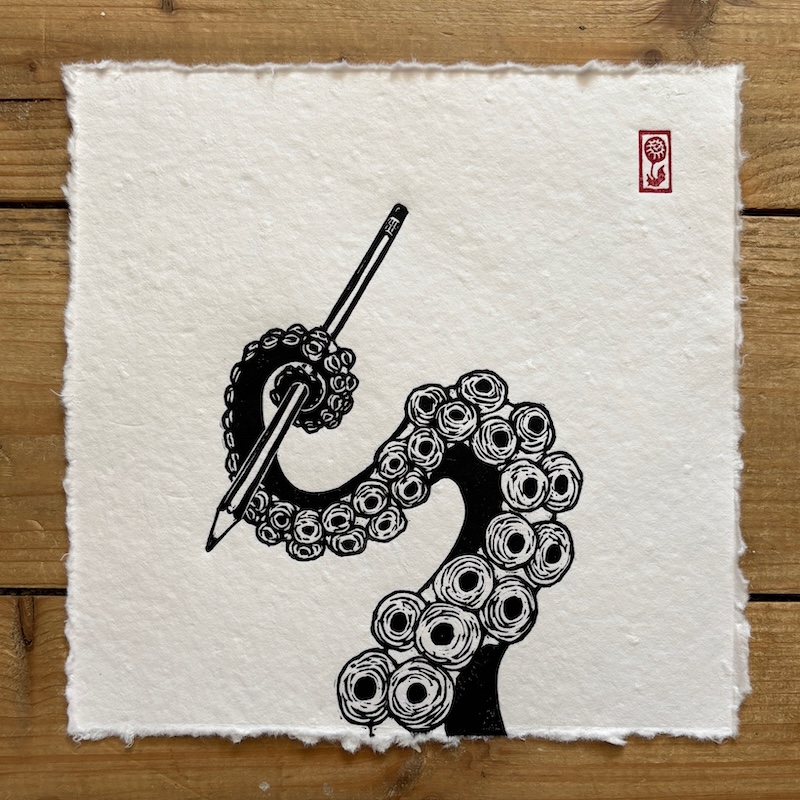
Although Kong doesn’t feature in my work as often now, I’ve done a few prints of him - including my very first linocut. These days, tentacles have taken on a similar role. My first tentacle print came from combining two unrelated items on my to-do list: “tentacle” and “retro pinup singer.” The result was a tentacle holding a retro microphone, which led to a whole series of tentacle-themed prints. Like Kong, tentacles often help me find a way into a prompt or serve as a jumping off point for ideas and they have become a playful and versatile motif in my work.
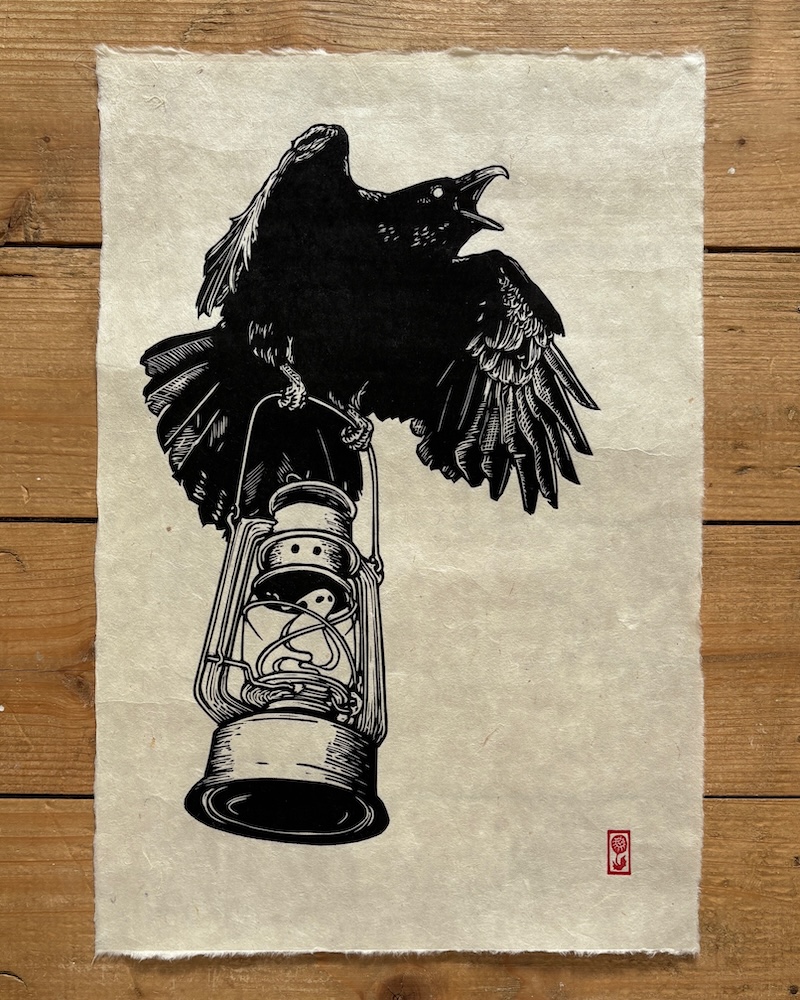
I also enjoy making wildlife prints, and corvids - especially crows and ravens - have become a favourite subject. I find them fascinating: they’re incredibly intelligent, steeped in myth and folklore, and visually striking. Their black colouring makes them especially well-suited to linocut.
While I’m not a fan of horror, I do love a good ghost story, and ghost prints have become another staple of mine. They’re usually very stylised and simple, but I really enjoy making them.
Another recurring theme is Baba Yaga - or more specifically, buildings with chicken legs. I was vaguely aware of the Slavic folklore before, but it wasn’t until a prompt inspired me that I started exploring it in my prints. Now I often find myself daydreaming about buildings marching away on chicken legs, and they’ve become a frequent subject in my work.
Music, film and pop culture also appear regularly, though those prints tend to be more varied and don’t share the same “DNA” as the others. Although I have started a series of movie themed tarot cards that I add to as inspiration strikes.
One of the most challenging prints I’ve made was “Where’s Waldo – Afterlife Edition,” which featured 275 ghosts, one of which was wearing a “Waldo” hat. It doesn’t look especially complex at first glance, but carving all those ghosts and keeping count was relentless. The margin for error was tiny, and the more I carved, the more anxious I became about making a mistake. It was worth it in the end - I’m really pleased with how it turned out.
I have fun with most of my prints, but one that stands out as particularly enjoyable was a wedding gift I created. It featured the groom being dragged along by the bride, with the wedding venue in the background and a giant cat looming over it. It might sound like an odd choice for a wedding gift, but it suited the couple perfectly and captured their energy, relationship, and sense of fun. I had a sense of what they’d enjoy from a previous commission the bride had requested for her then-fiancé - a wonderfully bonkers piece. The wedding print was as well received as I’d hoped, which made the whole experience even more rewarding.
What are your plans for the future?
Over the past few years, my creative journey has mostly lived online - especially through Instagram, where I’ve been sharing and selling my prints. While that’s been a great platform, I’ve been eager to build more of a presence in the physical world. Until recently, though, imposter syndrome held me back from fully putting myself out there.
That started to shift when I got a space in a local independent shop, which has been a fantastic opportunity and one I hope to continue. Then, this summer, I was invited to take part in a print exhibition at a gallery in Glastonbury (yes, the town near the famous music festival!). The experience was incredibly positive and gave me a real confidence boost. I’ve since been invited back for their winter exhibition, which will feature even more of my work, and I’m excited to keep building that relationship.
The Glastonbury show helped me push past some of that imposter syndrome, and it inspired me to submit work to my local museum in response to a call for pieces connected to the area. I was absolutely thrilled to have two of my prints accepted into their permanent collection. That museum is especially meaningful to me - I live nearby and visit often - so having my work included there feels surreal and deeply rewarding.
Since then, I’ve been contacted by several other galleries, and my goal now is to keep saying “yes” more often and respond to more open calls. But above all, I want to stay creative, keep the printmaking spark alive, and enjoy the process.
So expect more tentacles, more ravens, more ghosts, more chicken legs - and maybe even a Kong or two… and who knows what else!
|
|