Artist Interviews 2025
Little Fishy Things 
By Julia Siedenburg
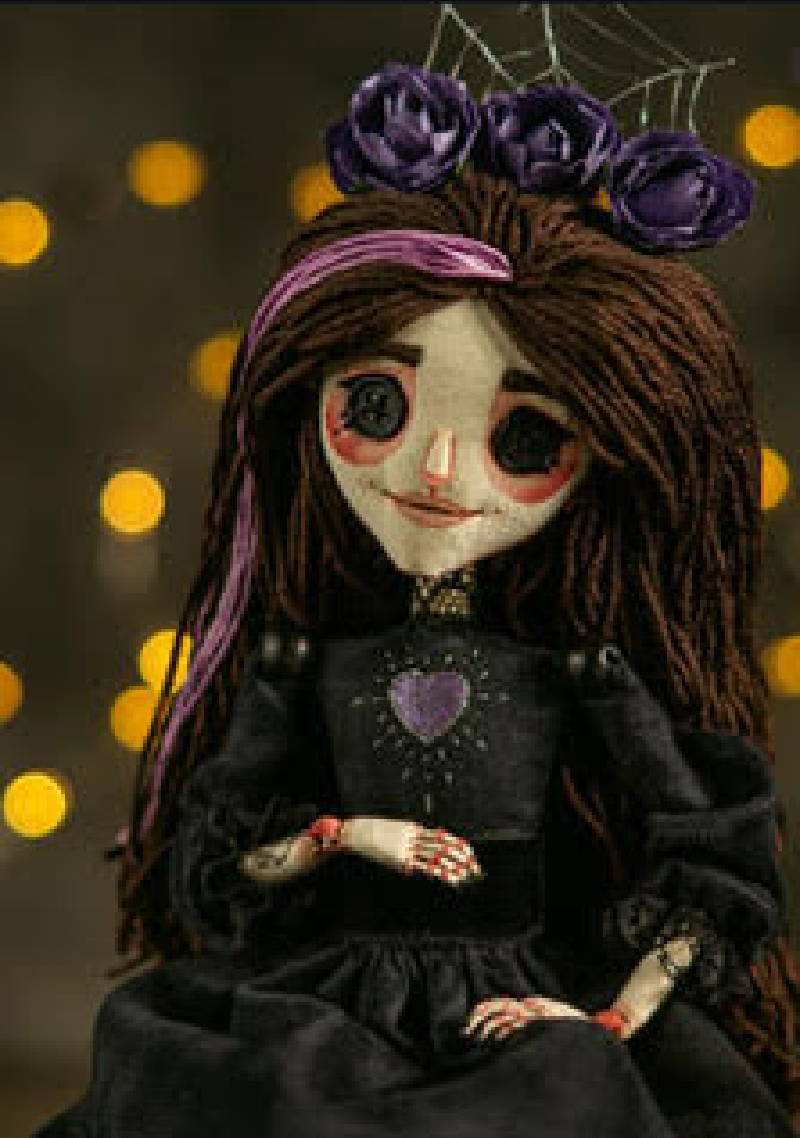
Little Fishy Things brings imagination to life through intricately handcrafted dolls, each with its own story and soul. Inspired by gothic fairytales, Tim Burton’s worlds, and the quiet beauty of Coraline, the artist creates a realm called Whateverland—a peaceful, dreamlike place filled with kindness and wonder. Her work blends craftsmanship and storytelling, offering a heartfelt escape into a world where every stitch carries meaning.
I simply love studying her incredibly detailed creations which seem as if they might come to life at any moment. I hope you enjoy diving into her magical world just as much as I did, dear reader.
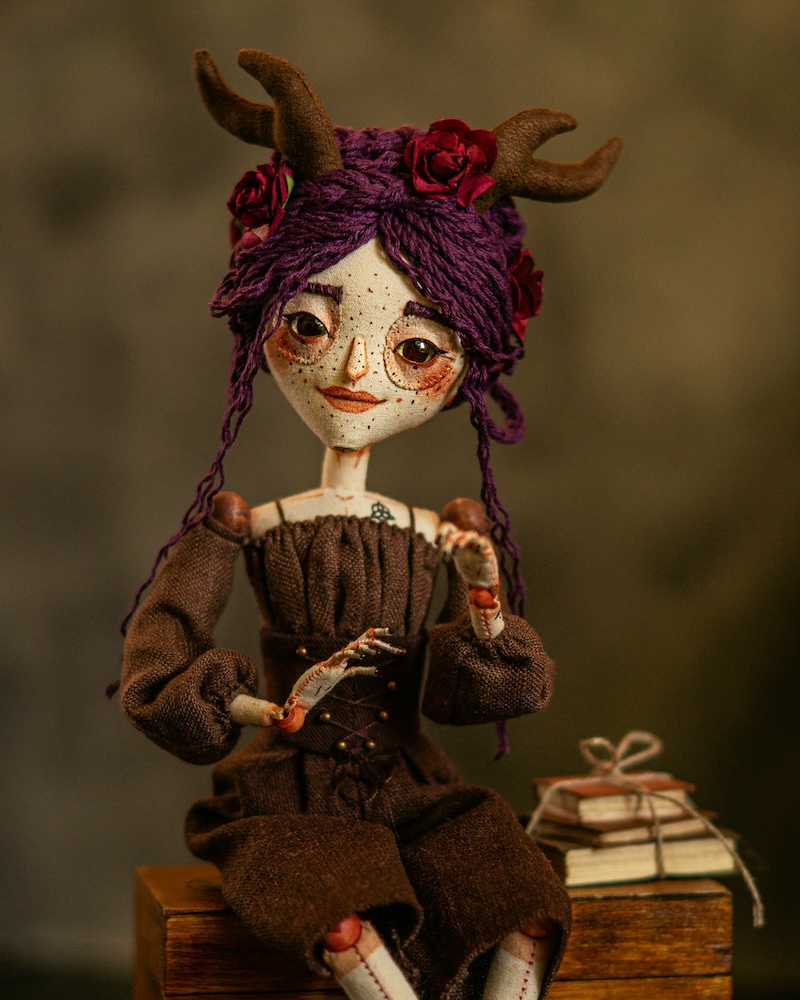
Why do you think art is so important in our daily lives?
It is often said that art in its various forms is a kind of escapism. I’ve always imagined that it probably takes most people to their perfect world, a safe place, which brings a sense of peace and comfort. A world, where one can be anybody, the best version of themselves. I believe that creating art or just surrounding ourselves by meaningful pieces of art is a way of bringing a bit of that world back with us into reality. It not only inspires us, but also gives us that gentle nudge to aspire to be a better person.
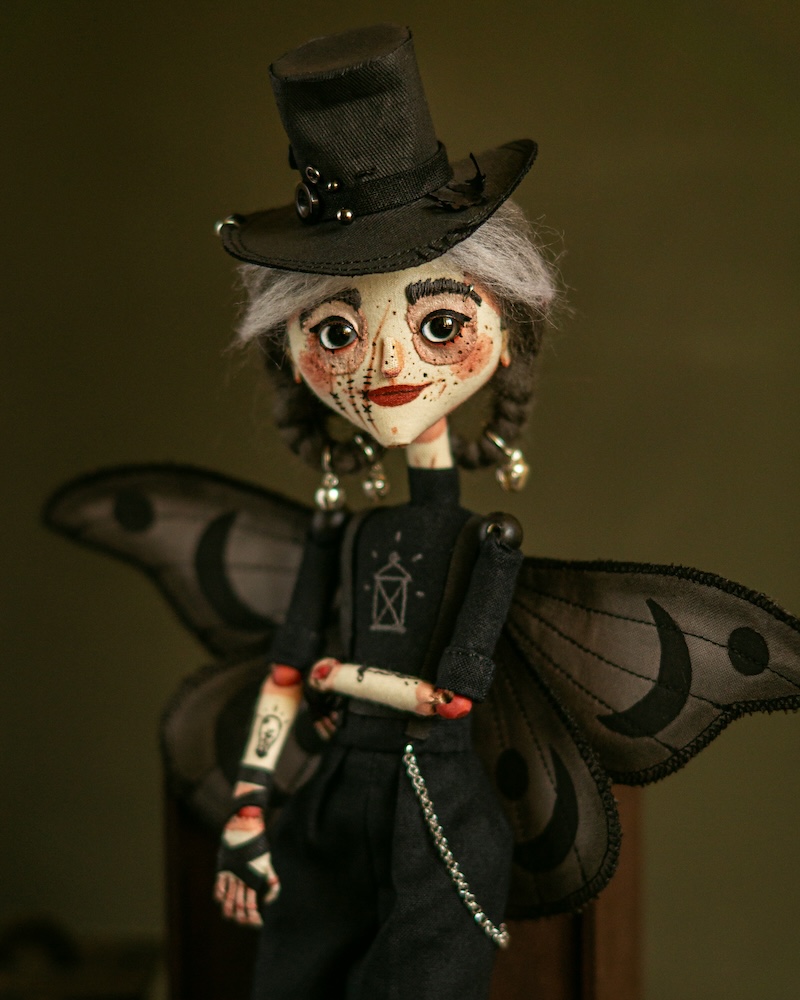
How does creating art make you feel? Is it a meditative or emotional experience for you, or do you see it more as a creative outlet?
To be honest, I’ve never really thought about it. It probably started as a creative outlet, long before I opened my shop. Now that my dolls are basically my livelihood, it is difficult to trace where emotions stop and simple work routine begins. It is my job with its responsibilities and deadlines. Of course, I set them myself, but I take it very seriously. I can not sit around waiting for inspiration or take a sick leave, I am my own strictest boss. My life has changed immensely since I started Little Fishy Things. Looking back, I realise now that every hardship, every emotional shock, which I thought I never truly vocalised (being quite a reserved person), all that experience was poured into my dolls. Looks like it still is a creative outlet. Most importantly, I believe it is incredibly therapeutical that all the negative experience I had was transformed into characters, who are kind and compassionate. They have that childish joy of simply living their lives, experiencing one moment after another and enjoying it to full extent.
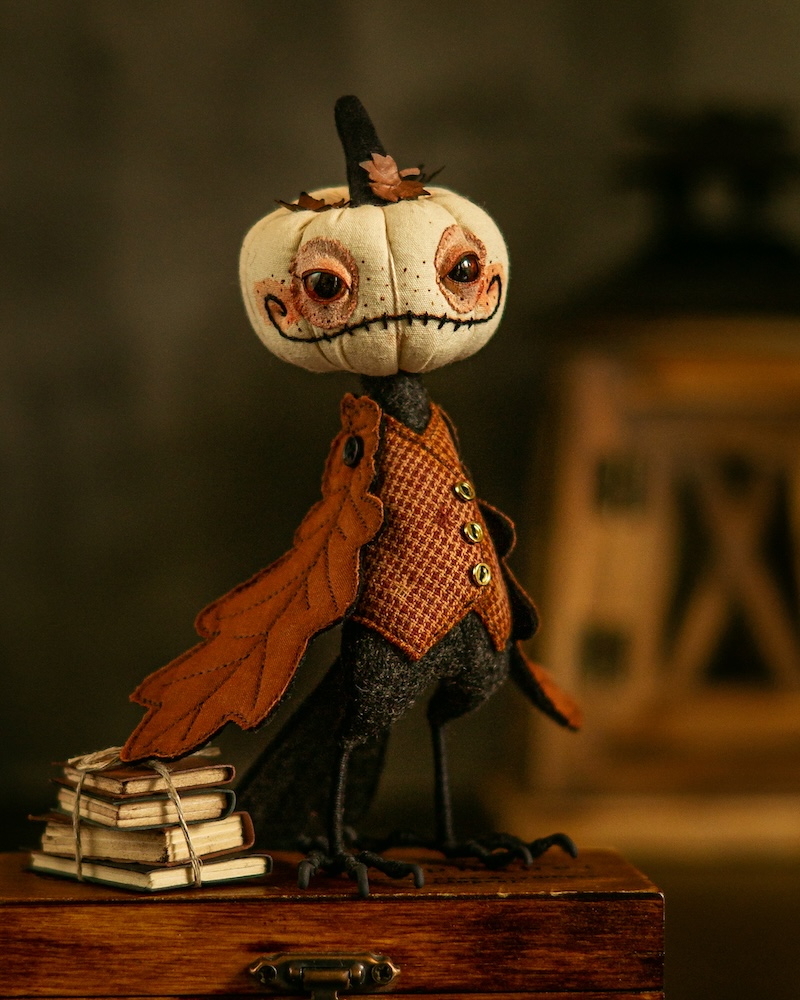
Which artist is your biggest inspiration?
This is an incredibly difficult question, even though one glance at my dolls is probably enough to say ‘Tim Burton’ at once. Like a sponge, I absorb everything that I perceive around me, be that a fellow artist from Instagram or someone world-known, who lived and perished a long time ago. Inspiration is tremendously hard to trace back to its source, because the visual and auditory stimuli settle down in my brain without me realising it. All that information merges together, transforming, biding its time, until an idea just pops into my head seemingly out of nowhere. Lately I’ve definitely been inspired by one particular person, but I am not sure many people would agree with me in calling them an artist. It’s a Dungeon Master from the UK, Mark Sherlock Hulmes, who is an amazing storyteller. A good story is probably a way more powerful source of inspiration for me than any visuals.
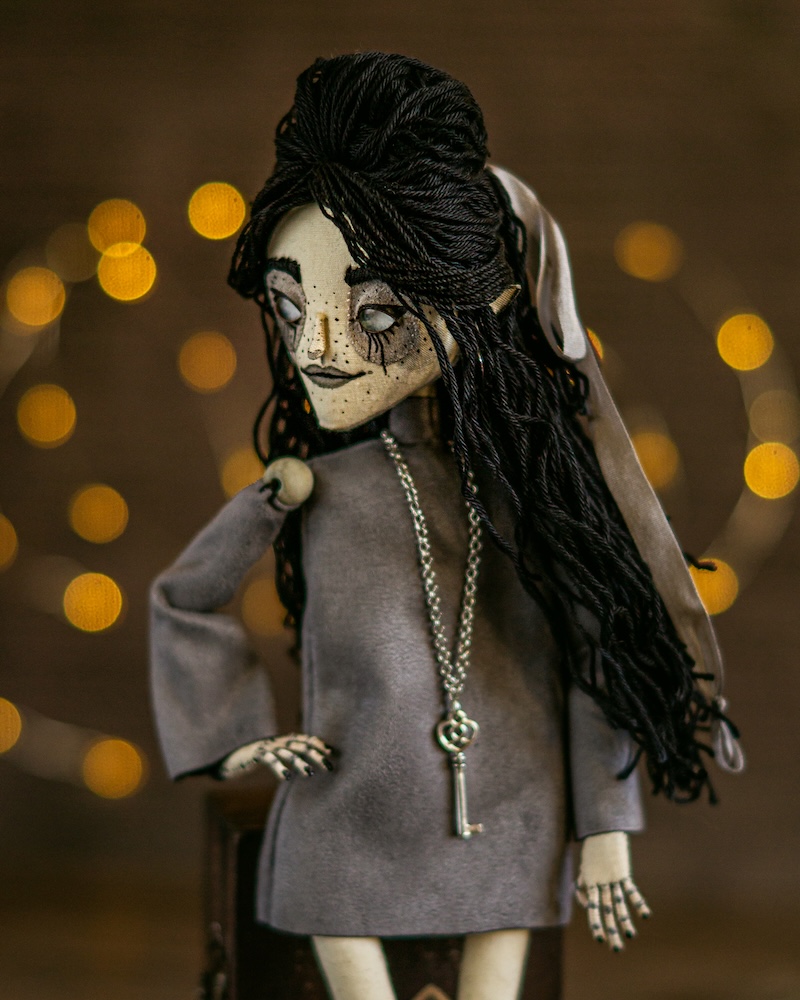
Tell us about “Whateverland”. How did this idea come about?
It seems that I am unable to make a doll without imagining who they are and what their life is like, what they enjoy and what they do for a living. When I was working on the very first three dolls for my shop, their story seemed to be writing itself the more time I spent with them. Friends, travellers, adventurers. There was a writer, a photographer and a wizard. Odd combination, but I found a lot of comfort picturing their wanderings through mysterious lands and what emotional treasures they would bring back home. I always try to be quite thorough, whatever I do. It started with innocent ideas about the kind of terrains they would traverse, how they would use their wit and talent to overcome obstacles, who they might meet. I failed to notice the moment I switched to global planning: how their world works, how it came to be in the first place, what kind of creatures inhabit it, what governmental system they have, what currency they use, in what ways they can earn money, how food is provided and spread… I just couldn’t stop. There is a great deal more in my head than I share on Instagram, simply because I do not have the time to sit down and put it all in writing properly. I sometimes consider writing a book of short stories, but a proper story needs a conflict, which is an alien concept in Whateverland. Besides, I can not imagine that I will have enough time to do that in the foreseeable future. Thus, I settled on short ‘sketches’ for every doll I make, just a few sentences to provide a bit of context and some background information, which would bring out the personality of the character in question.
People who follow my journey on Instagram closely, if they have been thorough, would have gathered the following information over the years.
Whateverland is a Kingdom in another dimension, situated on a planetoid Neticams-52. In Earth terms, it was founded nearly two hundred years ago by Watawa the Wise, who became the first King, so it would be more correct to say ‘Watawa’s Land’, not ‘Whateverland’ [over time language changes in mysterious ways, who are we to judge]. The first settlers arrived through a Portal, a magical giant lantern-like artefact, which transforms anyone who steps in. It preserves the living Soul [Seelen], gives it a new body and basic knowledge about the world it is about to emerge in. Only the purest of heart can stumble upon the Portal in the first place, so the entry point is magically protected. The exit in Whateverland is guarded by Sir Curatrix Papilio, a magnificent moth-like creature, whose job it is to greet the newcomers and help them grasp the scope of what had happened to them. There is a nearby lodge [Kwel Loch Lodge], where new citizens can stay until they find their calling and get a dwelling of their own. There are several major locations, always ready to welcome any creature with open arms. Further descriptions would definitely lead us too far away, so without going into too much detail I should probably say that Whateverland is a Kingdom of peace, camaraderie, simple joys and celebration of life in an oddly gothic and Victorian visual setting. Not only the concept of conflict, but also the concept of Death is very exotic here. When a creature decides to… stop and move on, they travel to Lake Excedere, where a self-propelled boat takes them to the eternal fog of the Beyond. However, once a year, on Excedere Reunion, the ghostly forms of those who departed can return to the Kingdom and join their loved ones in great festivities.
I apologise for the long description, it probably makes up for my short answer on question #1. This is a glimpse into my safe space, my happy place. From the comments I get on Instagram I gathered that Whateverland speaks to many hearts. The idea that this little world is a comfort to someone makes me feel most fulfilled.
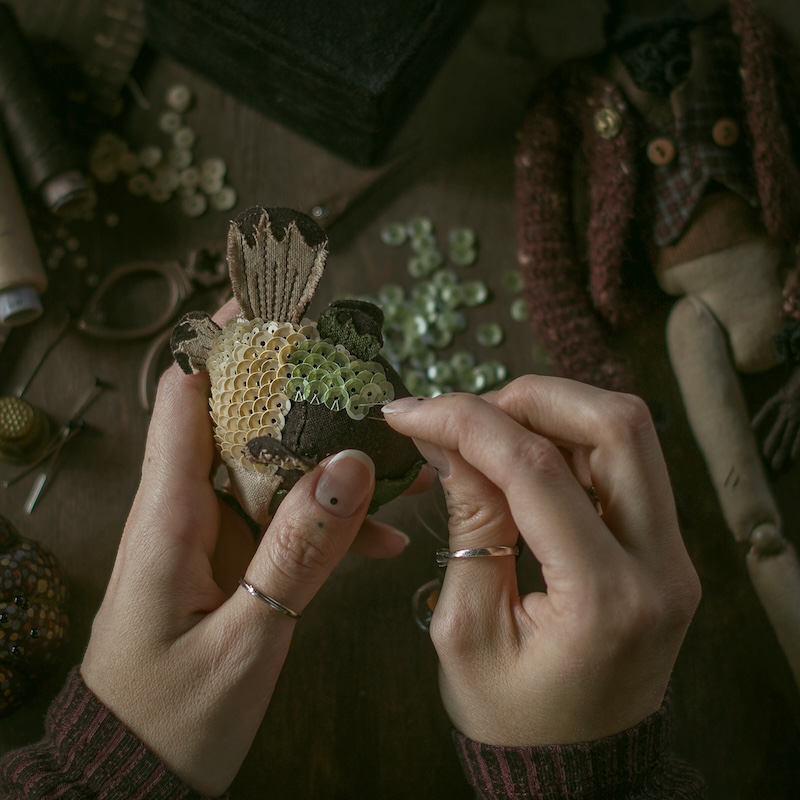
Your works of art are so beautiful and so intricately crafted. Give us a glimpse into your process. How long does it take from the first idea to the finished project? What are the steps you have to take? What materials do you use the most?
Thank you for your kind praise, I really appreciate it 😊
I begin working on a new doll the moment I finish the previous one. I do not always have a specific idea from the start, but since the basic parts for most of my dolls are the same, I can commence nearly clueless as to where this character will lead me. Depending on the complexity of the doll the whole process usually takes 3-5 days, I work 8-10 hours per day. I find it convenient to prepare all the small parts first, like the nose, the eyelids, the hands. After that I cut out and machine stitch all the body pieces. When everything is nicely stuffed and assembled, I focus on picking the fabric for the outfit. This is the very stage at which the beginnings of an idea for the new character finally acquires shape and solidifies, as I stumble upon some particularly curious piece of fabric I really want to use. In most cases I gravitate towards various blends of cotton, tricot, corduroy, all those wonderfully cosy fabrics of dark autumn colours. Only after that I decide on the colour of their eyes and hair. It gives me most satisfaction to make sure that all of my materials complement each other, both in colour and texture. Then I work on the face, paint the whole doll, stitch the outfit and dress them. Finally, I attach the hair and add tiny details and accessories. I believe that small things like that are essential to creating a believable character with distinct personality and a backstory, parts of which could be noticed in those very details.
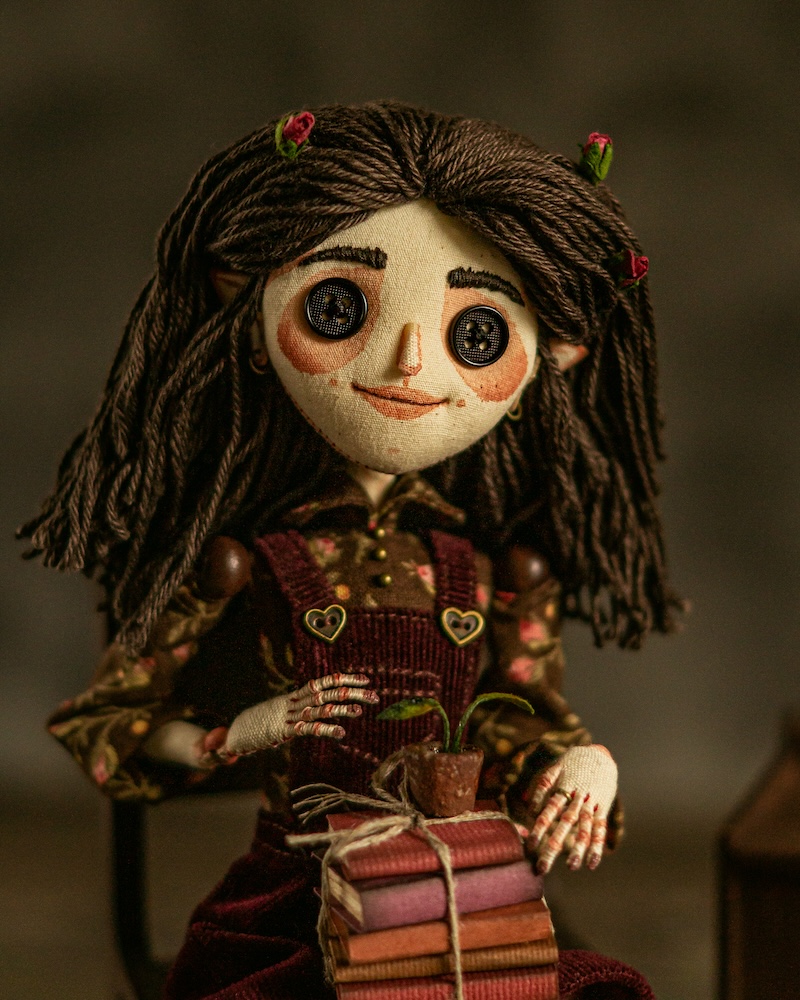
When I look at your creations, it instantly makes me think of fall. More specifically, but not solely, Halloween. Tell us why the movie Coraline was such a big influence on you, and which other movies inspire your work?
I am yet to meet a person who does not like Coraline. Plot analysis and deeper meanings aside, it is a visual paradise. The opening credits alone are a masterpiece, I got hooked from the very start. Funnily enough, when I watched it for the very first time even in my wildest dreams I could not have imagined that I would be making a living by creating dolls. Back then I was an amateur scrapbooker with an unhealthy fixation on buttons. I even had quite a sweet little collection, most of which ended up on handmade postcards.
As for other inspiring movies, my answer definitely won’t come as a surprise. Nightmare Before Christmas, Frankenweenie and the Sleepy Hollow spread their roots so deeply into my subconsciousness, I am sure they will always influence my art one way or another. I am also very fond of Stranger Things, and as I am typing this, an idea for my next doll has just popped up in my head 😊
I have a special collection called ‘Whateverlandian Cosplayers’. Many citizens of the Kingdom [I know they are technically ‘subjects’, but in this world they are citizens] find the mass culture of Earth truly fascinating. Naturally, every now and then they borrow some ideas and tendencies. Cosplay is one of them, as well as the characters they cosplay. My most recent one is Jinx from Arcane, cosplayed by Jenevelle Sagax, an Engineering student of the Royal Academy. This way I can express my appreciation of certain famous characters and keep the story of the Kingdom going. I find doll cosplay a very sweet idea, as I don’t even have to be too accurate. After all, maybe my Whateverlandian is an amateur and decided to do a simple closet cosplay. The possibilities are virtually endless.
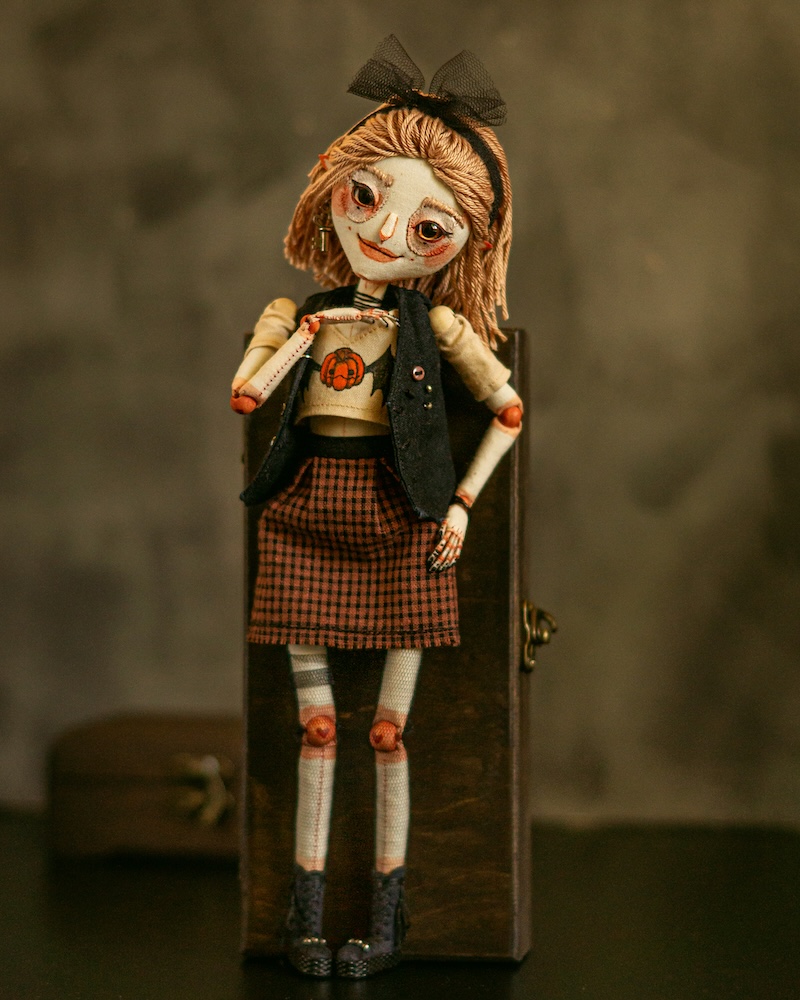
Each one of your figures has a name and personality. How do you choose the details for each one, and do you have a favorite?
As I mentioned before, in some things I tend to get annoyingly thorough. It gives me immense satisfaction when all the details fit together like puzzle pieces. Once I know who my new character is, I want to reflect it not only in their look or accessories, I spend a silly amount of time choosing the name as well.
Sometimes a name defines my doll quite literally. For example, Kello Uhrwerk, who is a clockmaker, is called Clock (Finnish) Clockwork (German). He has tattoos with gears, a rather large pocket watch on a chain and even uses an alarm clock to decorate his suspenders. He replaced one lens on his glasses with a big gear as well, it helps him focus on tiny details.
Other times I tie in my own emotions and associations. Matilda Fraser owns a sweet little shop she named ‘Another Chance’. Basically, it is a shop of various second-hand goods, but she always reworks the original items into something new and whimsical. Her love of creating stuff from various scraps is reflected in her outfit: that large bow made of old tulle curtains, a piece of twine she uses as a choker, someone’s old key is her single earring. Matilda cropped a torn T-shirt and drew a cute pumpkin with bat wings on it. She shortened somebody’s old skirt and left the edge raw, adding a decorative seam to prevent it from fraying too much, because she prefers chaos that can be controlled. Finally, her favourite vest she never parts with used to belong to Professor Pascal Pansophic, Headmaster of the Academy of Whateverland. It is obviously too big for her, and it has seen better days, but she will keep patching it up until all the threads that make the fabric simply disintegrate. ‘Matilda’ means ‘mighty in battle’, and I imagine that she is fighting against time to preserve the items brought to her shop and give them a new life. ‘Fraser’ means ‘strawberry flower/plant’, and I chose it merely because her hair is strawberry blonde, and I find it simply adorable.
I get quite attached to my dolls, and for me picking a favourite doll is like picking a favourite child. However, I do have deeper emotional connection to some of them. If I had to pick just one, it would probably be Rhiannon Mossig, breeder of Fungipuffs [hassock-like garden dwellers, they produce magical dew used in many calming and sleep potions].
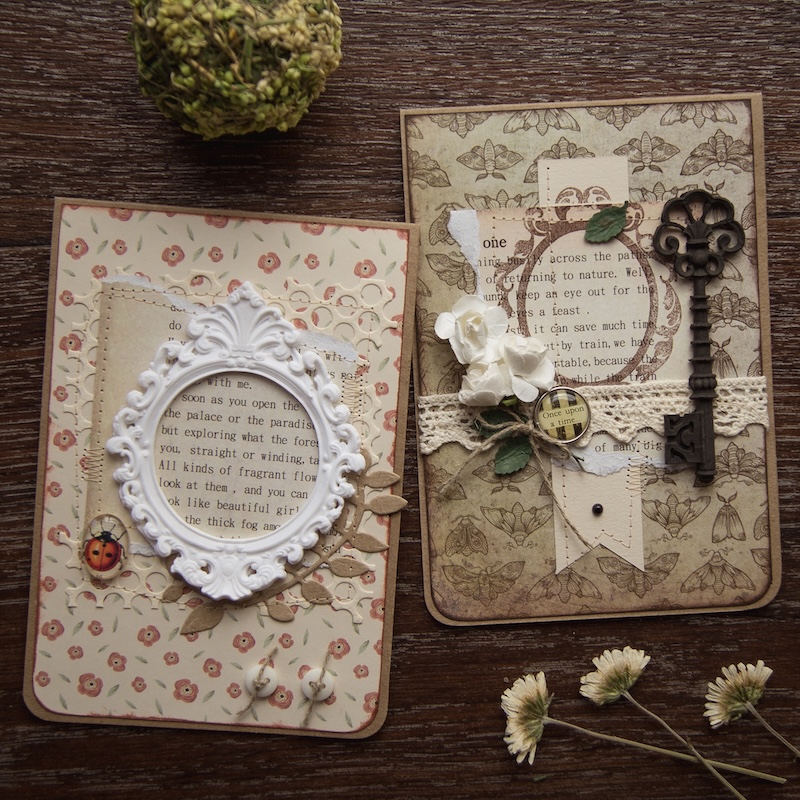
Tell us about your background and upbringing. Where did you grow up? Where are you now? When and how did you find your way to the artist life? How did you go from scrapbooks to dolls?
I was born in the Soviet Union and spent my childhood in a small settlement under Murmansk [North-West of Russia, a couple hundred kilometers from the border with Finland]. When I was a teenager, my family moved to Volgograd [former Stalingrad], a large city in the South surrounded by vast steppes. Even though I left that tiny settlement nearly three decades ago, the magnificent nature of the North has a very special place in my heart, even now it influences my art enormously. I still live in Volgograd and due to various reasons I don’t believe I’ll ever be able to move anywhere else. On the bright side, I have everything I need in my head: my memories and my imagination.
As someone who lived through the 90s in Russia, I believe that a person should be able to make most of the things they need with their own two hands. That is probably what pushed me towards the creative path initially. My mother often sewed and knitted clothes for me and my sister. My father always did all the home renovation stuff himself, whether it was laying bricks to move an inner wall in our apartment, rewiring, plumbing, plastering or even making bookshelves out of an old decrepit wardrobe. I grew up with the idea that a person can accomplish anything, if they put their mind to it. Frankly, accomplishing anything has become a lot easier with unlimited Internet walking into my life when I was a student at a local University.
After graduation I had no clue what to do with my life, so I stayed as a professor for a year, teaching English, Translation and History of Translation. I was obviously a lot more enthusiastic than my students, and seeing their complete lack of interest I left, disappointed. I jumped through several boring office jobs and after another quitting I stayed home with my parents for several months. That was the moment when I discovered Etsy. It might sound silly, but that blessed web-site opened my eyes. I had no idea people could actually make money by selling the stuff they make. I realised that it was exactly what I wanted to do, a dream life. Problem was, there was nothing I was particularly good at. Scrapbooking took my fancy, so I decided to try it. Creating compositions out of various bits of paper taught me a lot, especially in terms of colour and patterns combinations. This came in really handy when I switched to dolls.
Scrapbooking was an expensive hobby, so I got another boring office job. I often made little plush toys as gifts for my colleagues, and eventually one of them started to ask me for something particular. After I made her a Tilda deer, she told me she believed that dolls were really my thing and I should stick to it. At that moment something just clicked in my head. I’ve never really considered making dolls, even though I was obsessed with sewing doll clothes and making miniatures up until I got to high school. Scary as it was, I decided to try with hardly any skills or ideas. It just felt like it was a ‘now or never’ situation. My dream life was still waiting, I never abandoned that thought. Soon after that conversation I quit my last office job and never looked back.
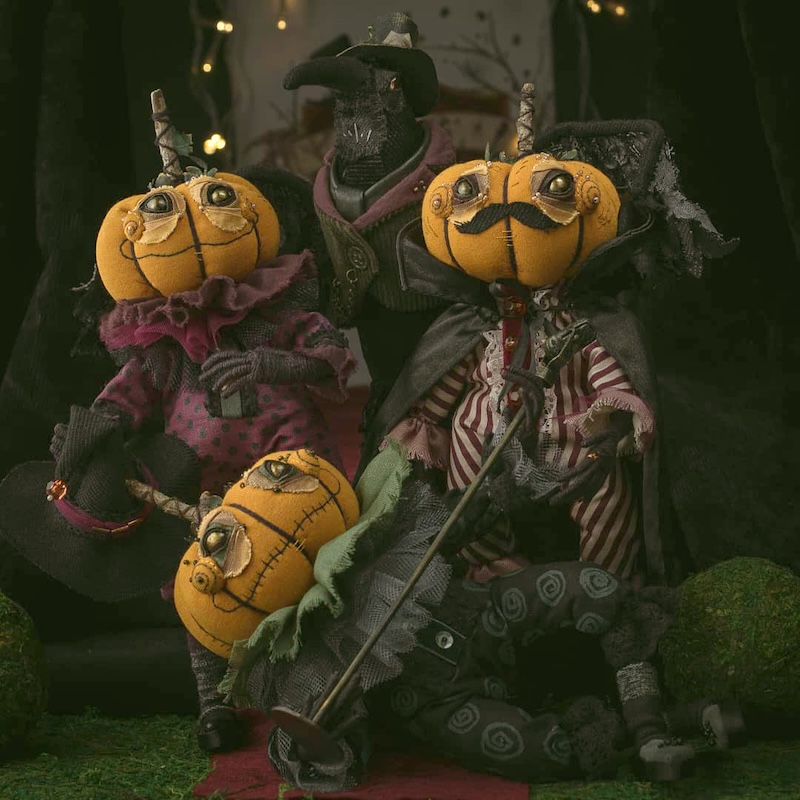
On top of creating your amazing pieces, you also create stop-motion videos. What made you start those videos, and how long does it take for you to create one of them?
Sadly, I haven’t created any new videos for several years, mostly due to lack of time, but also due to various technical issues I’d rather not bore anyone with. However, the next part is a truly nice walk down the memory lane. The first stop-motion video I ever made was an opening to the Spooks’ Variety Performance. Vincent Graves, Master of Ceremonies, calls the pumpkin-headed brothers Oscar, Alistair and Johnathan Spook to the stage, steps aside, and the stars of the evening emerge one by one, illuminated by flickering fairy lights. This video is only 25 seconds long, but it took three days to shoot. It is not very smooth, and at one point the camera changes its angle, because I accidentally stumbled over the tripod on day three after having barely breathed around it for two days. I made a lot of mistakes, but learned a great deal too. Next videos I made took only a few hours to shoot. My dolls are not really suitable for stop-motion animation. Nonetheless, both the process and the result give me enormous satisfaction.
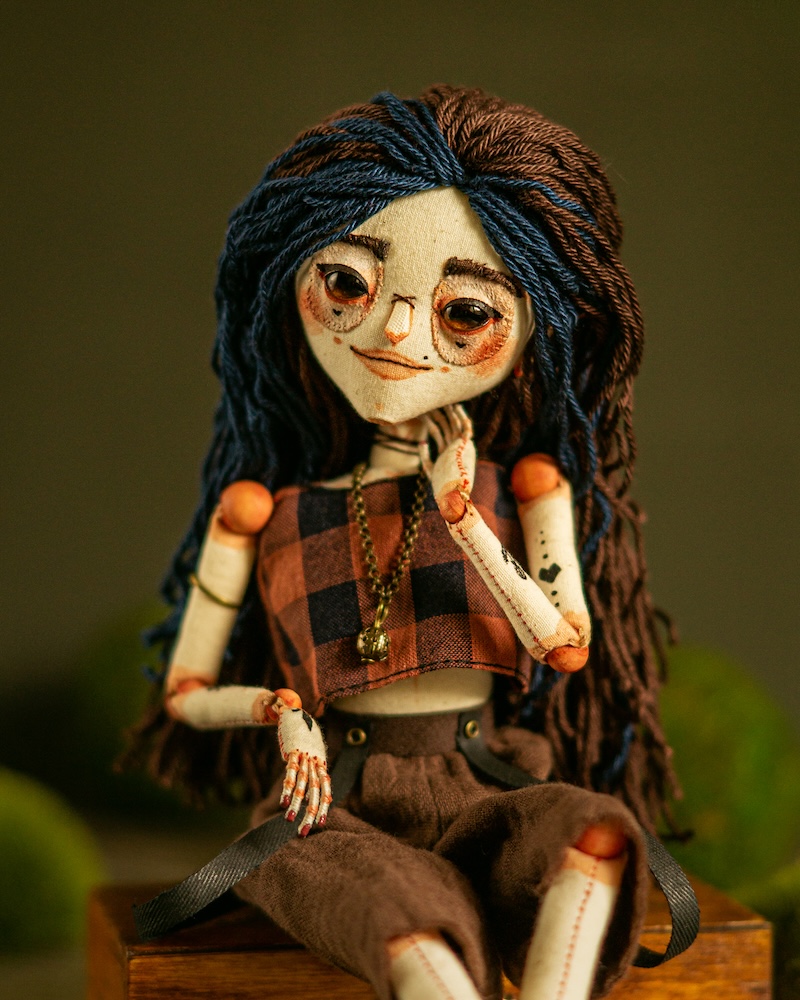
What are your plans for the future?
Planning for future is something I tend to avoid, because lives can change immensely even in a very short period of time. In an ideal world it would be lovely to have more time to study illustration and become fairly good at it. It would be splendid to write a book of short stories about Whateverland and be able to illustrate it myself. Finally, it would be tremendous to make longer stop-motion videos with my dolls, animate their faces, hire good voice actors. This will probably never happen, but I like to entertain myself with the idea from time to time. One thing I know for sure. I can not imagine my life without making dolls and I want to keep doing it as long as my fingers can hold a needle without shaking too much.
|
|