Artist Interviews 2025
Lucas Goubert 
By Johnny Otto
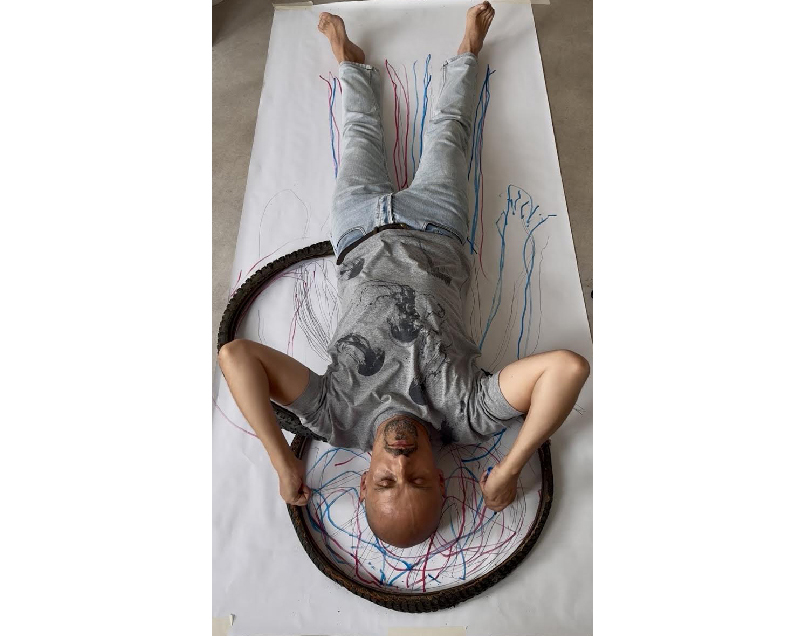
Your artistic “birth” began with a sketch inspired by Gabriela Mistral’s Ultimo Arbol in 1995. What drew you to that poem, and how did it shape your first vision as an artist?
I discovered Gabriela Mistral when I was an adolescent. Back in Colombia, I was a very lonely and “weird” young man. In Ultimo Arbol I found a verse that provided explanation and solace: “ the lonelinesses I chose,the lonelinesses that was given to me…”…
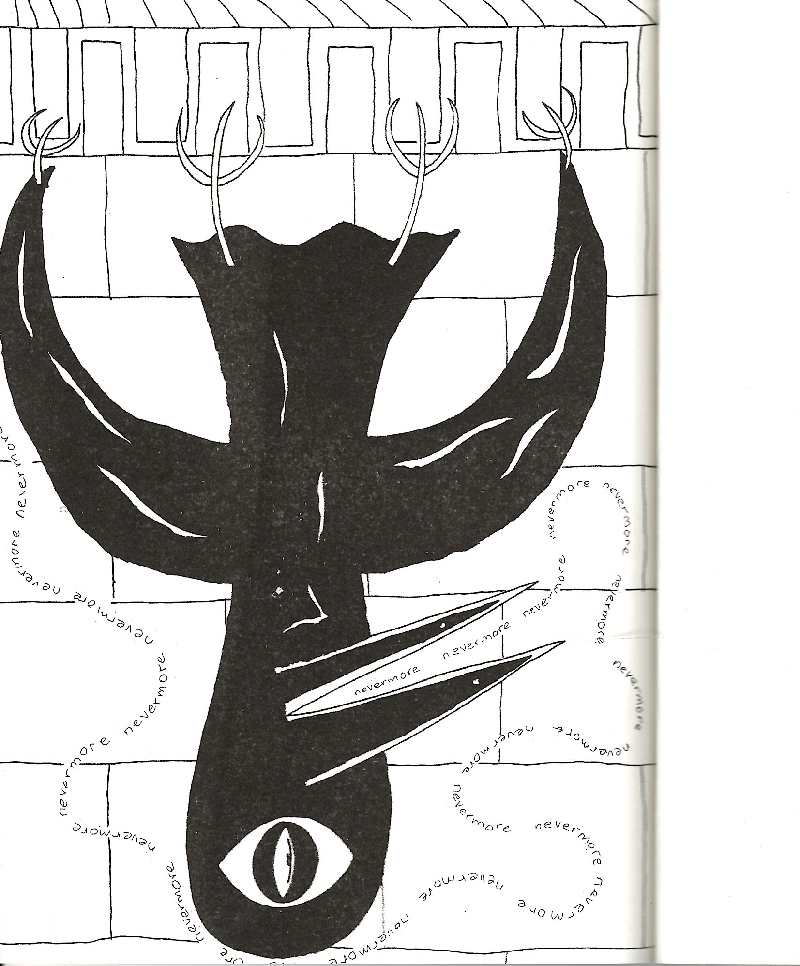
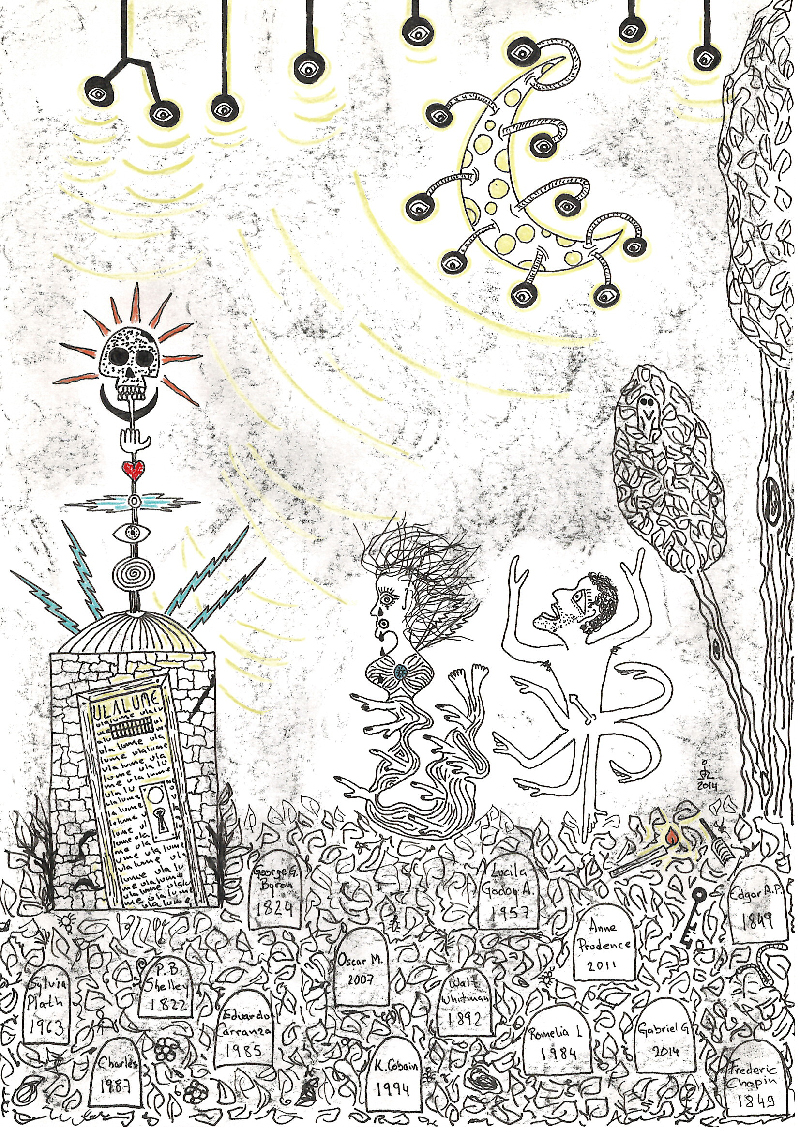
Several of Mistral’s poems became somehow my mantras and I repeat them constantly. Other poets that are super important in my life and art are Edgar Allan Poe, Lord Byron, Alfonsina Storni, Eduardo Carranza… Their passionate and poignant poems became my laws and mi bible.
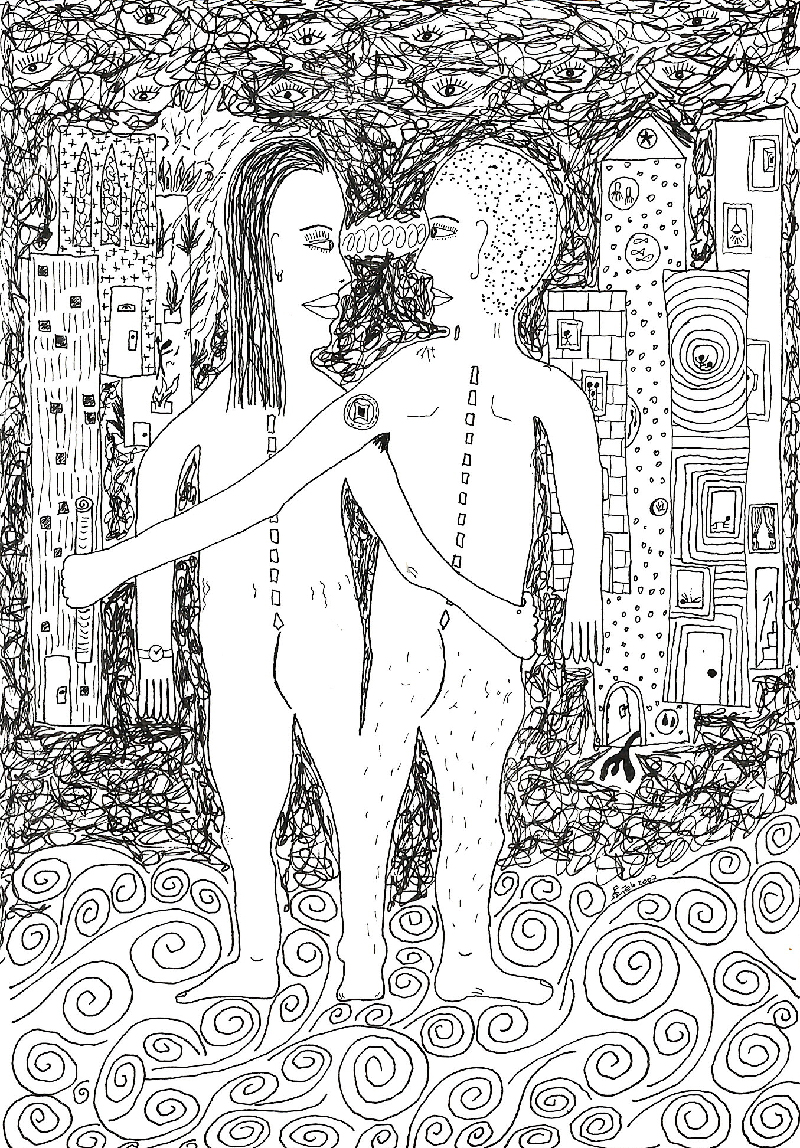
You’ve lived between Bogotá, Paris, and Normandy. How do these three places influence your creative process and the themes in your work?
I lived in Bogota, London, Paris, Madrid and Algiers. But the 2 most important places for me are Bogota and Paris. In Bogota I find passion and disorder. Colours everywhere! Noises that become music and spontaneity ever-present. Bogota’s violence creates profound friendship and a constant “memento mori” that pushes you never to procrastinate in life, in love, in passion, in expression… In Paris, I constructed all my adult life and more importantly I learnt the meaning and the depth of love. Both cities represent for me different faces of life. Their differences bring power and contradiction to my creative process.
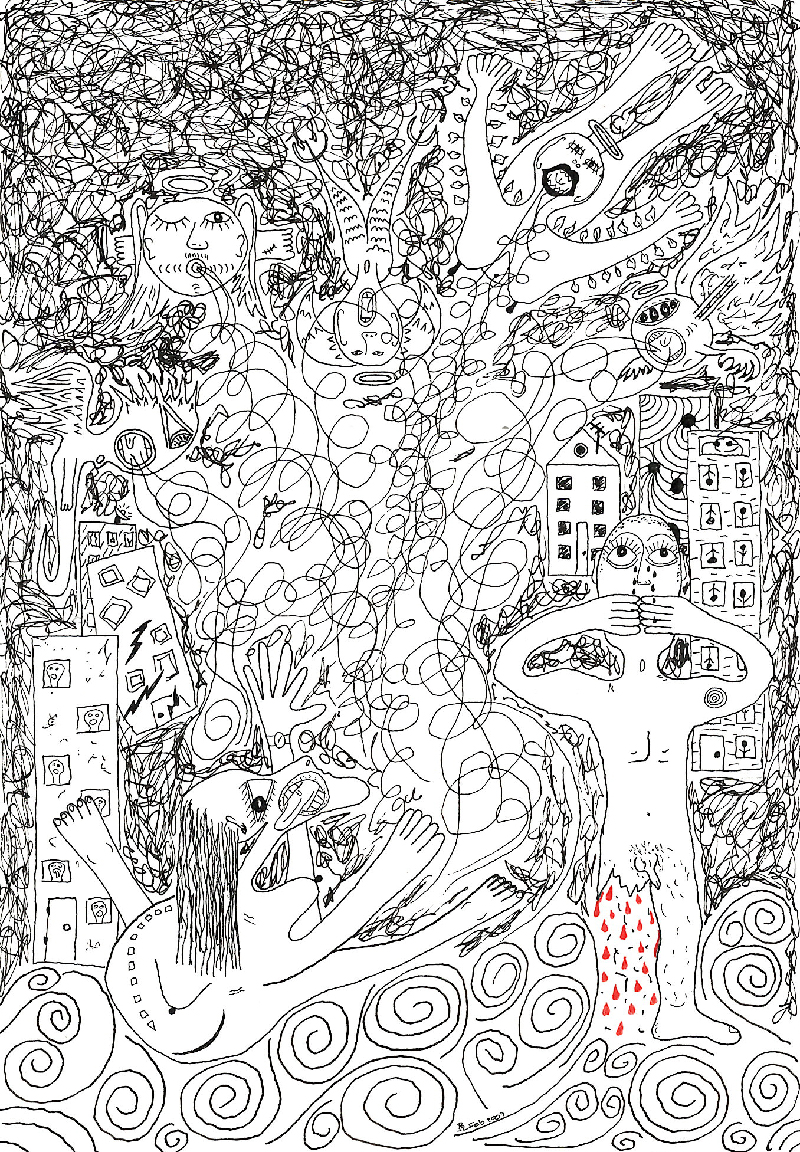
The pseudonym Lucas Goubert carries both personal and playful origins. What does this identity mean to you today as an artist?
Lucas Goubert set me free! He is joyful, lives and expresses his desires and passions without shyness, makes jokes about himself and about life, he is spontaneous. Lucas Goubert is daring and adventurous and like in Alfonsina Storni’s poem, his heart is a lion that has appetites instead of reason and he is not afraid to shout it loud and clear.
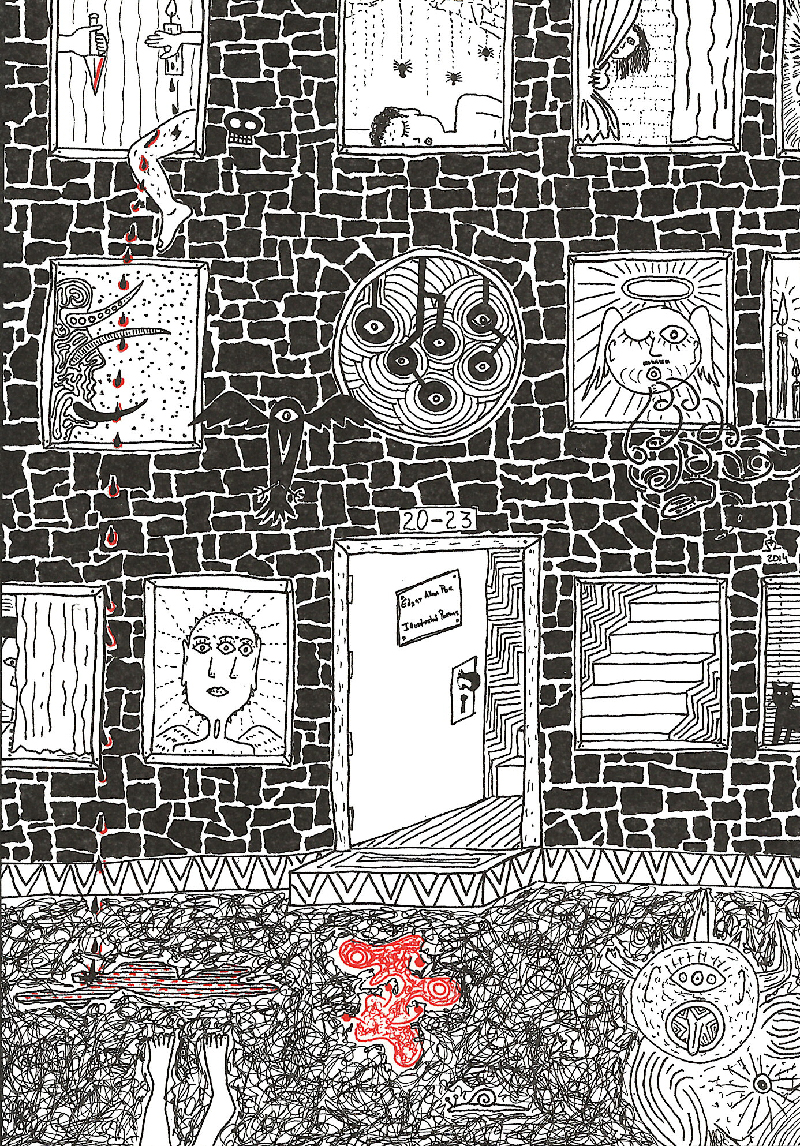
After many years in finance, your burnout in 2024 became a turning point. How did that moment of collapse transform your relationship to art and to yourself?
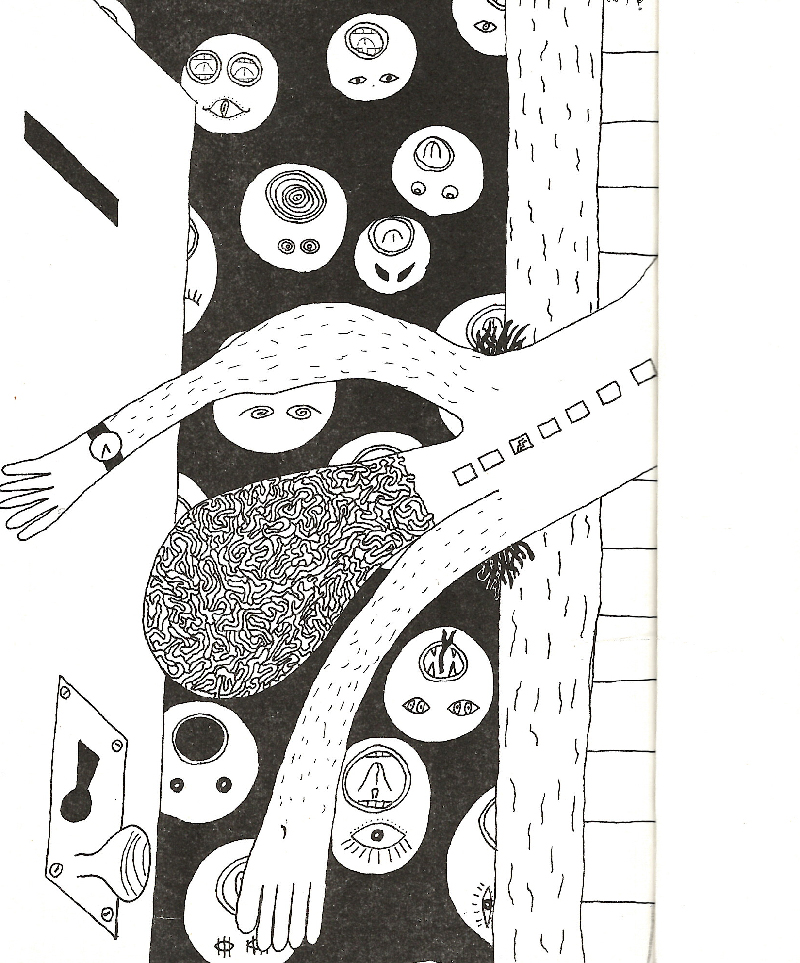
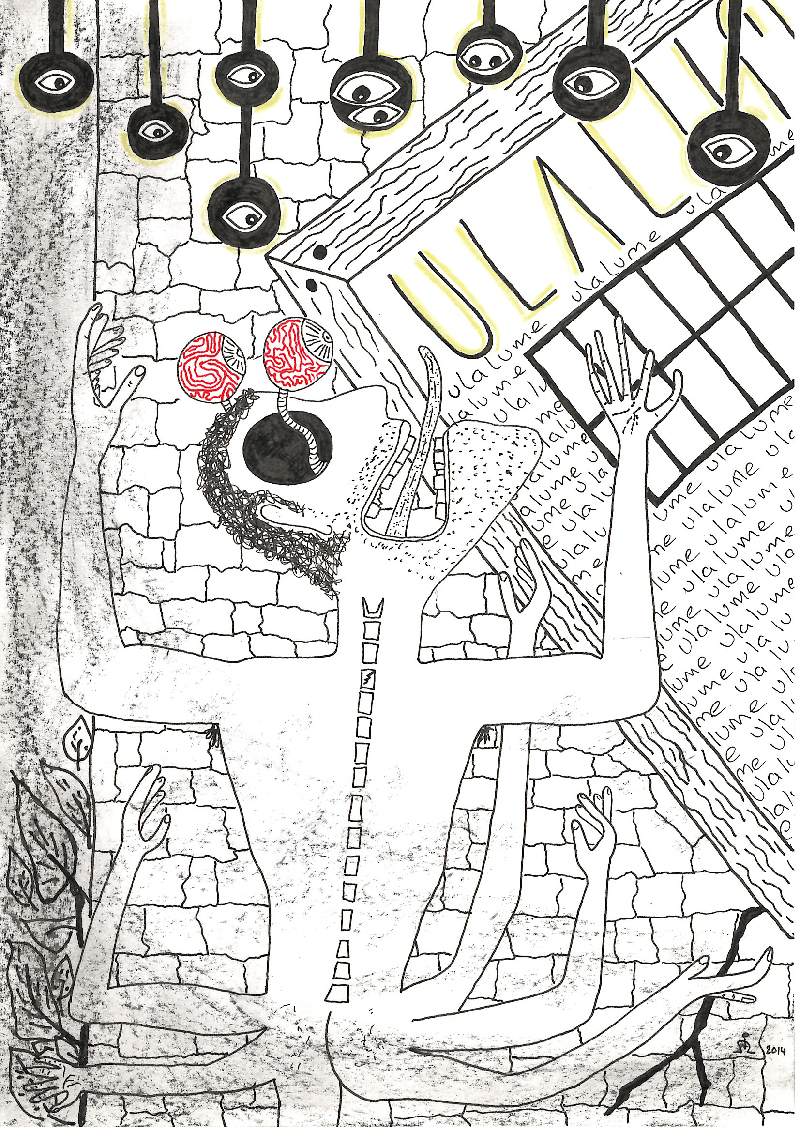
After collapse, after my brain was disconnected, after my tongue was paralyzed and my body trembled, the response was expression. Art was my own personal psychoanalysis. In the characters that I drew or painted, you could see anguish, suffering and struggle. Their eyes were restless, they had scars, several of them had suffered trepanations or other invasive surgical procedures. But all of them had colours, many colours, and inspite of their dire situations and pain, they kept their “auras” and they maintained their convictions. The collapse showed me more vibrant colours and made me realize that in the traditional banking world my colours had been watered down and tamed and that it was the moment to vibrate and resonate. Art was my salvation.
Collage, painting, and drawing are now your focus. What does each medium allow you to express differently?
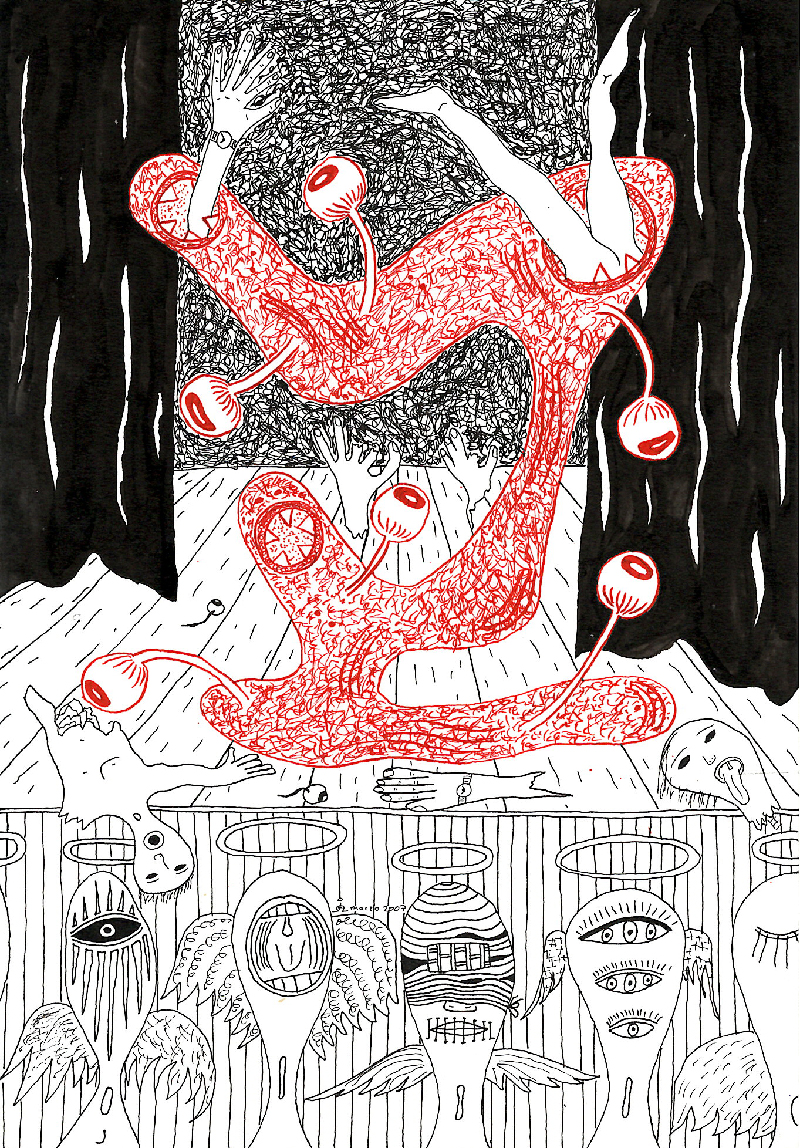
Now I am doing more and more installations and performance. I like to combine drawing, painting, and collage to “build” spaces in which multiple elements interact and resonate with each other. And then I make a performance in the “scenery” that the installation has created. The 2 most recent projects I have done are “Fuera de Ley” (out of law) inspired by a poem by Alfonsina Storni and “Cinco Bocas” (five mouths) inspired by a poem that I wrote in Venice 20 years ago. By mixing techniques and creating installations for performance I give life and movement to my art. I started drawing only, but the drawings, even if very expressive, were flat and lacked movement. Painting brought colours and texture. Collage brought depth and playfulness. But installation and performance are bringing movement, life and unexpected reactions and interactions with the public.
Your story reflects both resilience and reinvention—artist, banker, performer, partner. How do these different identities find their way into your creative practice?
When I was a child in Colombia I was the “nerd” who was constantly bullied by other children. When I was 16 I tried to commit suicide but 2 poems, “Credo” by Gabriela Mistral and “Invictus” by William Ernest Henley saved me. The verses of these poets gave me hope and light. They provided a purpose for my life as an individual (banker, friend,, lover, artist…). My creative process is always tied to the verses in poems, in songs, in mantras, in prayers, in words of love that I have heard from my parents, from lovers, from friends or from my loving husband.
Love also plays a role in your narrative, particularly your partnership with Cupix LevX. How does love and collaboration influence your artistic vision?
Love is the key to everything I do. Love for my father, the dentist, who taught me the beauty and power of words and the importance of passion in life. He gave me as present the first book of poetry I read. Love for my mother, the pianist, who taught me all I know about harmony, loyalty and sacrifice. Her music is present in every creation I do. An Immense Love for my Cupix LevX, the engineer, who I describe as my partner in gravity: each other attracted to each other in equilibrium, rotating in resonance like two celestial corpses traveling and discovering the Universe.
Looking forward, what themes or projects are you most excited to explore in this new chapter of your career as a full-time artist?
I am currently working in 3 projects. I will work and live in Berlin for the next 2 months developing an installation/performance called “mon corps est devenu encombrant” (my body became cumbersome. The topic relates to all the people and individuals that become cumbersome to society and that are excluded from it. They can be old people that are forgotten by their children, homeless people, refugees, etc. The other 2 projects are related to a heart which pretends to be happy while he is in disarray (inspired by a poem by Eduardo Carranza) and a collaborative project with a wonderful artist and friend in which we will treat in a massive and complex installation the “Identity”. These projects will all include multiple artistic techniques, installation and performance (and certainly verses and poetry). Stay tuned!
|
|