Artist Interviews 2025
Pang Torsuwan 
By Johnny Otto
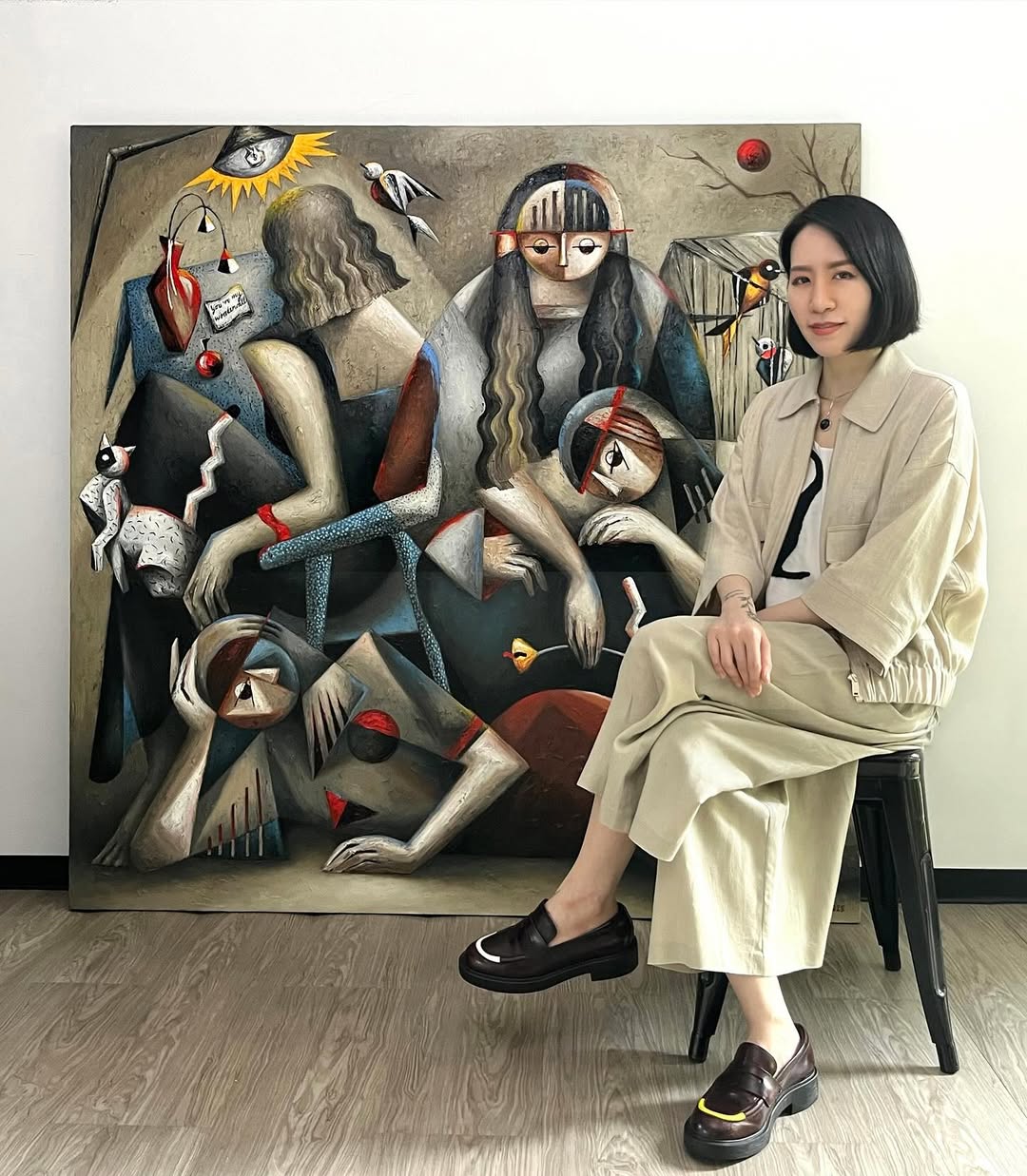
The Warm Geometry of Pang Torsuwan
In an art world often dominated by irony or detachment, Pang Torsuwan’s paintings stand out for their sincerity and quiet gravity. A self-taught artist working in Bangkok,
she draws heavily from the fractured vocabulary of Cubism, but what she creates is far from pastiche. Instead, her canvases transform Cubist structure into something warmer, more lyrical, and distinctly feminine.
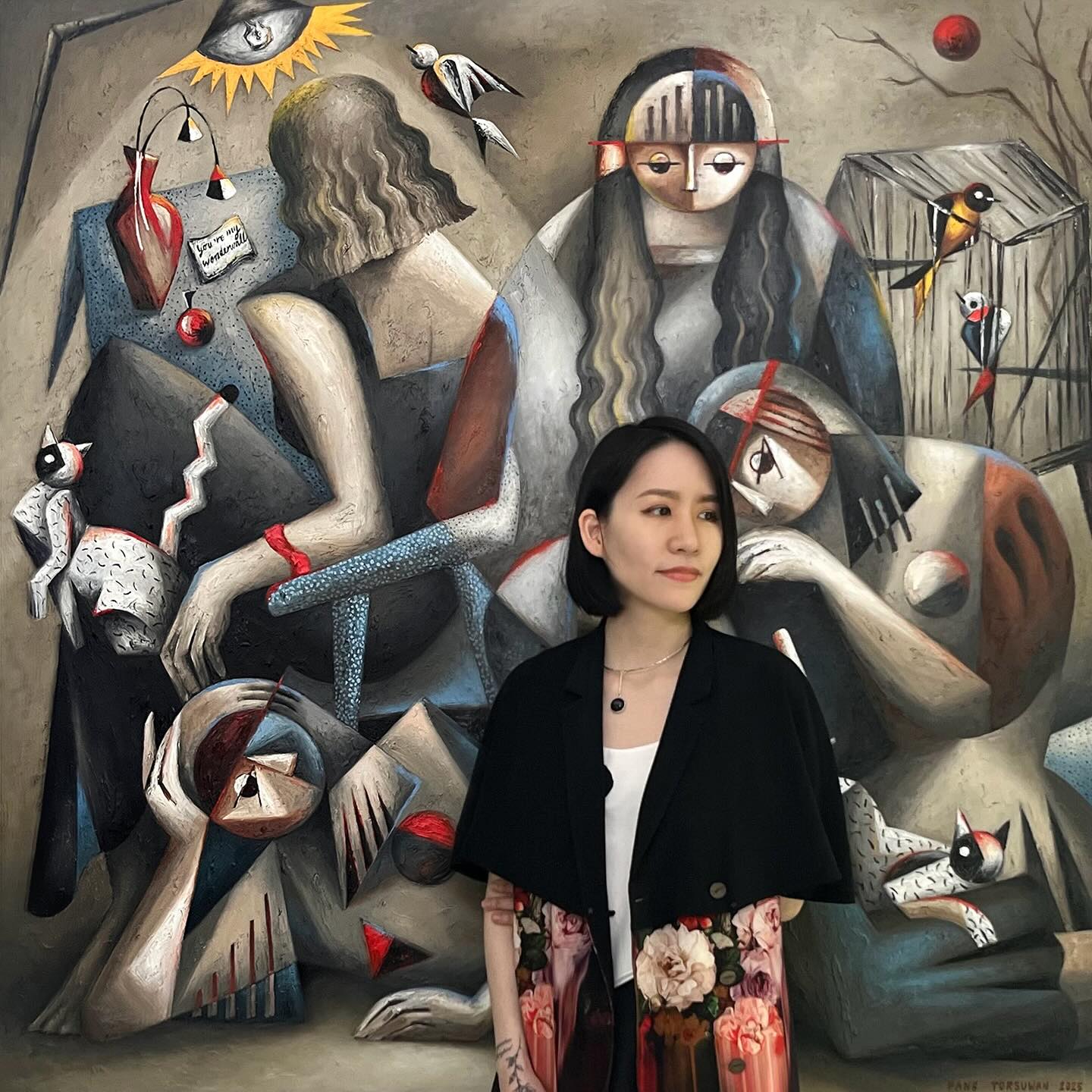
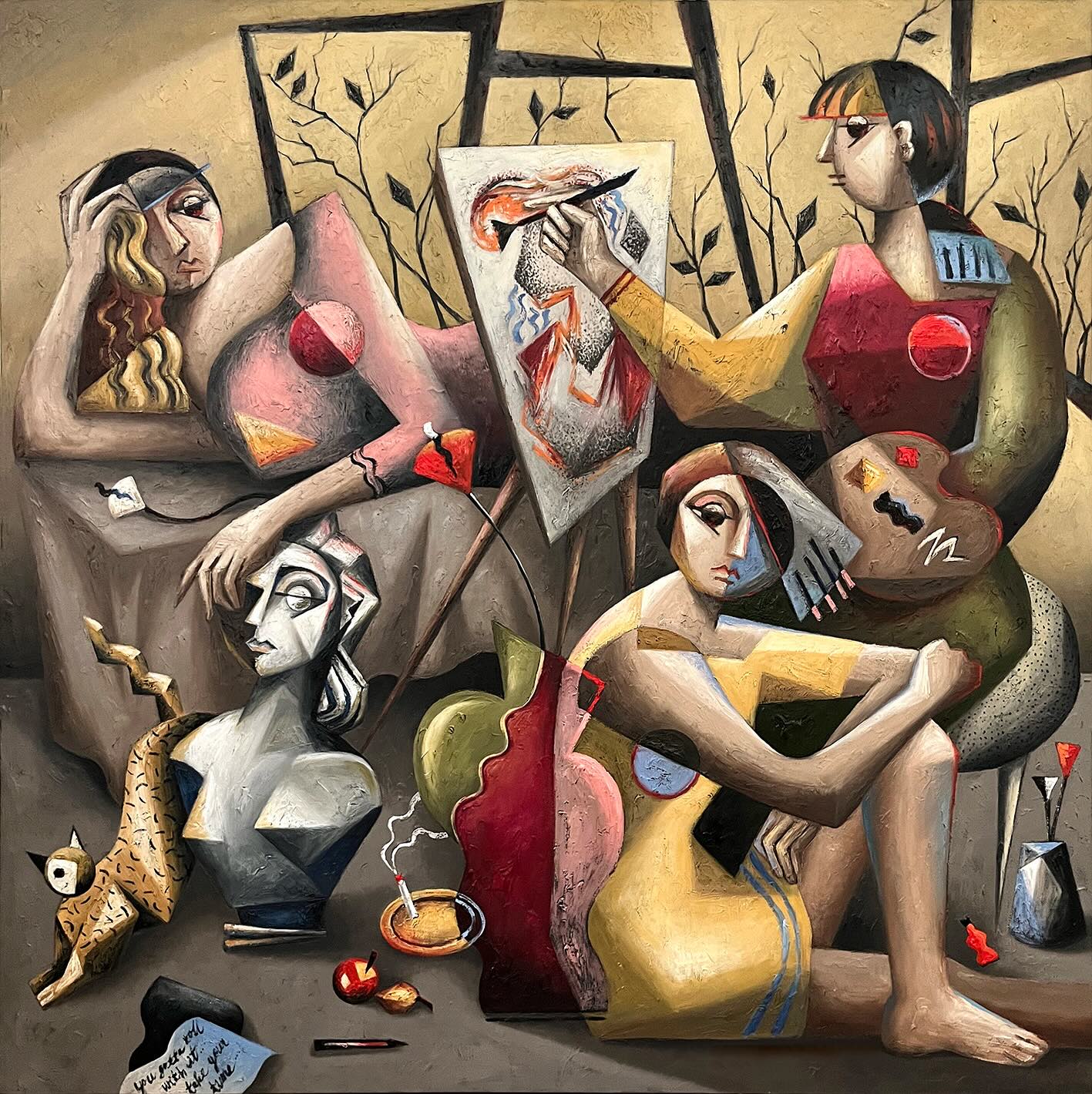
Her compositions are populated by women rendered in geometric planes and sculptural forms—faces split into masks, bodies rearranged into prisms and arcs—yet they radiate humanity. These figures are not abstractions
of theory, but abstractions of emotion. They lean, rest, brood, and dream, often surrounded by a cast of recurring symbols: cats with watchful eyes, fluttering birds, handwritten notes, flowers suspended in stylized vases.
These details act as an intimate lexicon, part narrative, part personal mythology, giving each painting the feel of a coded diary.
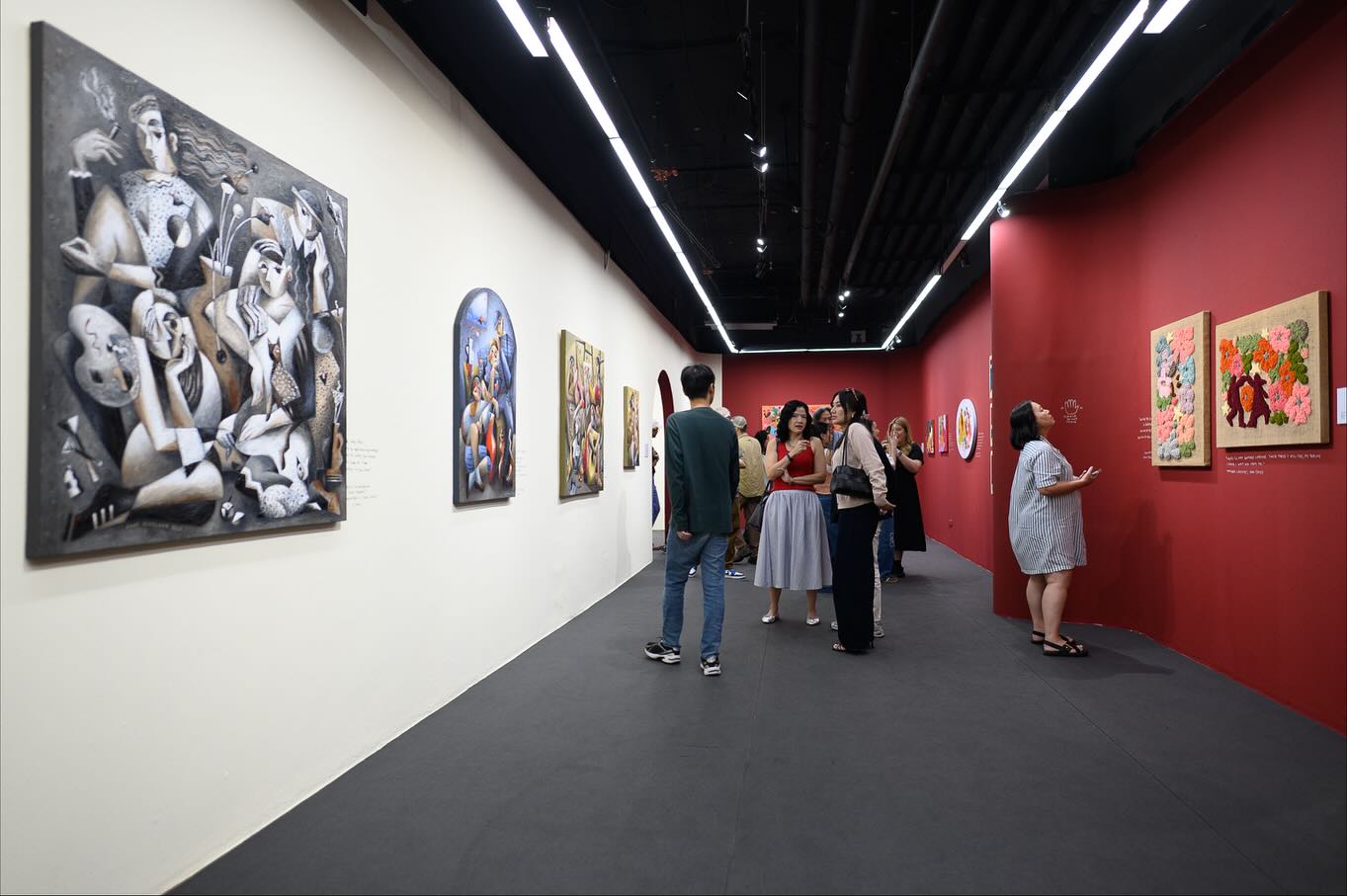
What is most striking about Torsuwan’s work is her use of color and atmosphere. Where Cubism traditionally muted its palette, she lets in bursts of red, yellow, and pink, balancing earthy shadows with luminous warmth.
This infusion of light and sensuality reclaims a visual language that once stripped figures of softness and reorients it toward tenderness. Even when her subjects appear fragmented, they exude wholeness—the multiplicity
of inner lives held together in a single frame.
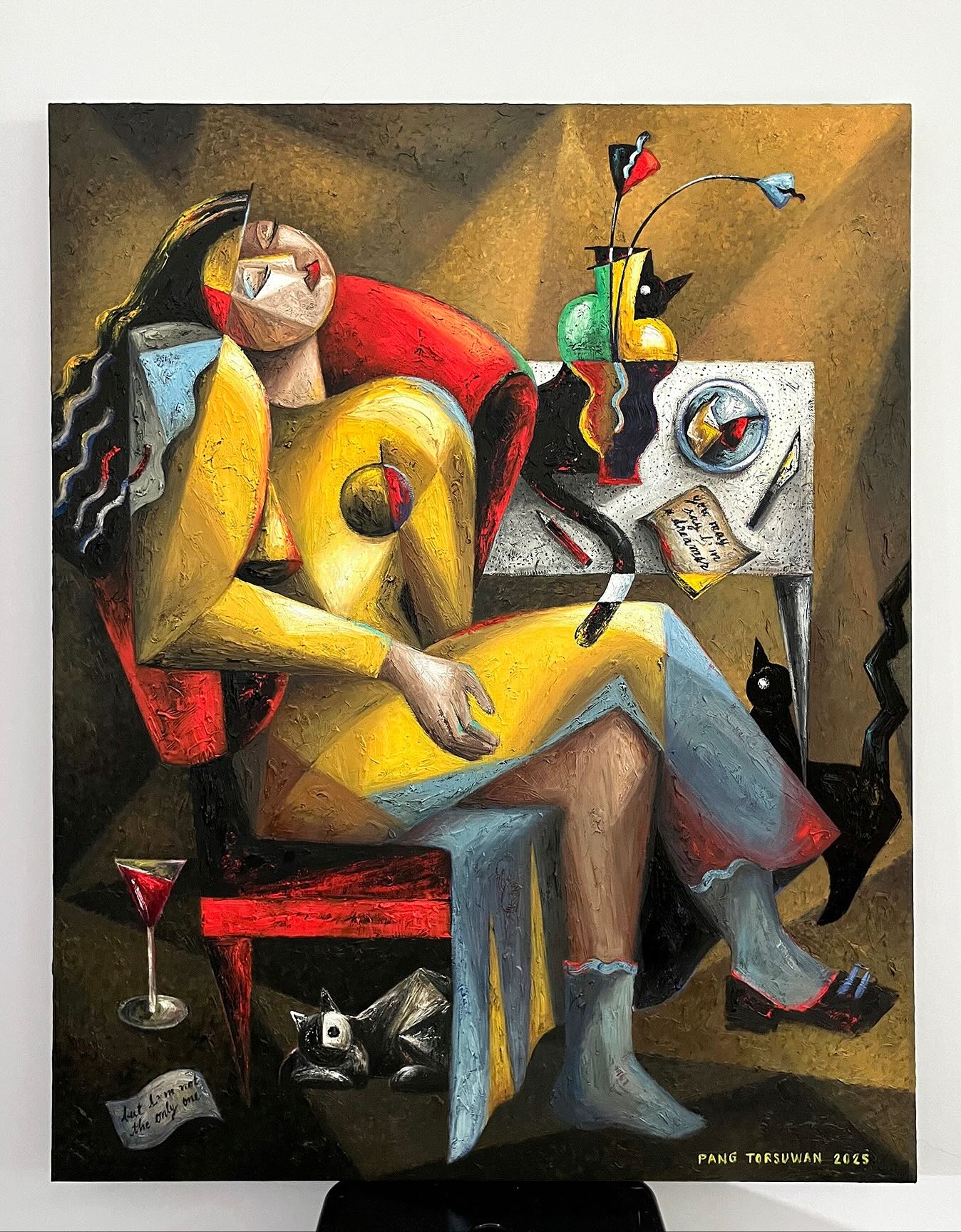
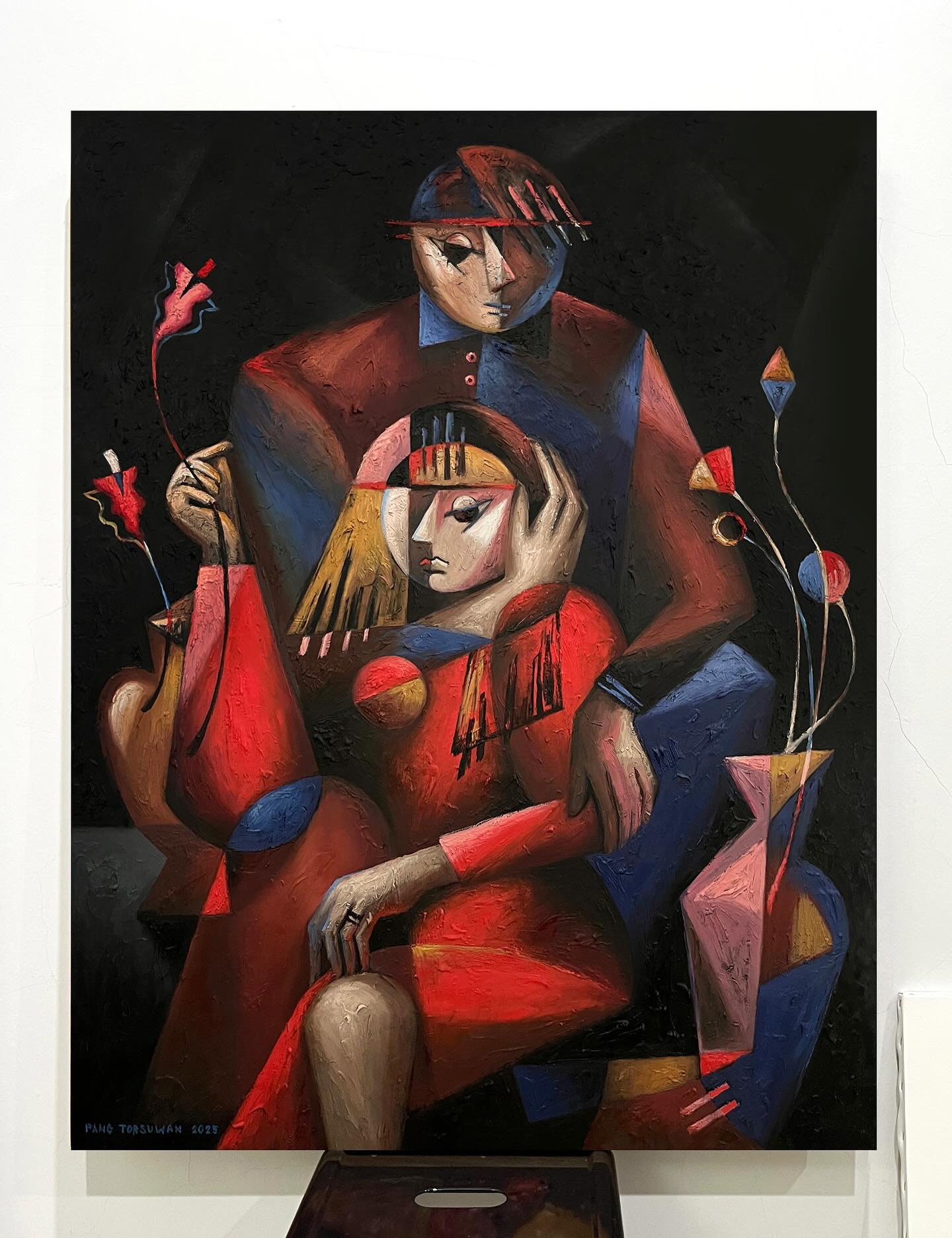
There is a theatrical quality to her staging: figures are posed like actors in a silent play, their gestures expressive, their gazes both direct and elusive. The spaces they inhabit—rooms cluttered with objects, tables
set with cigarettes and glasses of wine, notes that seem half-whispered—carry a timeless quality, as though we are peering into private scenes from another century and yet into our own.
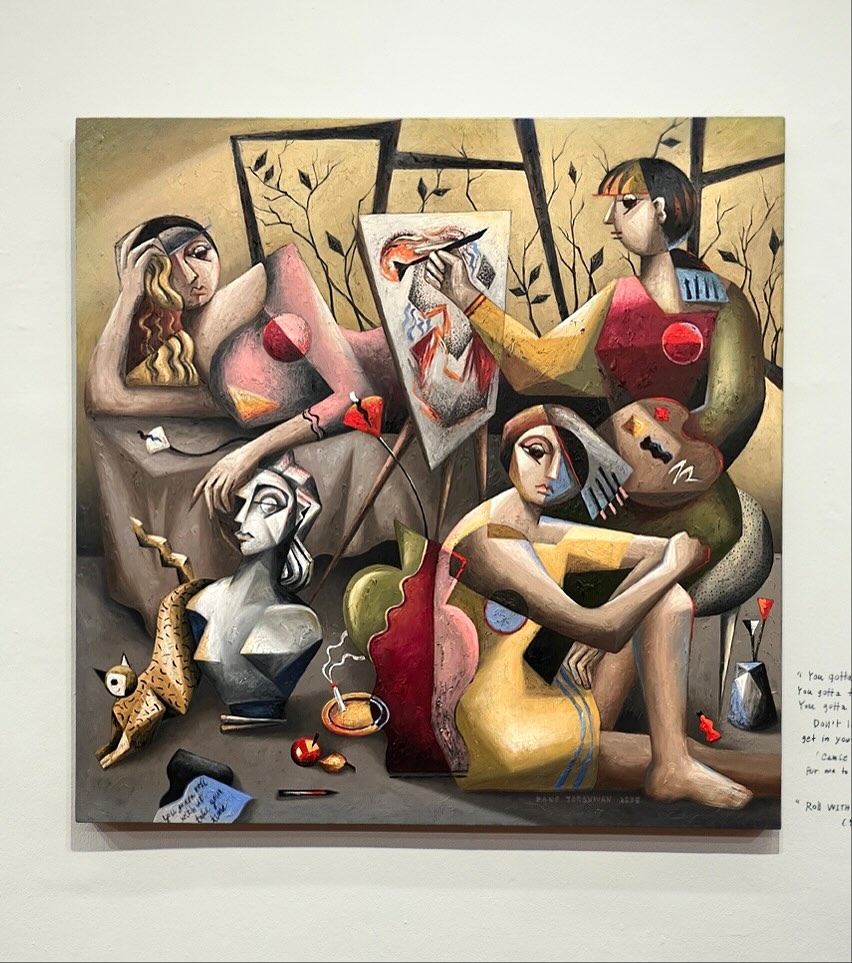
Seen together, Torsuwan’s paintings are less about Cubism reborn than Cubism rewritten. They are about women reclaiming space in a visual tradition that often objectified them. They are about finding lyricism in fractured
form, empathy in abstraction, and mystery in the everyday. To look at her work is to see how geometry, when softened by intuition, can reveal not only structure but also soul.
|
|