
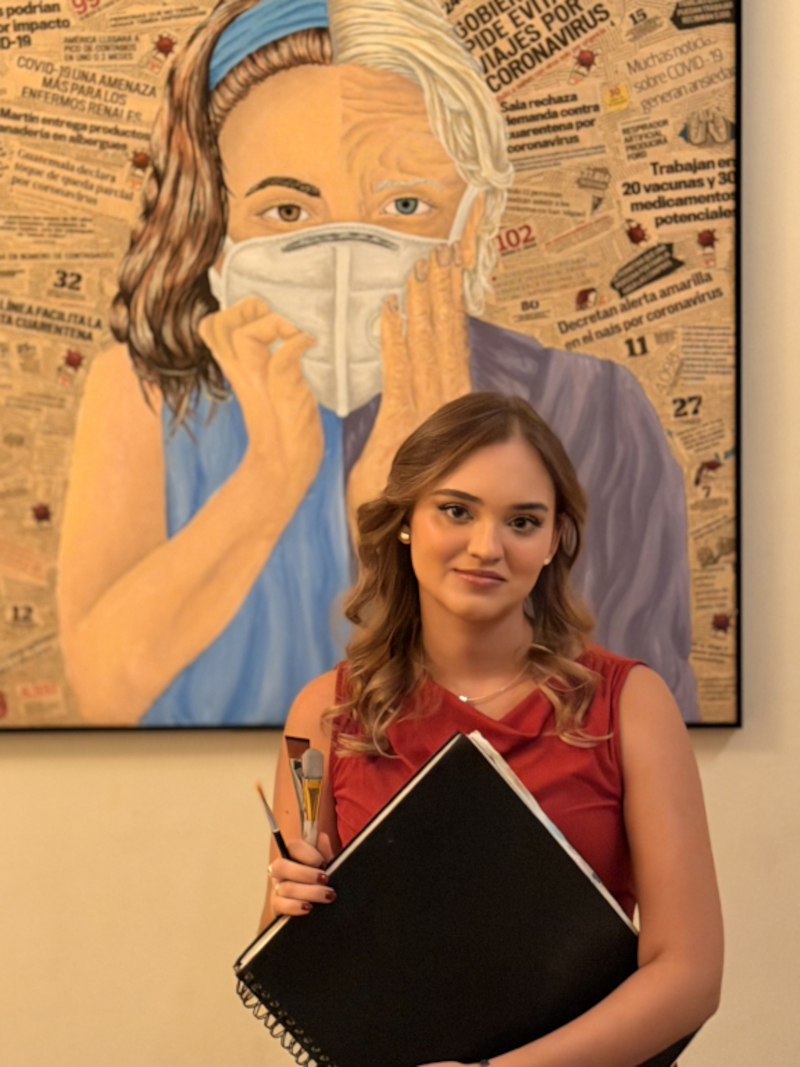
Alana Palomo is a multi-disciplinary artist based in Chicago whose work spans graphic design, painting, and cultural preservation. A graduate of the School of the Art Institute of Chicago, she has exhibited at The Other Art Fair in Los Angeles and Clio Art Fair in New York. Her practice is defined by connection, culture, and memory — and it doesn't stop at the finished canvas. Read on to get to know Alana and her unique approach to art and design.
1. As a graphic designer, you've worked on many projects with clear layouts and deadlines. What do you like about this kind of work, and what kind of clients have you worked with during your career?
I really enjoy the structure that comes with graphic design. There's something very satisfying about having clear goals, timelines, and a problem to solve. It pushes me to think critically while still being creative, and I like that balance between strategy and visual expression.
I studied graphic design and painting at the School of the Art Institute of Chicago, and that combination really shaped how I approach my work. Design taught me how to communicate clearly, build strong compositions, and think about how people interact with what I create.
Professionally, I've worked on a wide range of projects, from branding and social media content to large-scale event design and environmental graphics. Through my experience, especially working with teams like Kehoe Designs, I've worked with corporate clients, cultural institutions, and large events where everything has to be executed at a very high level while still feeling creative and engaging.
More recently, through my own company, Alana's Creative Studio LLC, I've been working more directly with individual clients and small businesses. That includes branding, custom artwork, and digital content, which allows me to bring a more personal and tailored approach to my design work.
I also love that design is constantly evolving. There's always something new to learn, whether it's new tools, trends, or ways of thinking, and that keeps it exciting for me.
I studied graphic design and painting at the School of the Art Institute of Chicago, and that combination really shaped how I approach my work. Design taught me how to communicate clearly, build strong compositions, and think about how people interact with what I create.
Professionally, I've worked on a wide range of projects, from branding and social media content to large-scale event design and environmental graphics. Through my experience, especially working with teams like Kehoe Designs, I've worked with corporate clients, cultural institutions, and large events where everything has to be executed at a very high level while still feeling creative and engaging.
More recently, through my own company, Alana's Creative Studio LLC, I've been working more directly with individual clients and small businesses. That includes branding, custom artwork, and digital content, which allows me to bring a more personal and tailored approach to my design work.
I also love that design is constantly evolving. There's always something new to learn, whether it's new tools, trends, or ways of thinking, and that keeps it exciting for me.
2. What are some of the recurring tasks you take on in your daily life as a graphic designer? How does this type of structured work differ from your work as a visual artist?
As a graphic designer, my daily work is very structured. I spend a lot of time working on layouts, refining compositions, preparing files for print or digital use, building mockups, and making revisions based on feedback. There's a clear expectation for what needs to be delivered, what works, and what doesn't, which makes the process more predictable.
That's very different from my work as a visual artist. While my art starts from exploring emotion, memory, and personal experience, it's also about creating a sense of relief for myself and for others. It's a way of processing things that feel out of our control in everyday life. When someone connects with a piece and feels seen or understood, that's one of the most fulfilling parts of what I do.
Fine art is much more unpredictable. Every space, every audience, every market reacts differently, and there's no clear formula for what will resonate. It's a lot of trial and error, which can be challenging, but I also find that process really exciting.
I honestly feel like I need both in my life. Design gives me structure and clarity, while art gives me freedom and emotional expression. Together, they make my practice feel more complete.
That's very different from my work as a visual artist. While my art starts from exploring emotion, memory, and personal experience, it's also about creating a sense of relief for myself and for others. It's a way of processing things that feel out of our control in everyday life. When someone connects with a piece and feels seen or understood, that's one of the most fulfilling parts of what I do.
Fine art is much more unpredictable. Every space, every audience, every market reacts differently, and there's no clear formula for what will resonate. It's a lot of trial and error, which can be challenging, but I also find that process really exciting.
I honestly feel like I need both in my life. Design gives me structure and clarity, while art gives me freedom and emotional expression. Together, they make my practice feel more complete.
3. Where do you find inspiration for your work as a visual artist? Please share your top three sources of inspiration with us.
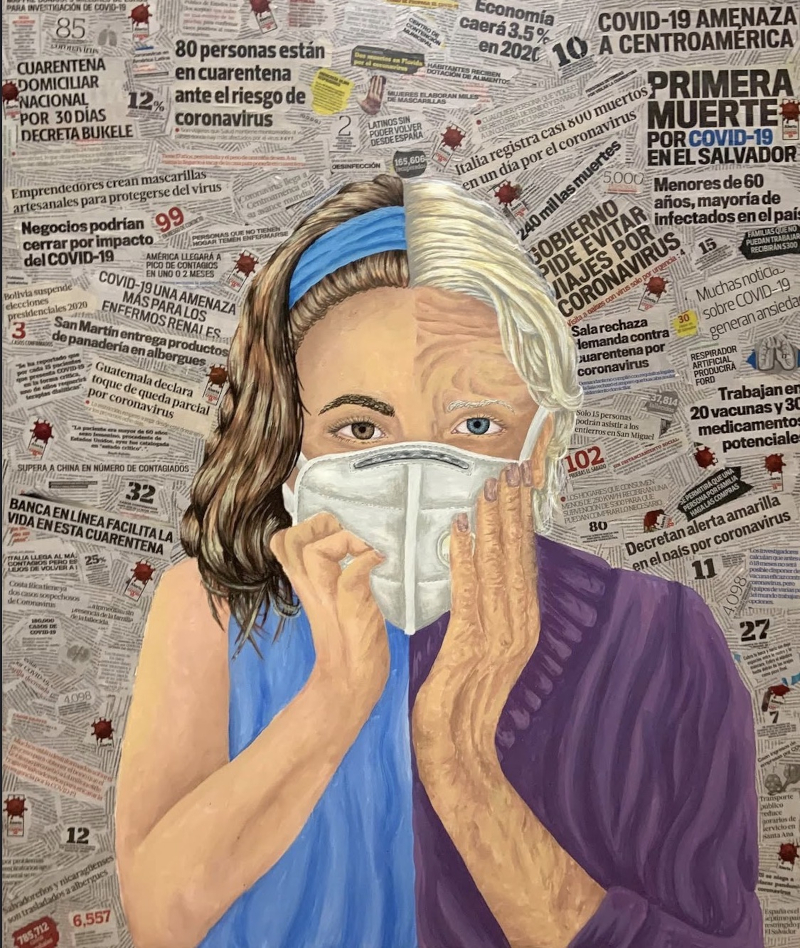
A lot of my inspiration comes from memory, especially the idea of how we carry places, people, and emotions with us over time. That shows up in the way I layer materials and build my surfaces. In works like "From Ashes," for example, the use of newspaper and texture reflects both collective and personal experiences, capturing that tension between trauma and healing.
Over time, I've also learned that memories are fleeting, no matter how important they are. Having something that extends beyond the moment itself has become really important to me. When I paint them, I'm able to reconnect with how I felt in that moment — not just how it looked, but the emotion behind it.
Another major source of inspiration for me is travel and cultural exchange. Being in new environments shifts how I see things and how I create. Pieces like "Hanging in the Balance" and "Darkest of Moments" came from very specific moments while traveling where I experienced a mix of uncertainty and beauty at the same time.
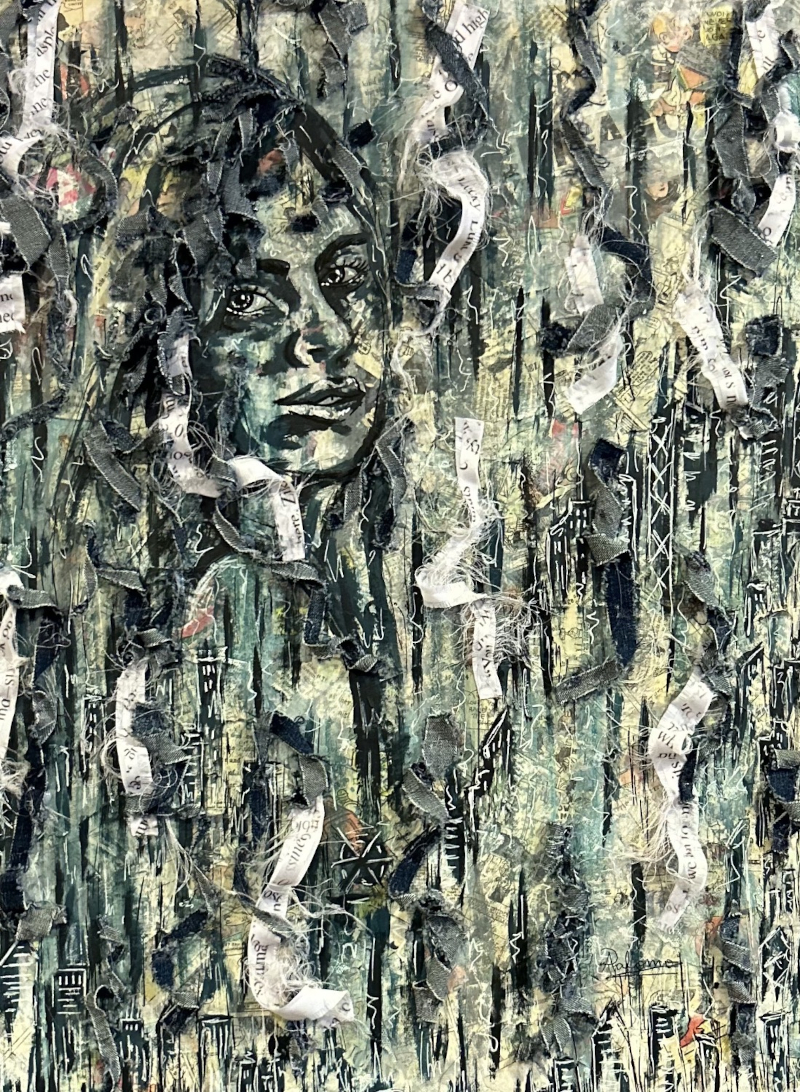
The third is material itself. Sometimes I'm inspired simply by what I'm working with. Materials like newspaper, fabric, or found objects already carry meaning, and I build from there. In "Conundrum of Industrialization," incorporating denim wasn't just a visual choice — it became part of the concept, reflecting the weight and impact of industrialization.
For me, inspiration isn't just visual — it's emotional, environmental, and physical. It's about how experiences, places, and materials come together to create something that feels real.
Over time, I've also learned that memories are fleeting, no matter how important they are. Having something that extends beyond the moment itself has become really important to me. When I paint them, I'm able to reconnect with how I felt in that moment — not just how it looked, but the emotion behind it.
Another major source of inspiration for me is travel and cultural exchange. Being in new environments shifts how I see things and how I create. Pieces like "Hanging in the Balance" and "Darkest of Moments" came from very specific moments while traveling where I experienced a mix of uncertainty and beauty at the same time.
The third is material itself. Sometimes I'm inspired simply by what I'm working with. Materials like newspaper, fabric, or found objects already carry meaning, and I build from there. In "Conundrum of Industrialization," incorporating denim wasn't just a visual choice — it became part of the concept, reflecting the weight and impact of industrialization.
For me, inspiration isn't just visual — it's emotional, environmental, and physical. It's about how experiences, places, and materials come together to create something that feels real.
4. You are originally from El Salvador; your artwork reflects your Salvadoran roots. What are the places and cultural customs from your home country that shaped you as a person and an artist?
Growing up in El Salvador shaped everything about how I create. There's such a strong presence of color, texture, and resourcefulness in everyday life. People create with what they have, using unconventional materials, and there's a kind of beauty in that that feels very honest and expressive.
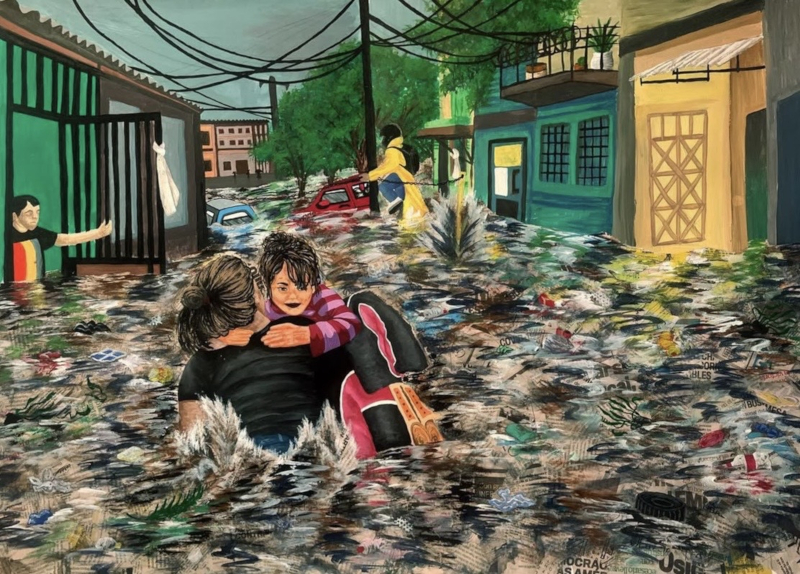
That influence is deeply embedded in my work. Pieces like "Amanda Arramblar" came from very real experiences in El Salvador, especially after Tormenta Amanda. It was a way of processing not only the physical destruction but also the emotional impact it had on people who were already struggling. It made me realize how important it is to give visibility to stories that aren't always told.
My project "Soy Salvadoreña," which I developed as my final body of work at SAIC, was a direct reflection of my identity. I created multiple smaller paintings on wood, referencing a very common cultural practice in El Salvador, but reinterpreted it through my own style. I also incorporated newspapers from El Salvador and used coffee staining, physically embedding elements of my culture into the work.
I've also explored the idea of preserving memory through sculptural pieces, repurposing objects to feel like they were pulled out of water thousands of years later. For me, that's about encapsulating my culture and experiences as I knew them — even as things change over time — preserving what feels essential.
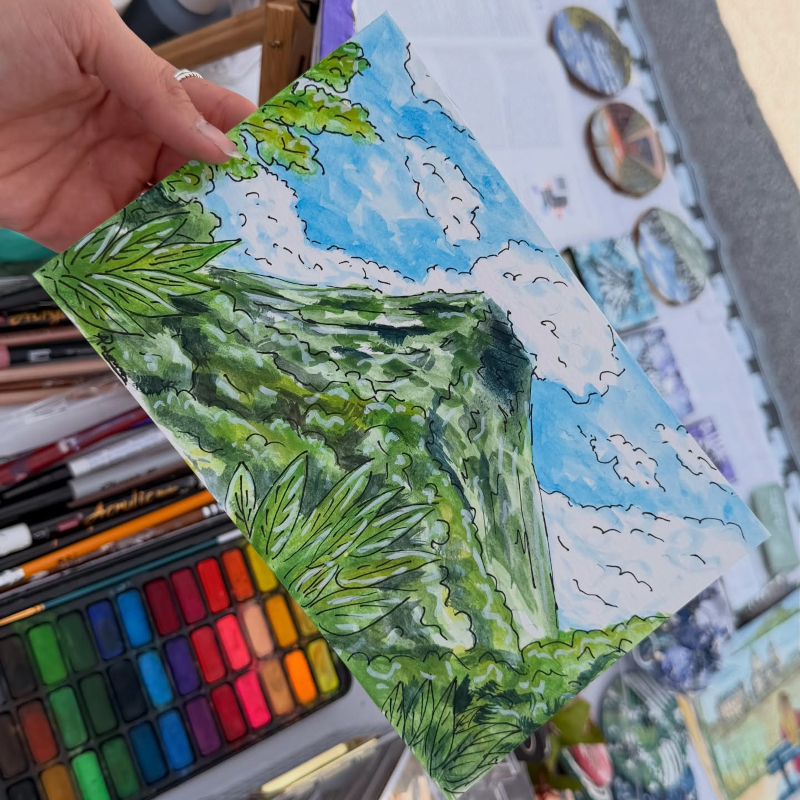
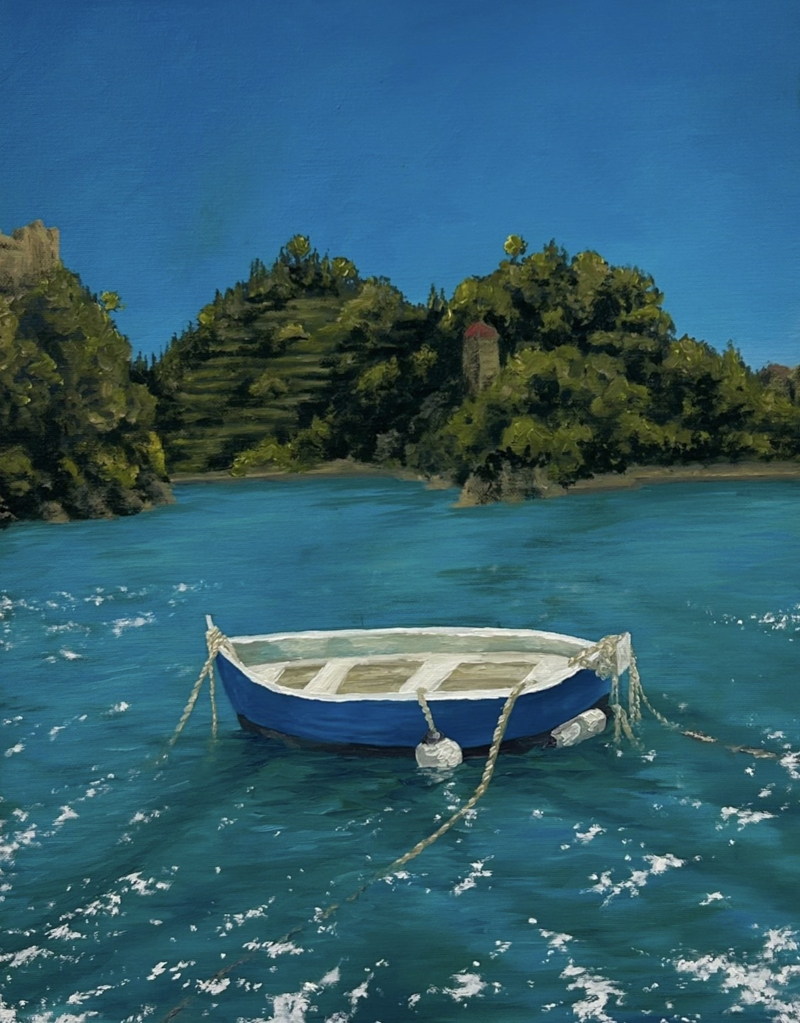
The landscape itself has also had a huge influence on me. Growing up surrounded by mountains, beaches, tropical animals, and that kind of natural beauty made me deeply connected to nature. Now living in a big city, I find myself craving those environments even more. Through color, light, and warmth, I aim to capture the feeling those places give me — that sense of calm, familiarity, and comfort that I carry with me no matter where I am.
That influence is deeply embedded in my work. Pieces like "Amanda Arramblar" came from very real experiences in El Salvador, especially after Tormenta Amanda. It was a way of processing not only the physical destruction but also the emotional impact it had on people who were already struggling. It made me realize how important it is to give visibility to stories that aren't always told.
My project "Soy Salvadoreña," which I developed as my final body of work at SAIC, was a direct reflection of my identity. I created multiple smaller paintings on wood, referencing a very common cultural practice in El Salvador, but reinterpreted it through my own style. I also incorporated newspapers from El Salvador and used coffee staining, physically embedding elements of my culture into the work.
I've also explored the idea of preserving memory through sculptural pieces, repurposing objects to feel like they were pulled out of water thousands of years later. For me, that's about encapsulating my culture and experiences as I knew them — even as things change over time — preserving what feels essential.
The landscape itself has also had a huge influence on me. Growing up surrounded by mountains, beaches, tropical animals, and that kind of natural beauty made me deeply connected to nature. Now living in a big city, I find myself craving those environments even more. Through color, light, and warmth, I aim to capture the feeling those places give me — that sense of calm, familiarity, and comfort that I carry with me no matter where I am.
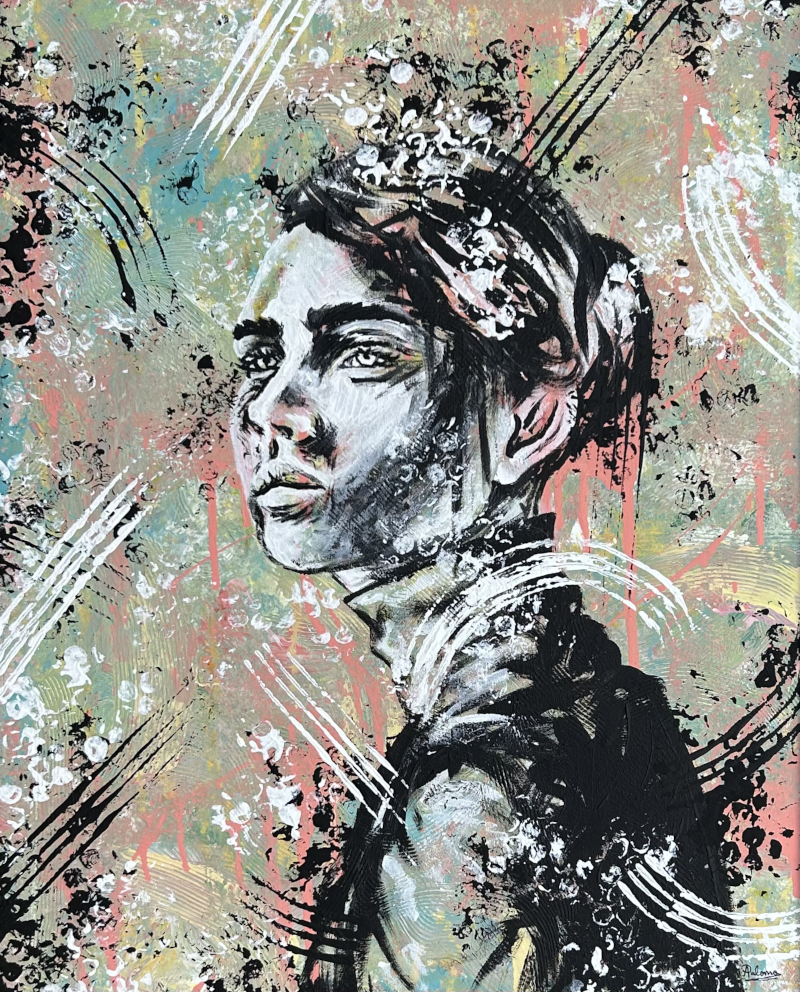
5. You use a signature fork and bubble wrap technique for your paintings. Please tell us a bit more about this procedure and how you developed it.
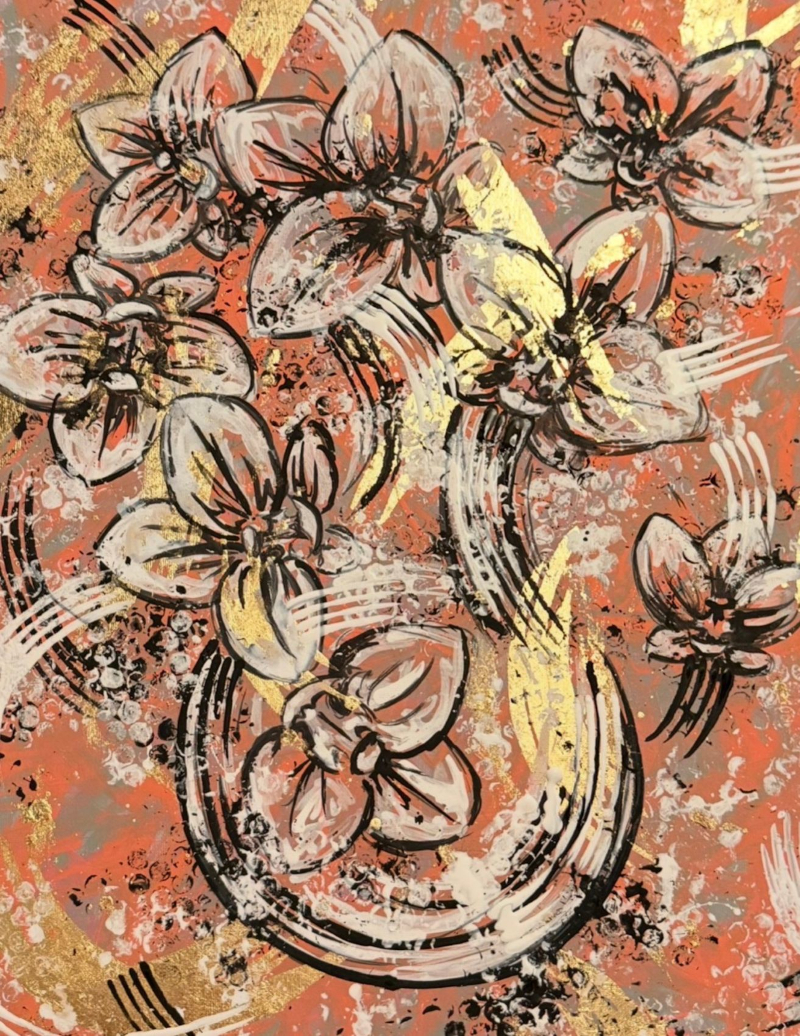
This technique started with one piece, "Enough." I was trying to express something very emotional and internal, but I didn't want to do it in a literal way. I started experimenting with unconventional tools, and I found that forks created these sharp, almost aggressive marks, while bubble wrap created softer, repetitive textures.
That contrast felt very natural to me because it reflected how emotions can feel — layered, conflicting, and not always easy to define.
After that piece, I kept experimenting with the technique, and it quickly became something I felt very connected to. Works like "Bollente" and "Forchetta" really pushed that further, and those pieces received a lot of positive feedback, especially when I exhibited them in El Salvador. That response encouraged me to keep developing the technique.
Over time, it has become something very recognizable in my work. What I love most is that I've been able to adapt it beyond traditional paintings. I now incorporate it into everyday objects like coasters, tote bags, and other pieces, which makes my work more accessible.
It's important to me that my art isn't just something that exists on a wall, but something that can live with people in their everyday lives.
That contrast felt very natural to me because it reflected how emotions can feel — layered, conflicting, and not always easy to define.
After that piece, I kept experimenting with the technique, and it quickly became something I felt very connected to. Works like "Bollente" and "Forchetta" really pushed that further, and those pieces received a lot of positive feedback, especially when I exhibited them in El Salvador. That response encouraged me to keep developing the technique.
Over time, it has become something very recognizable in my work. What I love most is that I've been able to adapt it beyond traditional paintings. I now incorporate it into everyday objects like coasters, tote bags, and other pieces, which makes my work more accessible.
It's important to me that my art isn't just something that exists on a wall, but something that can live with people in their everyday lives.
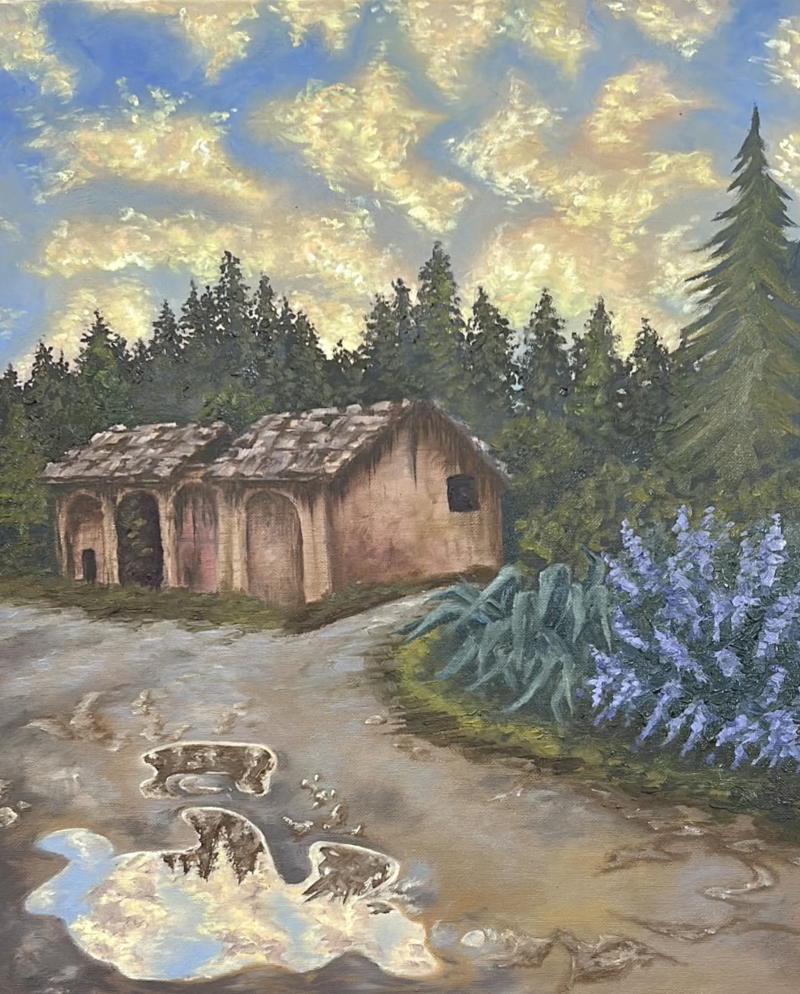
6. What do you enjoy about painting and being creative?
What I enjoy most is the freedom to explore and process things in a way that doesn't have to be fully explained.
Painting allows me to take emotions or experiences that feel complex or overwhelming and translate them into something physical. In works like "Darkest of Moments," for example, I was able to capture a very specific moment where everything felt uncertain, but there was still this quiet sense of beauty and hope.
I also really enjoy the physical process of building a piece. Layering materials, working with texture, and letting the work evolve over time makes it feel alive.
At the same time, I love that it creates connection. Pieces like "The Art of Giving" or "Bollente" resonate with people in different ways, and it's always interesting to see how others interpret something that came from such a personal place.
For me, being creative is not just about making something — it's about understanding, processing, and connecting.
Painting allows me to take emotions or experiences that feel complex or overwhelming and translate them into something physical. In works like "Darkest of Moments," for example, I was able to capture a very specific moment where everything felt uncertain, but there was still this quiet sense of beauty and hope.
I also really enjoy the physical process of building a piece. Layering materials, working with texture, and letting the work evolve over time makes it feel alive.
At the same time, I love that it creates connection. Pieces like "The Art of Giving" or "Bollente" resonate with people in different ways, and it's always interesting to see how others interpret something that came from such a personal place.
For me, being creative is not just about making something — it's about understanding, processing, and connecting.

7. How would you describe the art and design scene in Chicago? What is special about this community of creatives?
Chicago has been such an important part of my growth as an artist and designer. It's a city that has a really strong balance between fine art, design, and community-based work.
What makes it special is how accessible and supportive it is. There are so many spaces where you can show work, collaborate, and connect with other creatives.
Through my work teaching with Art City Chicago and Green Star Movement, I've been able to engage with artists of all ages and backgrounds, which has really shaped my perspective.
Chicago also has a strong design industry, which has influenced my professional work. My experience working on large-scale event design and branding projects has helped me think about how art and design can exist beyond traditional spaces.
It's a city that allows you to explore multiple paths at once, and that's something I really value.
What makes it special is how accessible and supportive it is. There are so many spaces where you can show work, collaborate, and connect with other creatives.
Through my work teaching with Art City Chicago and Green Star Movement, I've been able to engage with artists of all ages and backgrounds, which has really shaped my perspective.
Chicago also has a strong design industry, which has influenced my professional work. My experience working on large-scale event design and branding projects has helped me think about how art and design can exist beyond traditional spaces.
It's a city that allows you to explore multiple paths at once, and that's something I really value.
8. In your opinion, what are the benefits of exhibiting in local exhibitions versus national or international art shows? What has been your favorite experience and most successful fair so far?
Local exhibitions are really important because they allow you to build a strong community and develop relationships over time. You get to connect with people more personally, and there's a sense of continuity.
National and international shows, on the other hand, completely expand your perspective. You meet people you would never normally cross paths with — both artists and collectors.
One of the most valuable parts for me has been connecting with other artists who are just as passionate about their work. A lot of them have already gone through the challenges I'm currently navigating, and their advice and feedback have meant so much to me.
Something I've also noticed is that my different styles resonate differently depending on the location. Some pieces connect more in certain cities or countries than others, which makes traveling and exhibiting in different places really exciting.
Participating in The Other Art Fair in Los Angeles was a huge moment for me, and now being part of Clio Art Fair in New York has been just as impactful. Each experience has helped me grow both creatively and professionally.
National and international shows, on the other hand, completely expand your perspective. You meet people you would never normally cross paths with — both artists and collectors.
One of the most valuable parts for me has been connecting with other artists who are just as passionate about their work. A lot of them have already gone through the challenges I'm currently navigating, and their advice and feedback have meant so much to me.
Something I've also noticed is that my different styles resonate differently depending on the location. Some pieces connect more in certain cities or countries than others, which makes traveling and exhibiting in different places really exciting.
Participating in The Other Art Fair in Los Angeles was a huge moment for me, and now being part of Clio Art Fair in New York has been just as impactful. Each experience has helped me grow both creatively and professionally.
9. What is the most meaningful project you've worked on in your career?
Teaching has honestly been one of the most meaningful parts of my career.
Working with organizations like Green Star Movement, I saw firsthand how important art can be for young people, especially those going through difficult situations. For many of them, it becomes a way to cope, to express themselves, and to feel seen.
It's so easy to get discouraged when you're young and creative, especially if you don't have the support or resources around you. Being able to help someone push through that and feel confident in their work is incredibly meaningful.
I've also loved teaching with Art City Chicago, working with students of all ages. Seeing someone get inspired, try something new, and grow creatively is one of the most rewarding experiences I've had.
That impact goes beyond the artwork itself — it's about what it gives people.
Working with organizations like Green Star Movement, I saw firsthand how important art can be for young people, especially those going through difficult situations. For many of them, it becomes a way to cope, to express themselves, and to feel seen.
It's so easy to get discouraged when you're young and creative, especially if you don't have the support or resources around you. Being able to help someone push through that and feel confident in their work is incredibly meaningful.
I've also loved teaching with Art City Chicago, working with students of all ages. Seeing someone get inspired, try something new, and grow creatively is one of the most rewarding experiences I've had.
That impact goes beyond the artwork itself — it's about what it gives people.

10. What do you see as your biggest accomplishment in your career? Can you share your goals for the future?
One of my biggest accomplishments so far has been building my own creative practice and turning it into something sustainable through Alana's Creative Studio LLC.
I've been able to sell my work independently, develop a range of products, and connect directly with collectors, which has been incredibly rewarding.
Exhibiting my work in different cities has also been a huge milestone. Participating in The Other Art Fair was a major step for me and now continuing that momentum with shows in New York feels like a natural progression.
Looking forward, I want to continue expanding internationally, creating larger and more immersive work, and growing both my art and design practice.
I also want to keep teaching and building community, because that's something that has become just as important to me as creating itself.
I've been able to sell my work independently, develop a range of products, and connect directly with collectors, which has been incredibly rewarding.
Exhibiting my work in different cities has also been a huge milestone. Participating in The Other Art Fair was a major step for me and now continuing that momentum with shows in New York feels like a natural progression.
Looking forward, I want to continue expanding internationally, creating larger and more immersive work, and growing both my art and design practice.
I also want to keep teaching and building community, because that's something that has become just as important to me as creating itself.
Follow Alana on Instagram at @alanapalomo.art and visit her website at alanapalomo.com