
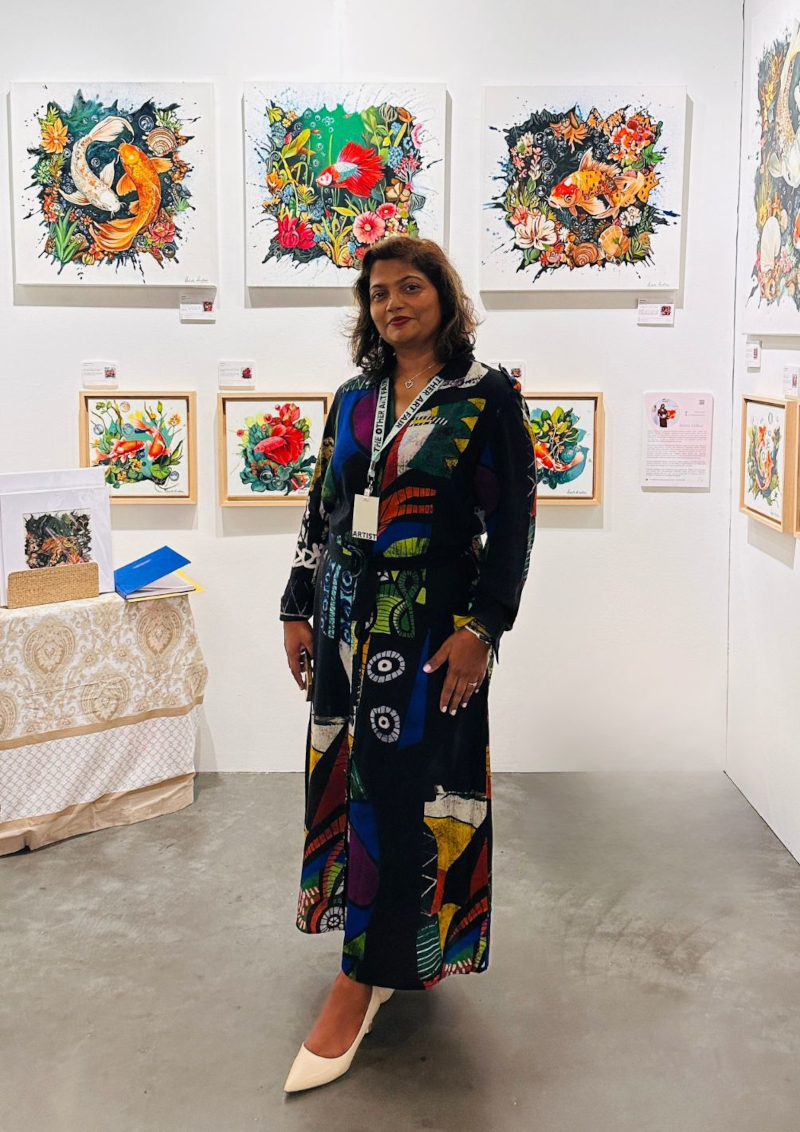
Babita Sridhar gives the meaning behind art a new perspective. Her paintings portray balance, recognition, and a deep understanding of humanity. The animals in her work function as emotional mirrors, showing the transformations and processes humans undergo in their lives without words. Through her choice of subjects, Babita explores "what it means to be human." Painting became a path of self-discovery for the artist and started her transition from the corporate to the artistic world.
We met at The Other Art Fair spring edition a couple of weeks ago, and your paintings really captured me. You call yourself a contemporary animal artist. Can you please share your artistic journey with our readers?
My journey into art began not in a studio, but in a moment of quiet reckoning. For over two decades, I worked in the corporate world — strategy, operations, the relentless rhythm of deliverables and quarterly targets. Art was something I had enjoyed during my childhood, garnering small prizes and certificates; also something I admired in galleries and museums, something that belonged to other people's lives. It took reaching a point of deep personal transition to realize it had always belonged to mine.
I picked up a brush seriously about six years ago, and from the very first painting, I knew this was my destiny! I was drawn to animals as my subjects, not for their beauty alone — though that is undeniable — but for what they carry symbolically. Animals exist in a state of pure authenticity. They do not perform identity; they simply are. That quality, that unguarded presence, became the lens through which I began to examine what it means to be human.
My practice has organically crystallized around two bodies of work. The Emergence series places animals — often birds, elephants, horses — against vivid painted-splash backgrounds. The animal emerges as if from the chaos of experience itself, which is very much how I understand personal transformation: we do not become ourselves despite turbulence, but because of it.
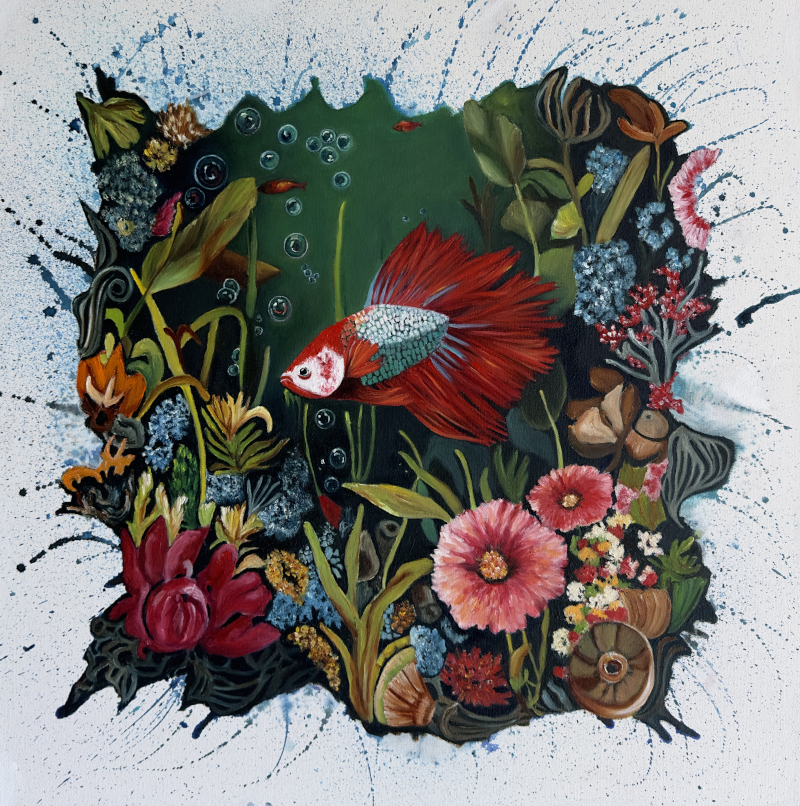
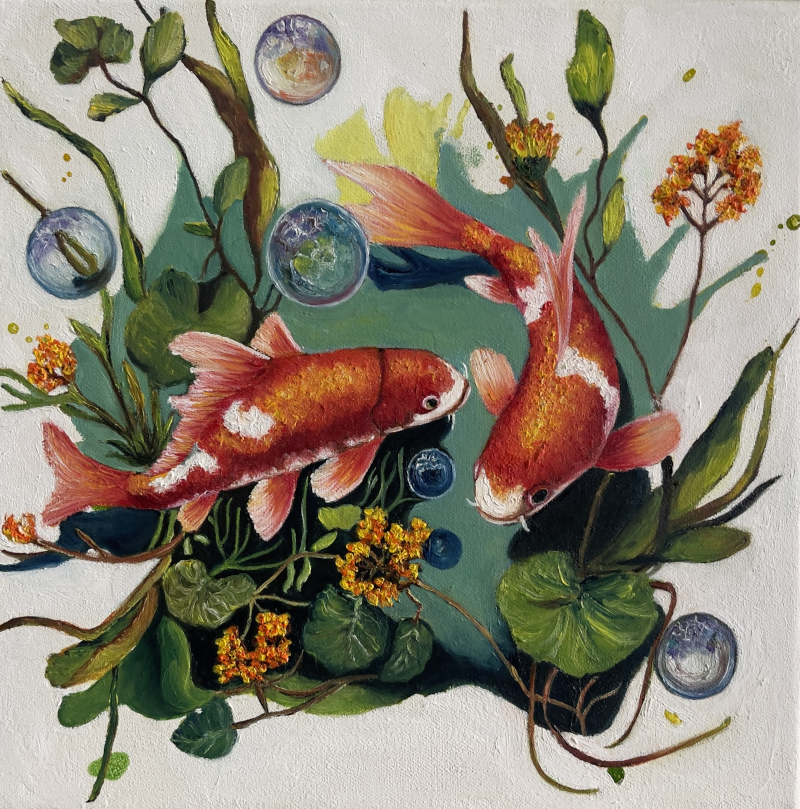
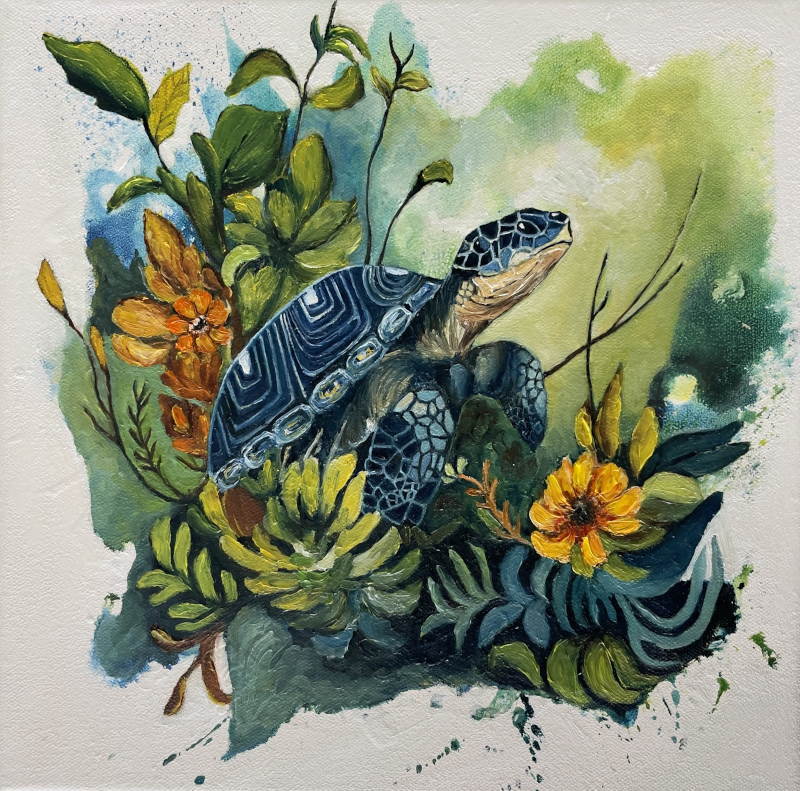
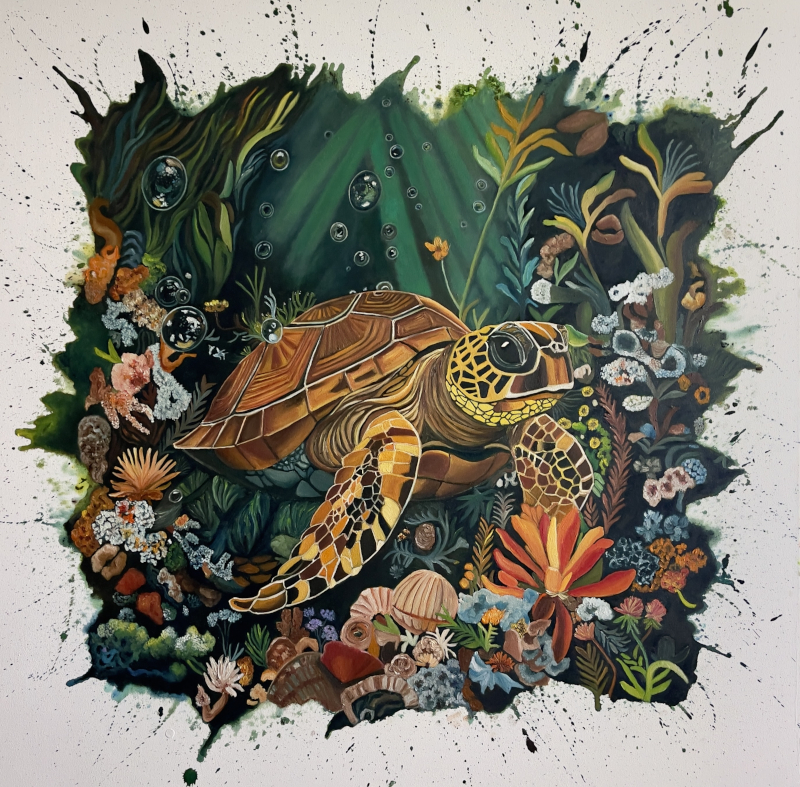
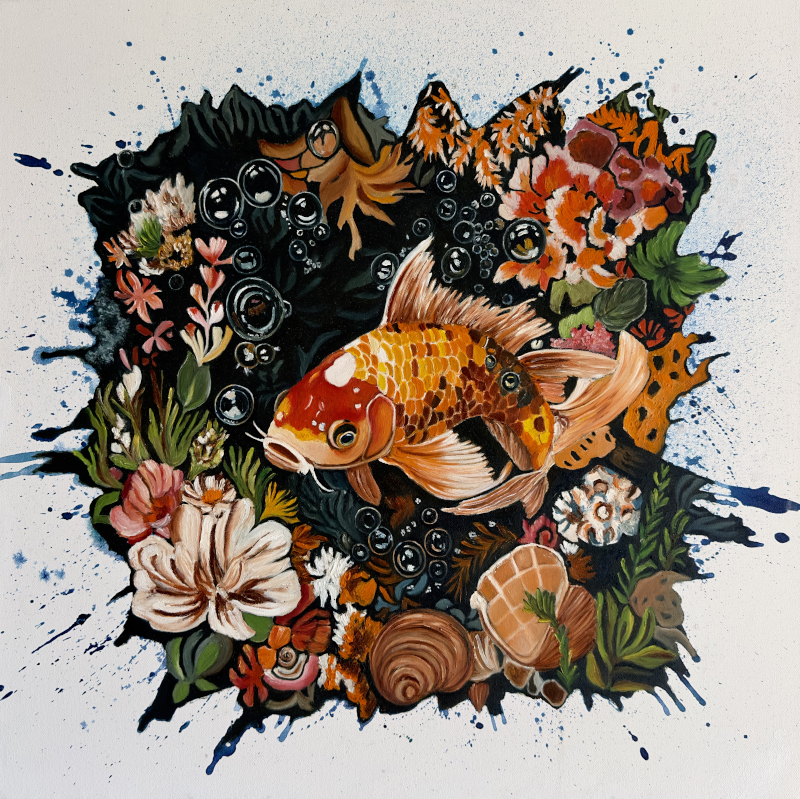
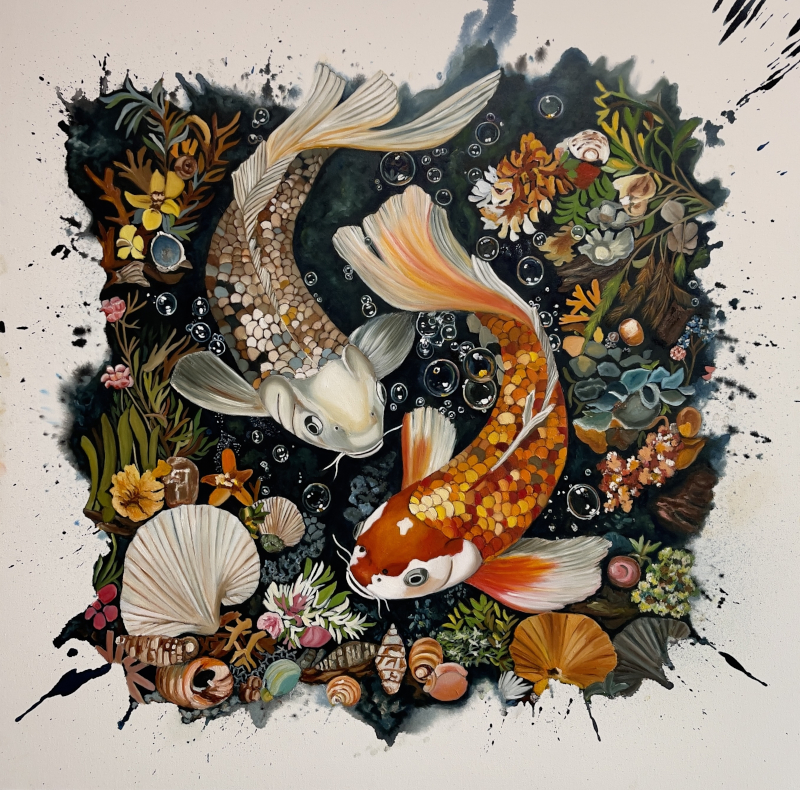
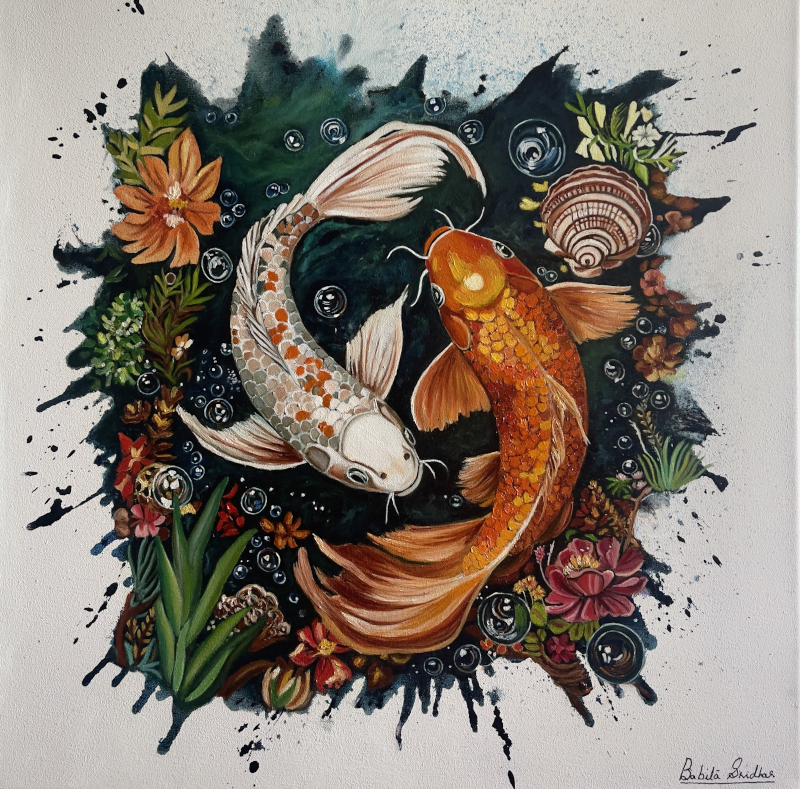
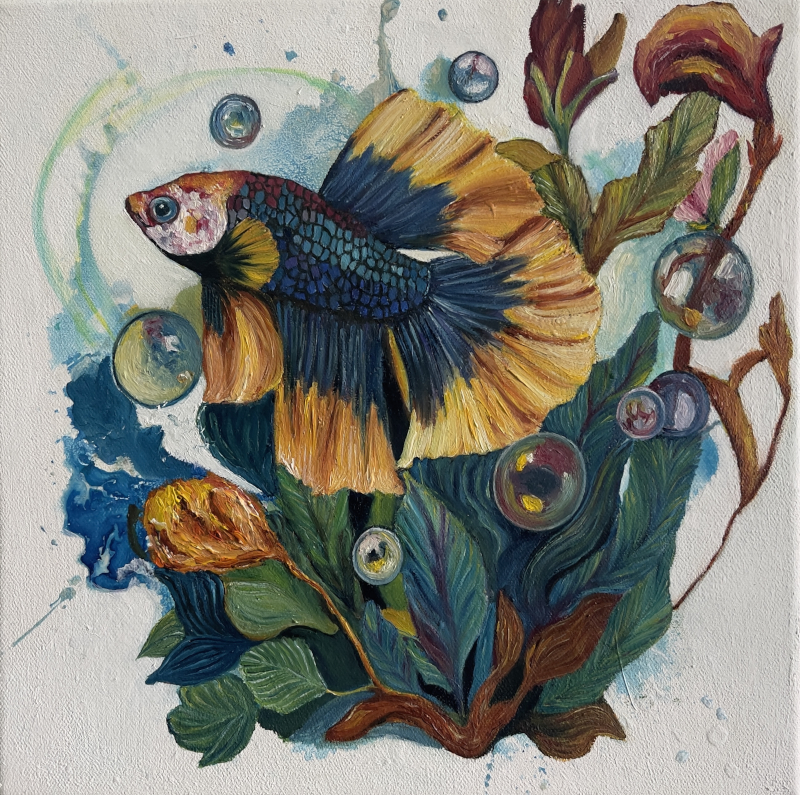
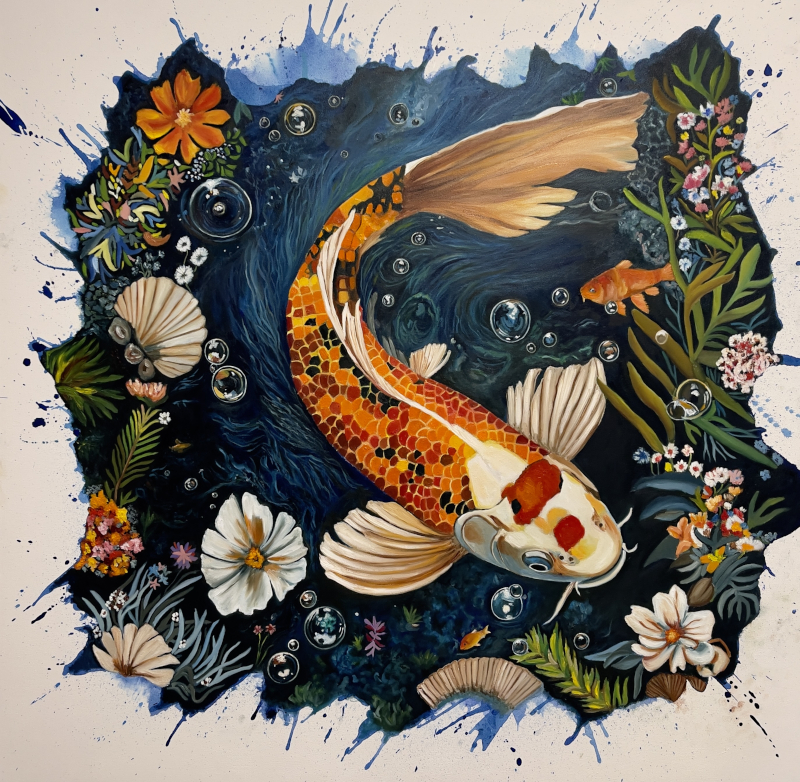
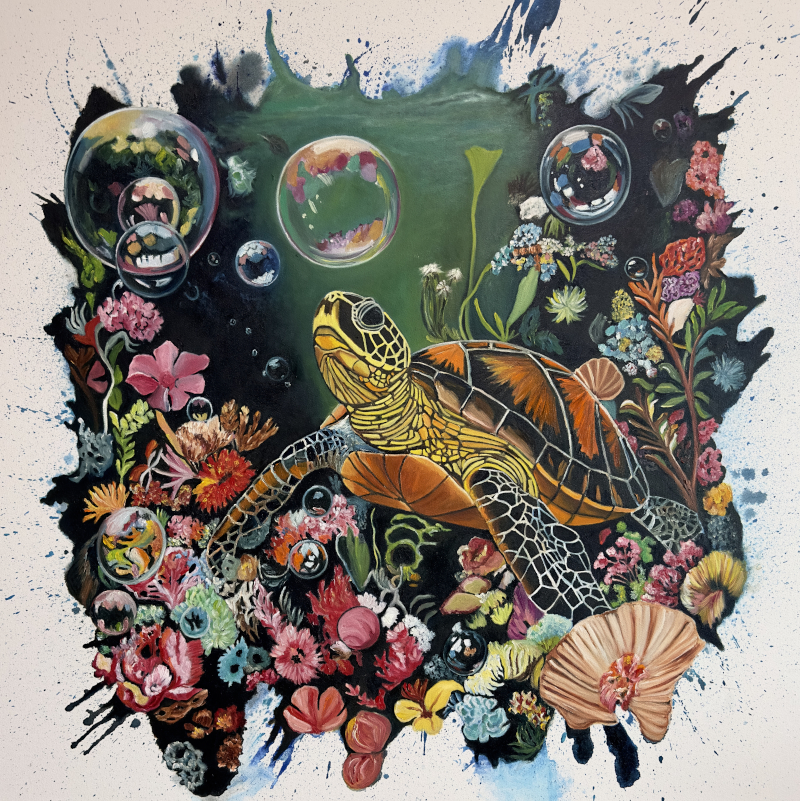
My latest Underwater series is more introspective: Koi fish, Turtles, Betta navigating the currents, exploring the unseen inner life, the quiet work of growth that happens beneath the surface of everything we show the world.
My brand identity, the sentence I return to again and again, is this: I paint animals to tell human stories — about transformation, identity, and the courage it takes to become who you are meant to be. Every painting is, at its core, a portrait of that journey.
I picked up a brush seriously about six years ago, and from the very first painting, I knew this was my destiny! I was drawn to animals as my subjects, not for their beauty alone — though that is undeniable — but for what they carry symbolically. Animals exist in a state of pure authenticity. They do not perform identity; they simply are. That quality, that unguarded presence, became the lens through which I began to examine what it means to be human.
My practice has organically crystallized around two bodies of work. The Emergence series places animals — often birds, elephants, horses — against vivid painted-splash backgrounds. The animal emerges as if from the chaos of experience itself, which is very much how I understand personal transformation: we do not become ourselves despite turbulence, but because of it.
My latest Underwater series is more introspective: Koi fish, Turtles, Betta navigating the currents, exploring the unseen inner life, the quiet work of growth that happens beneath the surface of everything we show the world.
My brand identity, the sentence I return to again and again, is this: I paint animals to tell human stories — about transformation, identity, and the courage it takes to become who you are meant to be. Every painting is, at its core, a portrait of that journey.
Your work is rooted in symbolism. Would you describe your work process as structured or rather spontaneous? What are some techniques you have perfected throughout your artistic career?
My process lives in the productive tension between the two. The conceptual foundation is always intentional — I know, before I touch canvas, what emotional territory a painting is meant to explore, what the animal represents, what question it is asking of the viewer. But the mark-making itself, particularly in the early and middle stages, is deeply spontaneous.
I work primarily in acrylics and inks in the first layers — fluid, fast-moving mediums that respond to gesture and breath. Liquid paints poured across the canvas create the atmospheric grounds that form the world the animal inhabits. I never fill the entire canvas; my signature is painted-splash boundaries at the edges, leaving the animal to emerge from, or dissolve into, expressive negative space. That choice is not decorative; it is philosophical. We are never fully contained by our circumstances. Something always exceeds the frame.
The figurative element — the animal itself — is completed in oils. The shift from acrylics to oils is a shift in consciousness, from the intuitive to the precise. Oils allow me to build translucency in fins, to layer the submersion shadows that give an underwater Koi its sense of depth, to place a single catchlight in an eye that makes the creature suddenly, undeniably alive.
A few things have become distinctly mine: the splash — expressive painted boundaries at the canvas edges that let the animal emerge from negative space rather than sit within a filled background. Precision around the eye, that single moment where a catchlight either brings a painting to life or it doesn't. Building oil layers slowly, letting translucency accumulate through glazing rather than forcing depth. What I think of as maximalism with a hero — paintings that are full of color, texture, and movement, but where the animal always wins.
I work primarily in acrylics and inks in the first layers — fluid, fast-moving mediums that respond to gesture and breath. Liquid paints poured across the canvas create the atmospheric grounds that form the world the animal inhabits. I never fill the entire canvas; my signature is painted-splash boundaries at the edges, leaving the animal to emerge from, or dissolve into, expressive negative space. That choice is not decorative; it is philosophical. We are never fully contained by our circumstances. Something always exceeds the frame.
The figurative element — the animal itself — is completed in oils. The shift from acrylics to oils is a shift in consciousness, from the intuitive to the precise. Oils allow me to build translucency in fins, to layer the submersion shadows that give an underwater Koi its sense of depth, to place a single catchlight in an eye that makes the creature suddenly, undeniably alive.
A few things have become distinctly mine: the splash — expressive painted boundaries at the canvas edges that let the animal emerge from negative space rather than sit within a filled background. Precision around the eye, that single moment where a catchlight either brings a painting to life or it doesn't. Building oil layers slowly, letting translucency accumulate through glazing rather than forcing depth. What I think of as maximalism with a hero — paintings that are full of color, texture, and movement, but where the animal always wins.
Please share your process of creating an original painting and the different steps needed to complete your work, so it reflects your intentions and vision of becoming.
Every painting begins in silence. I sit with the concept before I sit at the canvas, thinking about the emotional core, the specific animal, the quality of light and the environment that will hold the symbolism I need to convey. I may spend days or weeks with an idea before any mark is made.
When I finally come to the canvas, the first act is always the ground. I work with fluid acrylics and inks in sweeping, gestural layers, building an atmosphere — warmth or coolness, chaos or stillness — that will inform everything that comes after. For my Underwater series, this is where the water comes to life: deep teals, luminous greens, the violet shadows that gather in the deep. I pour, tilt, and guide but I do not force. The medium has its own intelligence, and my job is partly to listen to it.
Once the ground is established and dry, I begin to develop the animal in acrylics. This is the structural phase — composition, proportion, the architecture of the form. The final and most meditative stage is completing the figurative element in oils. I add Liquin to increase the transparency of the paint and speed drying slightly, which allows me to glaze and layer in a way that creates depth. A Koi fish might receive a dozen thin layers of oil before it has the luminosity I am looking for.
The eye is always last. There is a Japanese concept — me ga Ikiru, the eye comes alive. That catchlight, a small comma of pure white, is the moment a painting stops being a representation and becomes a presence.
I know a painting is finished not when there is nothing left to add, but when adding anything more would diminish it. That is a feeling I have learned to trust over six years.
When I finally come to the canvas, the first act is always the ground. I work with fluid acrylics and inks in sweeping, gestural layers, building an atmosphere — warmth or coolness, chaos or stillness — that will inform everything that comes after. For my Underwater series, this is where the water comes to life: deep teals, luminous greens, the violet shadows that gather in the deep. I pour, tilt, and guide but I do not force. The medium has its own intelligence, and my job is partly to listen to it.
Once the ground is established and dry, I begin to develop the animal in acrylics. This is the structural phase — composition, proportion, the architecture of the form. The final and most meditative stage is completing the figurative element in oils. I add Liquin to increase the transparency of the paint and speed drying slightly, which allows me to glaze and layer in a way that creates depth. A Koi fish might receive a dozen thin layers of oil before it has the luminosity I am looking for.
The eye is always last. There is a Japanese concept — me ga Ikiru, the eye comes alive. That catchlight, a small comma of pure white, is the moment a painting stops being a representation and becomes a presence.
I know a painting is finished not when there is nothing left to add, but when adding anything more would diminish it. That is a feeling I have learned to trust over six years.
You've evolved personally and professionally since your shift from a corporate career to becoming a full-time artist. How did this shift and career change come to be, and what have you learned since trading careers?
The shift was not a single decision; it was a slow accumulation of truths I could no longer ignore. Corporate life gave me enormous gifts: discipline, strategic thinking, the ability to hold complexity, and operate under pressure. I am grateful for all of it. But there came a point where I recognized that I was applying every ounce of my capability to building something that did not feel like mine. I was optimizing someone else's vision.
Art entered my life as a private practice at first — weekends, early mornings, stolen hours. But the more I painted, the more I understood that what I was making in those hours was the most honest version of myself. The animals I was drawing out of the paint were, in some sense, me finding form, finding voice.
What I have learned since making the transition would fill several books, but the most important things are these: Discipline is the artist's deepest friend. Inspiration is unreliable; showing up every day is not. The business of art — pricing, positioning, collector relationships, exhibition logistics — is as demanding as any corporate role, and artists who do not acknowledge that may struggle. And vulnerability is not a weakness to manage, but the actual medium. The paintings that move people are the ones made from something real.
I have also learned that the courage required to become an artist mid-life is indistinguishable from the courage I paint about. I did not simply change careers. I became a demonstration of my own work's central theme.
Art entered my life as a private practice at first — weekends, early mornings, stolen hours. But the more I painted, the more I understood that what I was making in those hours was the most honest version of myself. The animals I was drawing out of the paint were, in some sense, me finding form, finding voice.
What I have learned since making the transition would fill several books, but the most important things are these: Discipline is the artist's deepest friend. Inspiration is unreliable; showing up every day is not. The business of art — pricing, positioning, collector relationships, exhibition logistics — is as demanding as any corporate role, and artists who do not acknowledge that may struggle. And vulnerability is not a weakness to manage, but the actual medium. The paintings that move people are the ones made from something real.
I have also learned that the courage required to become an artist mid-life is indistinguishable from the courage I paint about. I did not simply change careers. I became a demonstration of my own work's central theme.
Has your artistic voice changed throughout the last few years, as your series progressed?
Enormously — and not at all. The core of what I am doing has been consistent from the beginning: transformation as both subject and method. But my path to animals was not always obvious. It came through a small, simple moment — being asked to paint postcards, and realizing that the birds and animals I put on them were saying exactly what I had always wanted to say. The sophistication with which I have been able to execute that vision has grown in ways I find genuinely surprising when I look back at my early work.
The Underwater series, which developed later, represents a maturation of the voice. The work is more ambiguous, more interior, more comfortable with mystery. Where the Emergence series tends to be dramatic — animals bursting from or settling into vivid ground — the Underwater work is quieter, more contemplative. It is the difference between the moment of transformation and the long, invisible process that makes transformation possible.
My voice has also become more distinctly mine. There was a period where I was absorbing other contemporary artists, worrying about what the market wanted, calibrating. I still learn from other artists constantly, but the calibration now is entirely internal. I make what is true to myself, and then I trust that the right people will find it.
The Underwater series, which developed later, represents a maturation of the voice. The work is more ambiguous, more interior, more comfortable with mystery. Where the Emergence series tends to be dramatic — animals bursting from or settling into vivid ground — the Underwater work is quieter, more contemplative. It is the difference between the moment of transformation and the long, invisible process that makes transformation possible.
My voice has also become more distinctly mine. There was a period where I was absorbing other contemporary artists, worrying about what the market wanted, calibrating. I still learn from other artists constantly, but the calibration now is entirely internal. I make what is true to myself, and then I trust that the right people will find it.
Your underwater works explore what lies beneath the surface, both visually and symbolically by representing the unseen journey of self. What makes the ocean and water a fitting environment to explore those thoughts? Please tell us a bit more about the symbolism of your work.
Water is the oldest metaphor for the interior life. Every tradition, every culture, every mythology reaches for water when it needs to speak about what lies beneath conscious awareness — the unconscious, the soul, the unseen self. I did not choose water because it was an interesting visual challenge, though it certainly is. I chose it because I needed a world in which the invisible could become visible.
The underwater environment allows me to paint light behaving differently than it does on land. It bends, scatters, softens. It creates a world where nothing has hard edges, where boundaries are permeable, where what you see depends on where you are standing and how deep you are willing to look. This is precisely the quality of inner life. We are different at different depths of ourselves.
The Koi fish carries specific symbolic weight across multiple Asian traditions — resilience, transformation, the courage to move upstream against resistance. For my work, the Koi is also specifically about adaptation: learning to move gracefully in an environment that does not always feel natural, discovering that what you thought were limitations are in fact the conditions that made you stronger.
My two series speak to each other, and together I hope they tell a complete story: the courage to go under, and the courage to emerge.
The underwater environment allows me to paint light behaving differently than it does on land. It bends, scatters, softens. It creates a world where nothing has hard edges, where boundaries are permeable, where what you see depends on where you are standing and how deep you are willing to look. This is precisely the quality of inner life. We are different at different depths of ourselves.
The Koi fish carries specific symbolic weight across multiple Asian traditions — resilience, transformation, the courage to move upstream against resistance. For my work, the Koi is also specifically about adaptation: learning to move gracefully in an environment that does not always feel natural, discovering that what you thought were limitations are in fact the conditions that made you stronger.
My two series speak to each other, and together I hope they tell a complete story: the courage to go under, and the courage to emerge.
Is it difficult to let go of a painting you've worked on for a long time? Can you share a story about a special painting that you held very dear to your heart?
Every sale is a negotiation between the artist and her attachment, and I have learned to be grateful for that negotiation — because it means the work mattered.
There is one painting I think about often. It is part of my Emergence series, a piece I completed during a period of significant personal transition — one of those seasons of life where you are not entirely sure who you are becoming, but you are ready to step into the most authentic version of yourself. The Elephant in the painting, against the green atmospheric background splash with the title "Power," was my way of reclaiming back the power that I desperately needed in that phase of life. It took me longer than the other works to complete, not because of technical difficulty, but because every time I came to the canvas, I found another layer of what I was trying to say.
When it sold — to a collector who, with one look, was sure that he wanted it in his space — I felt two things simultaneously: the quiet grief of losing something I was so proud of, and a profound gratitude. Because that is the whole point, is it not? A painting leaving the studio is not a loss; it is the beginning of its real life. When a collector connects deeply with a work, when it becomes part of their home, their daily life, their story, the painting becomes something far greater than I could have made it alone.
There is one painting I think about often. It is part of my Emergence series, a piece I completed during a period of significant personal transition — one of those seasons of life where you are not entirely sure who you are becoming, but you are ready to step into the most authentic version of yourself. The Elephant in the painting, against the green atmospheric background splash with the title "Power," was my way of reclaiming back the power that I desperately needed in that phase of life. It took me longer than the other works to complete, not because of technical difficulty, but because every time I came to the canvas, I found another layer of what I was trying to say.
When it sold — to a collector who, with one look, was sure that he wanted it in his space — I felt two things simultaneously: the quiet grief of losing something I was so proud of, and a profound gratitude. Because that is the whole point, is it not? A painting leaving the studio is not a loss; it is the beginning of its real life. When a collector connects deeply with a work, when it becomes part of their home, their daily life, their story, the painting becomes something far greater than I could have made it alone.
You are based in Singapore but exhibit internationally. How is the art scene in Asia different from the US or Europe? What do you enjoy about exhibiting in different countries and cultures?
Singapore is a fascinating base for an artist precisely because it is so deeply itself and so cosmopolitan simultaneously. The art scene here is young in comparison to the great European centers, but growing with extraordinary energy and investment. Collectors in Singapore and across Southeast Asia bring a kind of open intelligence to looking at art that I find very stimulating.
Exhibiting in the United States — I participated in The Other Art Fair in Los Angeles — gave me a different experience entirely. American collectors are often more expressive immediately about their emotional response to work. There is a directness to the encounter, a willingness to say "this moves me" or "this is not for me" without the layers of social protocol that operate differently in other cultural contexts. I appreciated that honesty enormously.
What I love most about exhibiting across cultures is discovering which aspects of my work are truly universal and which resonate differently depending on context. The animal symbolism, the themes of transformation and identity, seem to translate across every cultural frame I have encountered. Pain and courage and becoming are not regional experiences. But the specific animals carry different weight in different traditions — Koi fish, for instance, carry immediate resonance in many Asian contexts that requires more unpacking elsewhere. I find that difference genuinely fascinating.
Exhibiting in the United States — I participated in The Other Art Fair in Los Angeles — gave me a different experience entirely. American collectors are often more expressive immediately about their emotional response to work. There is a directness to the encounter, a willingness to say "this moves me" or "this is not for me" without the layers of social protocol that operate differently in other cultural contexts. I appreciated that honesty enormously.
What I love most about exhibiting across cultures is discovering which aspects of my work are truly universal and which resonate differently depending on context. The animal symbolism, the themes of transformation and identity, seem to translate across every cultural frame I have encountered. Pain and courage and becoming are not regional experiences. But the specific animals carry different weight in different traditions — Koi fish, for instance, carry immediate resonance in many Asian contexts that requires more unpacking elsewhere. I find that difference genuinely fascinating.
How do you define the relationship between humanity and nature? Can art shape awareness for the necessary balance between both worlds?
I believe the separation between humanity and nature is one of the most consequential and least examined stories we tell about ourselves. The idea that we are apart from the natural world — observers of it, managers of it, consumers of it — is a recent and, I think, deeply impoverished way of understanding what we are. We are nature. Our bodies obey the same rhythms. Our cells carry the same fundamental instructions as every other living thing on this planet. We are not visiting the natural world; we are an expression of it.
My paintings are, in one sense, an argument for this. When I place an animal on the canvas and ask a viewer to see their own transformation, their own courage, their own hidden depths in that creature, I am dissolving the boundary between the human and the non-human. I am asking: what if your story is not separate from theirs? What if the Koi navigating deep water and the woman navigating midlife are, in the most essential way, the same story?
I think the deepest disconnection between humanity and nature is not informational; it is emotional. We have stopped seeing ourselves in other living things. Art has the rare ability to close that gap — not through instruction but through feeling. When someone stands in front of one of my paintings and sees their own struggle, their own resilience, their own quiet courage reflected in an animal, something shifts. That moment of recognition is also a moment of connection — to another living thing, to the natural world, to something larger than themselves. And I believe that how we feel about the natural world shapes how we treat it, and art, quietly and persistently, shapes how we feel.
My paintings are, in one sense, an argument for this. When I place an animal on the canvas and ask a viewer to see their own transformation, their own courage, their own hidden depths in that creature, I am dissolving the boundary between the human and the non-human. I am asking: what if your story is not separate from theirs? What if the Koi navigating deep water and the woman navigating midlife are, in the most essential way, the same story?
I think the deepest disconnection between humanity and nature is not informational; it is emotional. We have stopped seeing ourselves in other living things. Art has the rare ability to close that gap — not through instruction but through feeling. When someone stands in front of one of my paintings and sees their own struggle, their own resilience, their own quiet courage reflected in an animal, something shifts. That moment of recognition is also a moment of connection — to another living thing, to the natural world, to something larger than themselves. And I believe that how we feel about the natural world shapes how we treat it, and art, quietly and persistently, shapes how we feel.
Is there an important lesson you would like to share with novice artists? What are some of the most important traits an artist needs to be successful in these fast-changing times?
The most important lesson I can offer is the one that took me the longest to learn: your distinctiveness is your greatest asset, not a liability to be smoothed away. When I began, I spent considerable energy trying to understand what the market wanted and adjusting toward it. The paintings made in that mode were technically competent, but I see now that they may have been emotionally empty. The work that has built my practice — the collectors, the exhibitions, the conversations that actually matter — came from leaning further into what only I could make.
Develop your technical foundation, and do not look for shortcuts. The freedom you feel when technique becomes second nature — when your hand can finally follow your vision without lagging behind it — is worth every frustrating, failed, repainted canvas along the way.
Learn the business, not as a compromise but as a form of respect for your own work. Understand your pricing and hold it. Build collector relationships with genuine care. Learn to write and speak about your work with clarity and feeling.
And in these times especially, when attention is fragmented and the visual world is overwhelmingly saturated, be unmistakably yourself. That is not advice I give lightly, because I know how long it takes to find what that actually means. But the artists who cut through are not the ones who chased what was working for someone else. Algorithms can increase your reach, but they cannot manufacture emotional truth. Only you can do that. And that, I have learned, is everything.
Develop your technical foundation, and do not look for shortcuts. The freedom you feel when technique becomes second nature — when your hand can finally follow your vision without lagging behind it — is worth every frustrating, failed, repainted canvas along the way.
Learn the business, not as a compromise but as a form of respect for your own work. Understand your pricing and hold it. Build collector relationships with genuine care. Learn to write and speak about your work with clarity and feeling.
And in these times especially, when attention is fragmented and the visual world is overwhelmingly saturated, be unmistakably yourself. That is not advice I give lightly, because I know how long it takes to find what that actually means. But the artists who cut through are not the ones who chased what was working for someone else. Algorithms can increase your reach, but they cannot manufacture emotional truth. Only you can do that. And that, I have learned, is everything.
Follow Babita on Instagram at @babscreativeart and visit her website at babscreativeart.com