
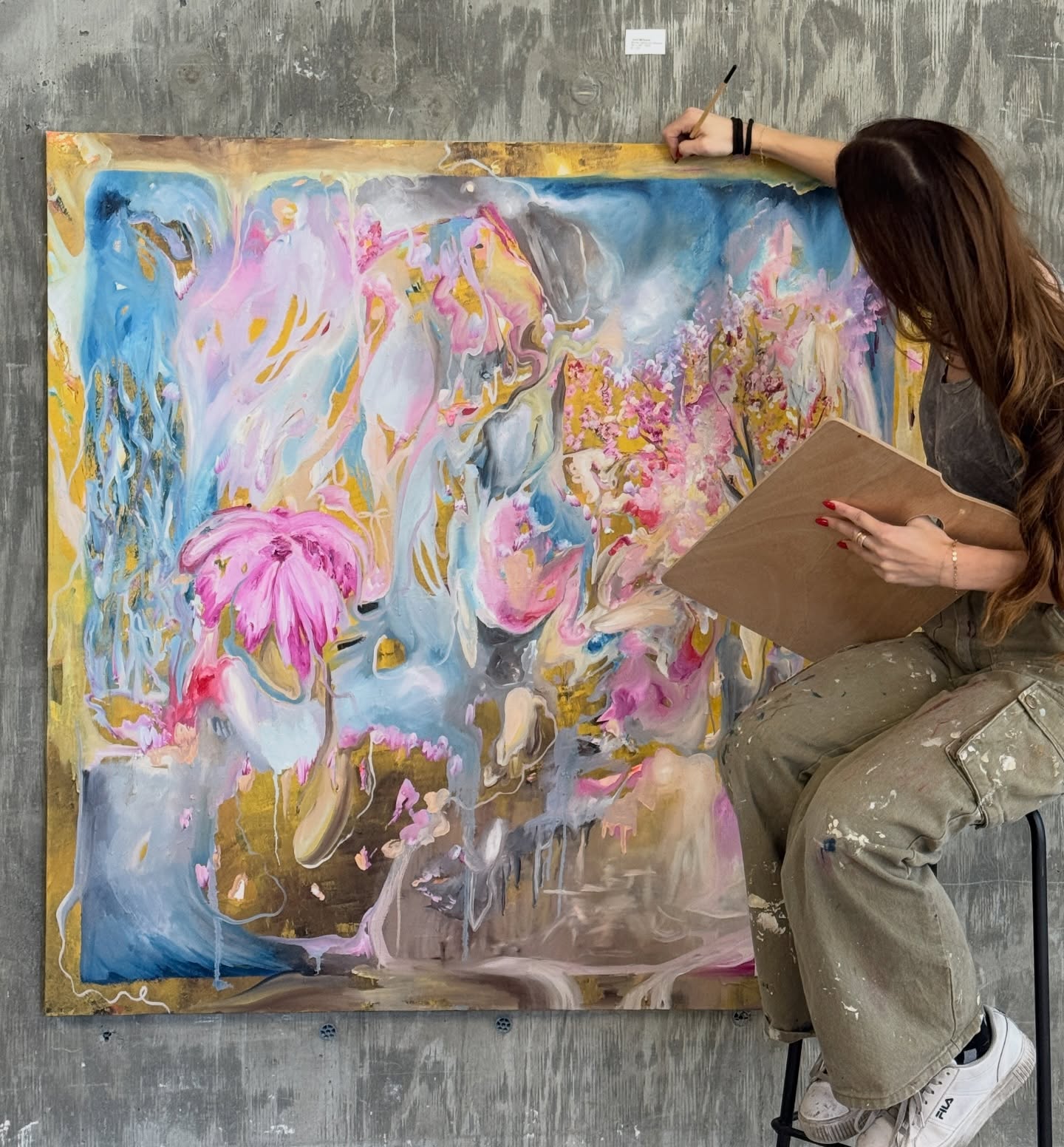
Rachel Berkowitz is a painter, photographer, and performance artist whose work moves fluidly between London's classical sensibility and the saturated warmth of Los Angeles. Rooted in biophilia and a deep belief in art as emotional care, her luminous canvases dissolve landscape into inner life — inviting viewers into what she calls a more poetic state of being. Through her studio practice and æsthetíque studio, she has built a creative world where beauty, accessibility, and transformation coexist.
1. You move between London's romantic restraint and Los Angeles's saturated glow — where do those two visual languages collide most intensely in your work?
They collide in the tension between structure and atmosphere. I paint with constant contrast, both physically on the canvas as well as emotionally. London — where I grew up — gave me a deep sensitivity to history, composition and restraint, while living in Los Angeles has opened up my relationship to light, color and emotional immediacy. In my work, that intersection shows up as classical compositions dissolving into luminous, almost dreamlike environments. Imagine an ancient fresco melting into modern light.

2. Your practice is rooted in biophilia, but your imagery feels more emotional than literal — are you capturing nature itself, or the psychological imprint it leaves behind?
I'm much more interested in the psychological imprint. Nature in my work is not about documentation, it's about sensation. It's the feeling of air on your skin at dusk, the softness of a garden after a long day, the emotional exhale that happens when you step outside into the sun, or the rush from the aftermath of a gathering. The landscapes become internal states as much as external spaces. I view the natural world as if it's its own party. When my paintings are viewed, my audience knows that they're invited to softly celebrate.
3. There's a palpable sense of light and motion across your pieces — does that energy come from your background in performance, or is it something you construct more deliberately in the studio?
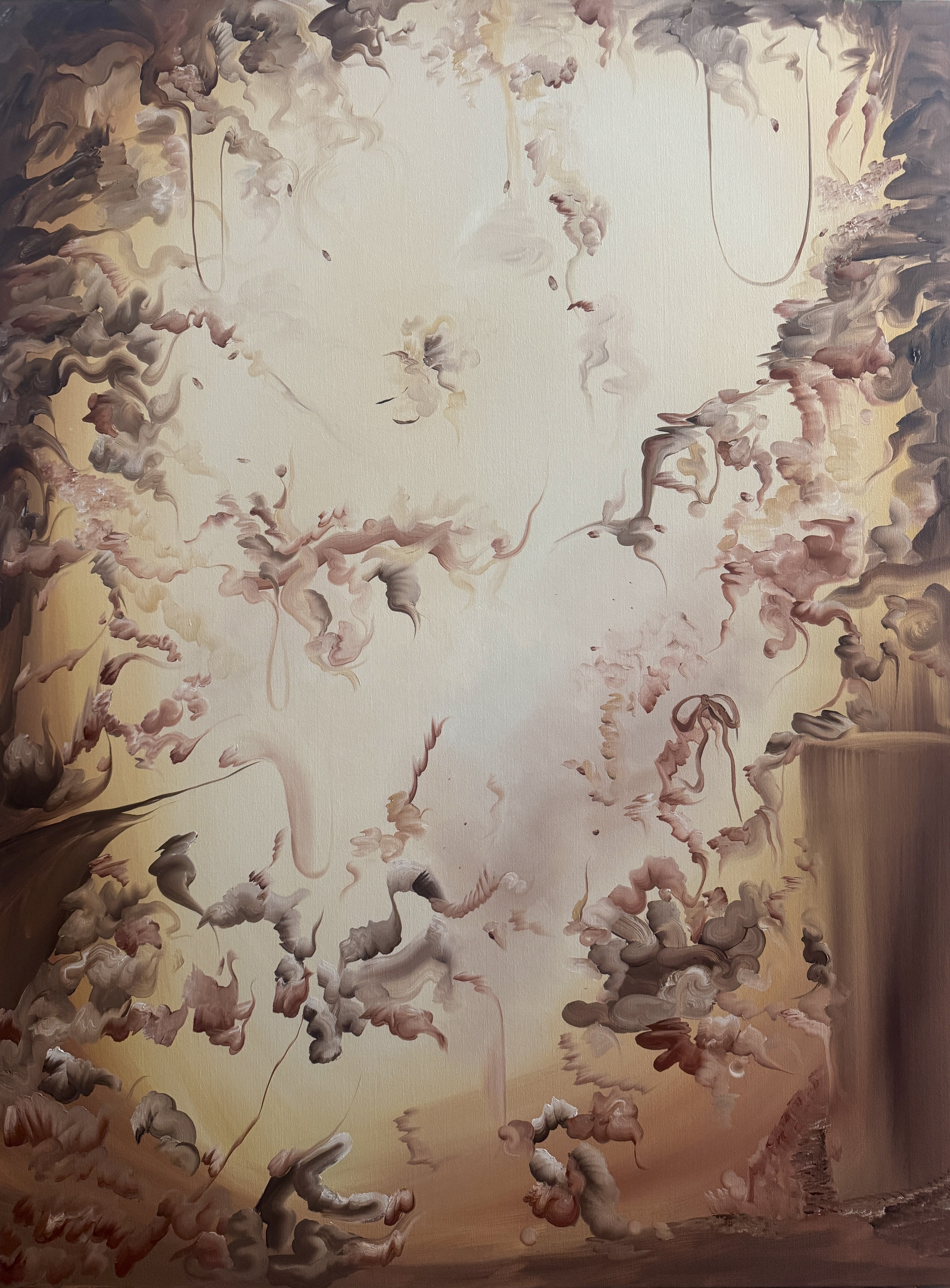
My work always begins with a nod to performance, whether it's begun in a live setting, or sketches have been made during an event, or even moments I'll photograph and then refine into paintings in my studio. I always paint to music and that rhythm creates a kind of embodied movement in the brushwork. Later, I shape and edit that energy more deliberately, but I try not to lose the initial spontaneity. The goal is for the painting to feel like it's still moving, even when it's still.
4. You speak about "mental transformation" — is that something you set out to depict, or something that reveals itself to you in the process of making?
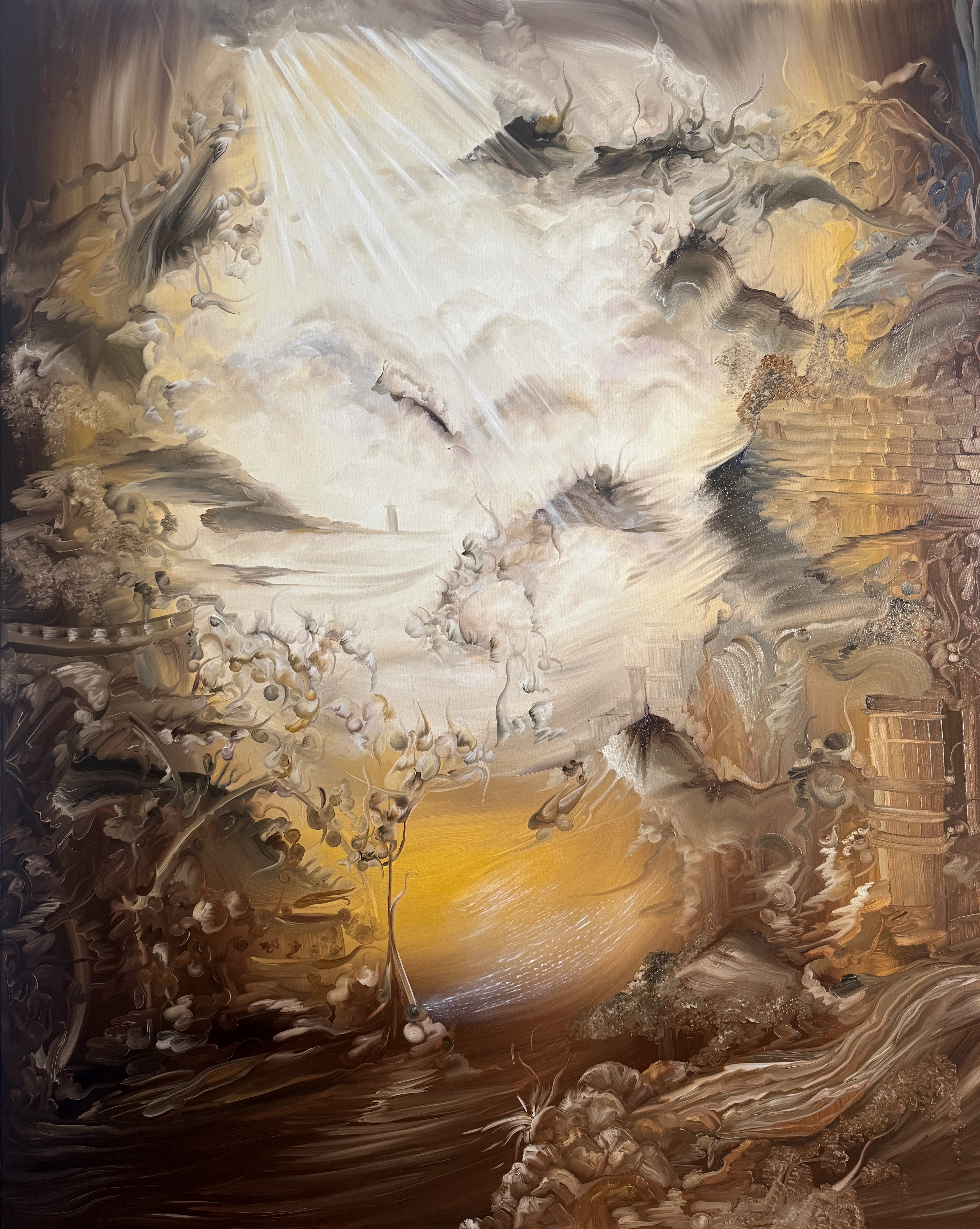
It reveals itself through the process. I constantly reframe negative life situations, aiming to guide my viewers toward openness through the feelings evoked by my artwork. I view my paintings as portals that oscillate between life and afterlife, the physical and dream world, creating windows through which viewers can step into a more poetic state of being. I don't start with a fixed idea of transformation, but I notice that as I paint, the work shifts emotionally and spatially. Figures dissolve, environments open up, and something softer or more expansive takes over. That shift mirrors an internal change, both for me and, hopefully, for the viewer.
5. Working across painting, photography, and performance, your practice resists staying in one lane — what determines the form a piece ultimately takes?
The form is determined by the kind of experience I want to create. If it's about lingering immersion and atmosphere, it becomes a painting. If the goal is capturing a fleeting moment or raw energy as it happens, photography is the answer. Performance exists only in the present for its immediate audience. I think of each medium as a different way of holding time and emotion.
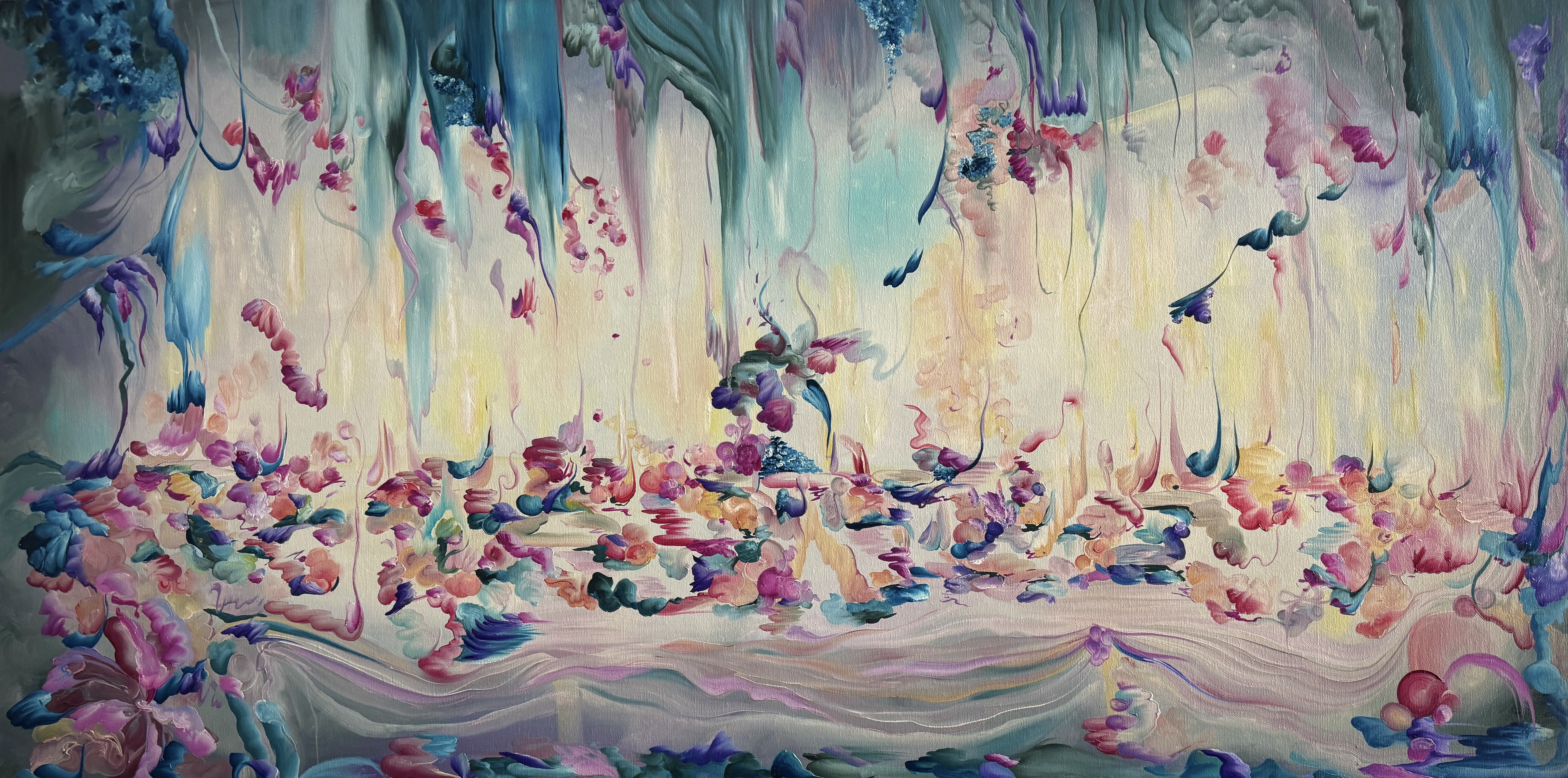
6. Your work threads classical art history through a distinctly contemporary palette — what past influences feel most alive in your work right now?
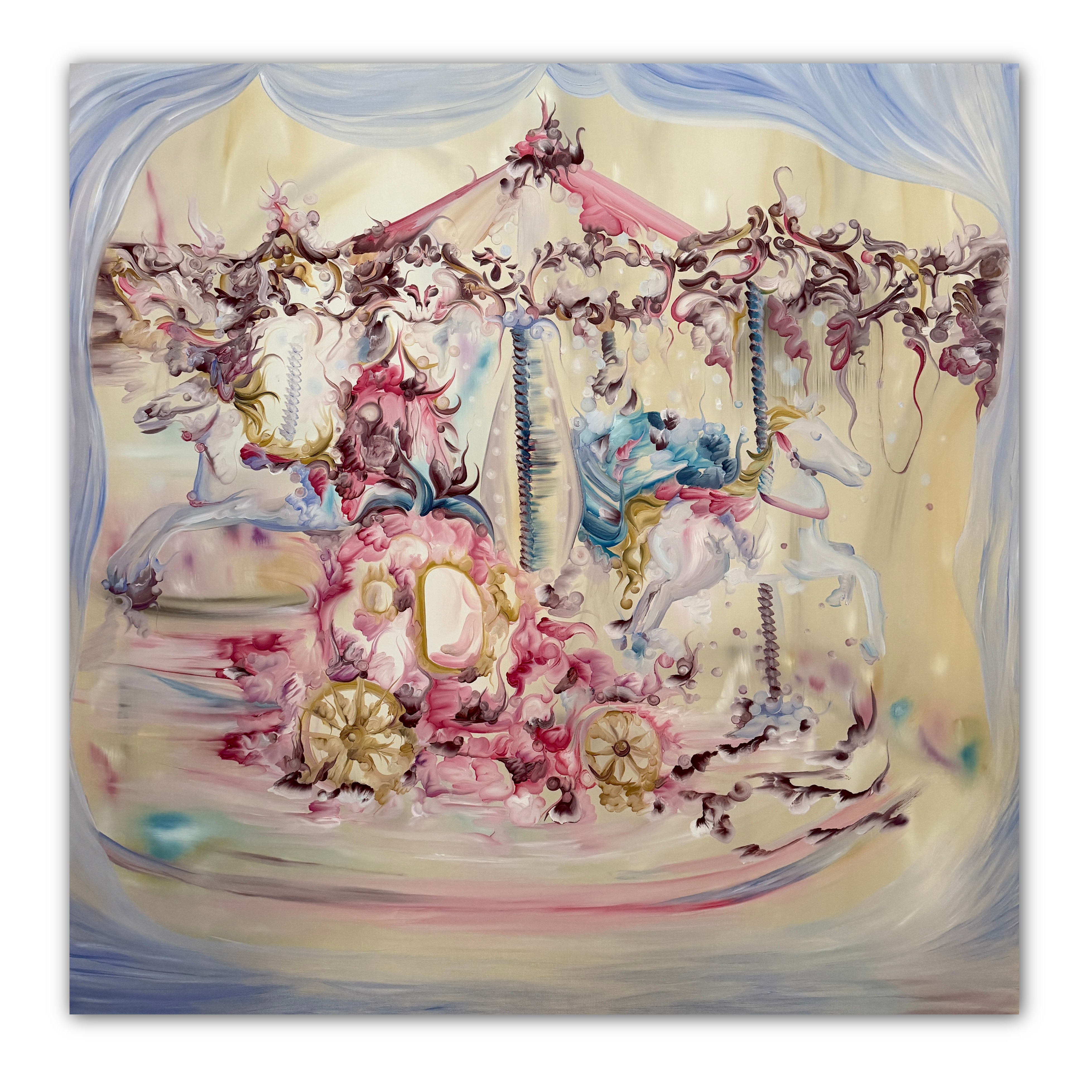
Right now, I feel deeply connected to French Rococo painters and Italian fresco traditions. There's a sense of lightness, movement and devotion to beauty in those works that continues to resonate with me, especially in how they transform everyday pleasures into something poetic and elevated. I'm particularly drawn to the concept of Fête galante, where scenes of gatherings, concerts in the woods and fleeting romantic encounters were depicted as playful, almost theatrical reflections of French society. There's an intimacy and softness in those compositions that feels both escapist and emotionally real.
In my work, I reinterpret that spirit through a contemporary lens. I'm interested in carrying forward that celebration of leisure and connection, but shifting its meaning. My paintings position joy not as something to earn or justify, but as something to inhabit fully. The environments and abstract gestures become less about narrative and more about emotional atmosphere. In this way, the series becomes a kind of sanctuary — a space where viewers are invited to step into pleasure and presence, and where life feels abundant and richly alive.
In my work, I reinterpret that spirit through a contemporary lens. I'm interested in carrying forward that celebration of leisure and connection, but shifting its meaning. My paintings position joy not as something to earn or justify, but as something to inhabit fully. The environments and abstract gestures become less about narrative and more about emotional atmosphere. In this way, the series becomes a kind of sanctuary — a space where viewers are invited to step into pleasure and presence, and where life feels abundant and richly alive.
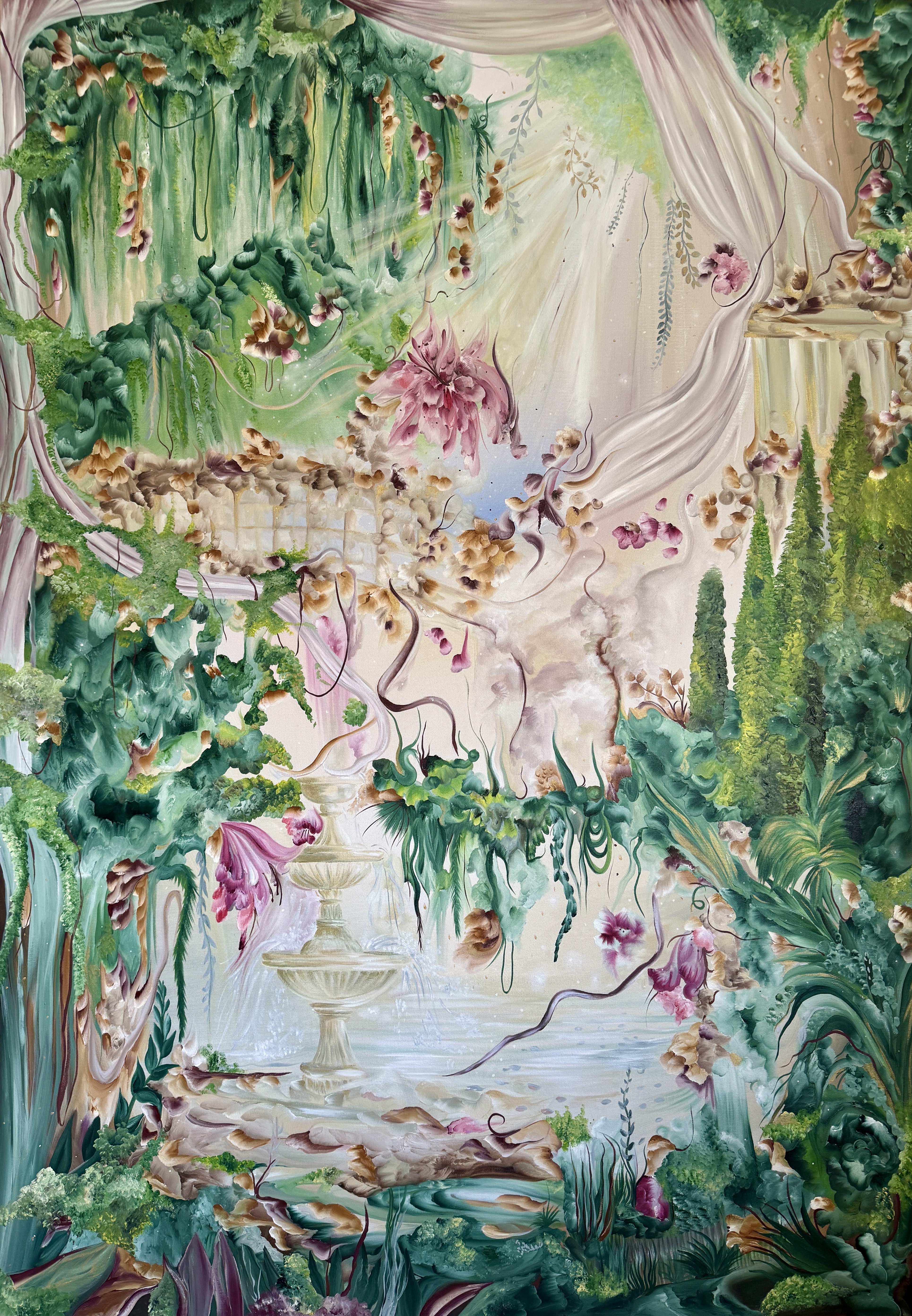
7. With æsthetíque studio, you've built a space centered on accessibility and emotional well-being — how has holding space for others reshaped your own relationship to making art?
It's made my work more generous. Holding space for others, especially in community settings, has shifted my focus from creating something purely visual to creating something that feels supportive and open. It's reinforced the idea that art can be a form of care, not just expression — and that has deepened the emotional intention behind everything I make. Seeing adults respond to my workshops and classes with such positivity and gratitude fulfills me deeply.
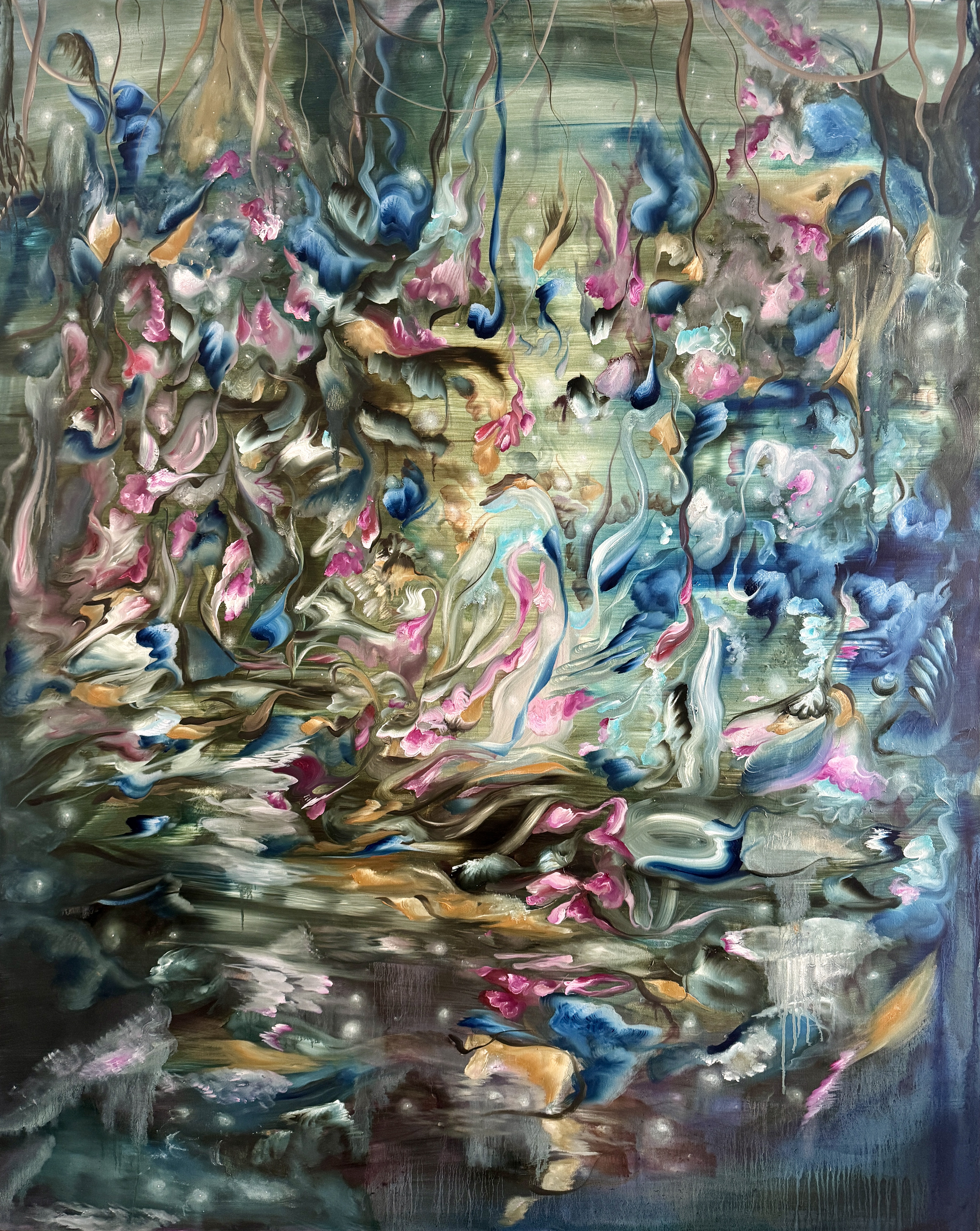
8. Your work has lived everywhere from gallery walls to fashion week stages and screen appearances — how much does context shape the way you conceive a piece before it's even made?
Context certainly plays a role, especially if the work is created live. The environment I work in always determines the sensations behind the work, as well as the forms, colors and compositions themselves. Even when I'm alone in my studio painting, music and my emotional state influence the work, as well as the setting or references I am drawing from. I consider how a piece might live in a space, whether it's a gallery, a performance or a more public setting, but the emotional core stays consistent. Ideally, once created, the work carries its own atmosphere with it and transforms whatever environment it enters.
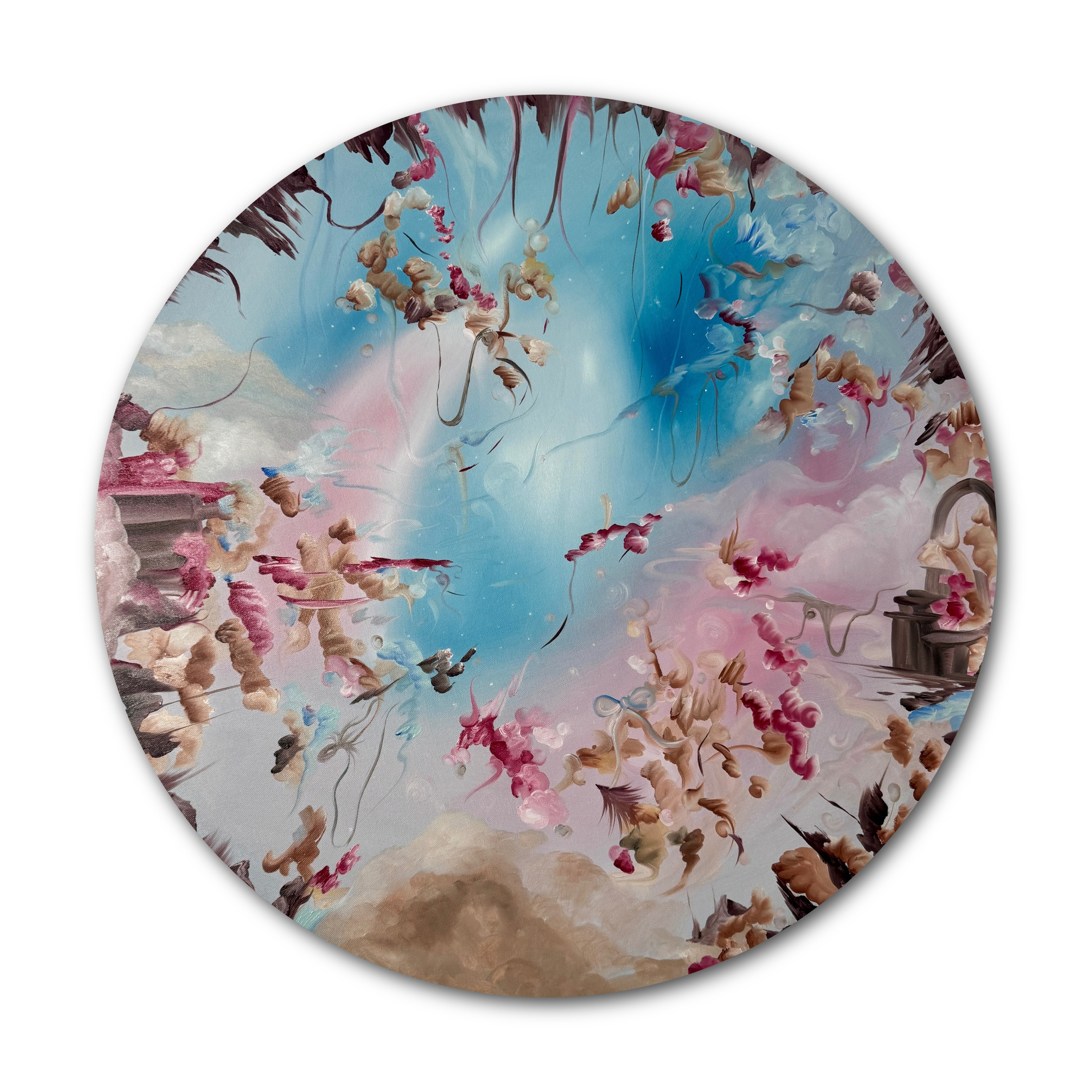
Follow Rachel on Instagram at @rachelberkowitzart