
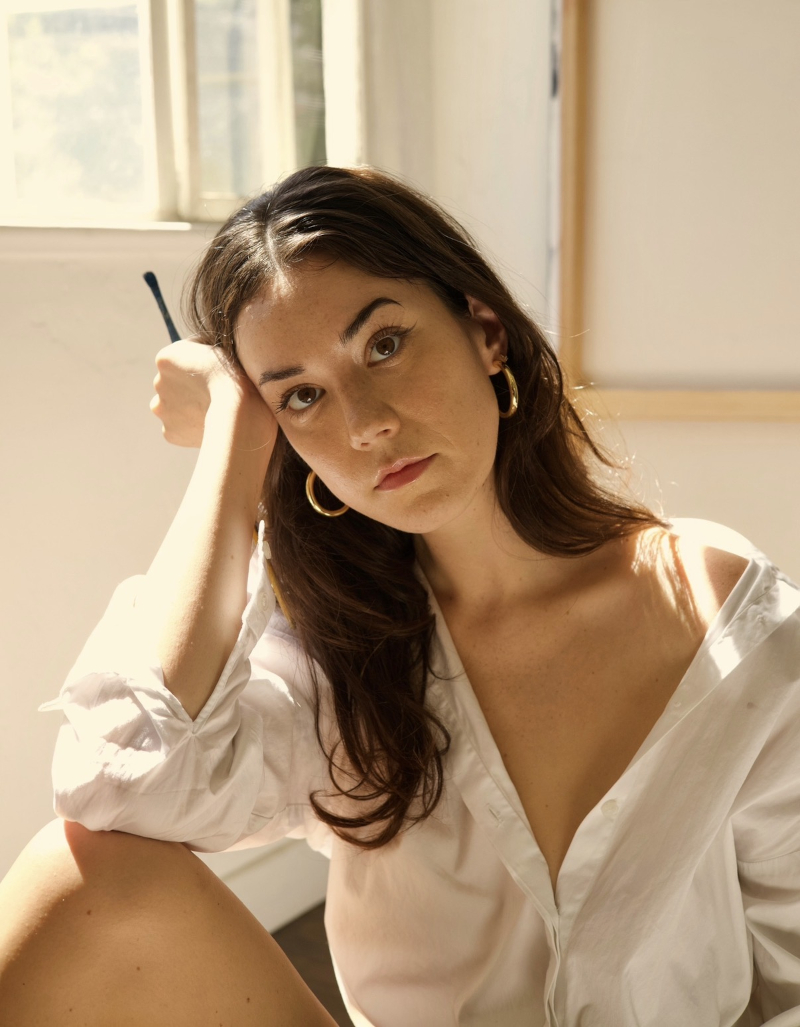
Havilah Abrego is not only a painter, but also a marine biologist who infuses her daily work as a scientist into her art. Her emotional connection to nature defines the different dimensions of her practice, and her love for the ocean resonates deeply in her work. Havilah shares her thoughts on the meaning of the color blue, whales, and art as a channel of connecting humanity with nature and personal memories. The artist focuses on the energy between the natural and the human world in her work to deepen understanding of both.
1. You are an artist and a marine biologist living on Oahu, Hawaii. How do you combine art and science in your daily life?
I feel incredibly grateful to have built a life that allows me to be fully immersed in both art and science. I think of the dynamic between these two very different disciplines as an intimate relationship; it is quite romantic. When I was younger, I always held art and science separately and did not yet have the expansion to see how powerful they can be together. As I dedicated more time to understanding them individually, I began slowly exploring what it would look like if they bled into each other.
As I've worked on nurturing this relationship over the years, I learned that for that marriage to flourish, it's critical to dedicate time to each of them independently of each other. Entering either discipline feels like going through a portal into an entirely different dimension. Providing attention and love to each world requires vastly different facets of myself to show up; it really does feel like shapeshifting. Exploring science and art on a daily basis is not just a career or a degree but it is the way that I have chosen to move through everyday life. Participating can be as simple as spending time in my studio or sitting outside and observing my surroundings. It also looks like working in a chemistry lab, or working on mathematical problems, and seeing the artistic patterns in it all. It can be getting in the water to observe marine wildlife in the morning and then painting them in the evening.
As I've worked on nurturing this relationship over the years, I learned that for that marriage to flourish, it's critical to dedicate time to each of them independently of each other. Entering either discipline feels like going through a portal into an entirely different dimension. Providing attention and love to each world requires vastly different facets of myself to show up; it really does feel like shapeshifting. Exploring science and art on a daily basis is not just a career or a degree but it is the way that I have chosen to move through everyday life. Participating can be as simple as spending time in my studio or sitting outside and observing my surroundings. It also looks like working in a chemistry lab, or working on mathematical problems, and seeing the artistic patterns in it all. It can be getting in the water to observe marine wildlife in the morning and then painting them in the evening.
2. How do you translate your love for the ocean and nature into art?
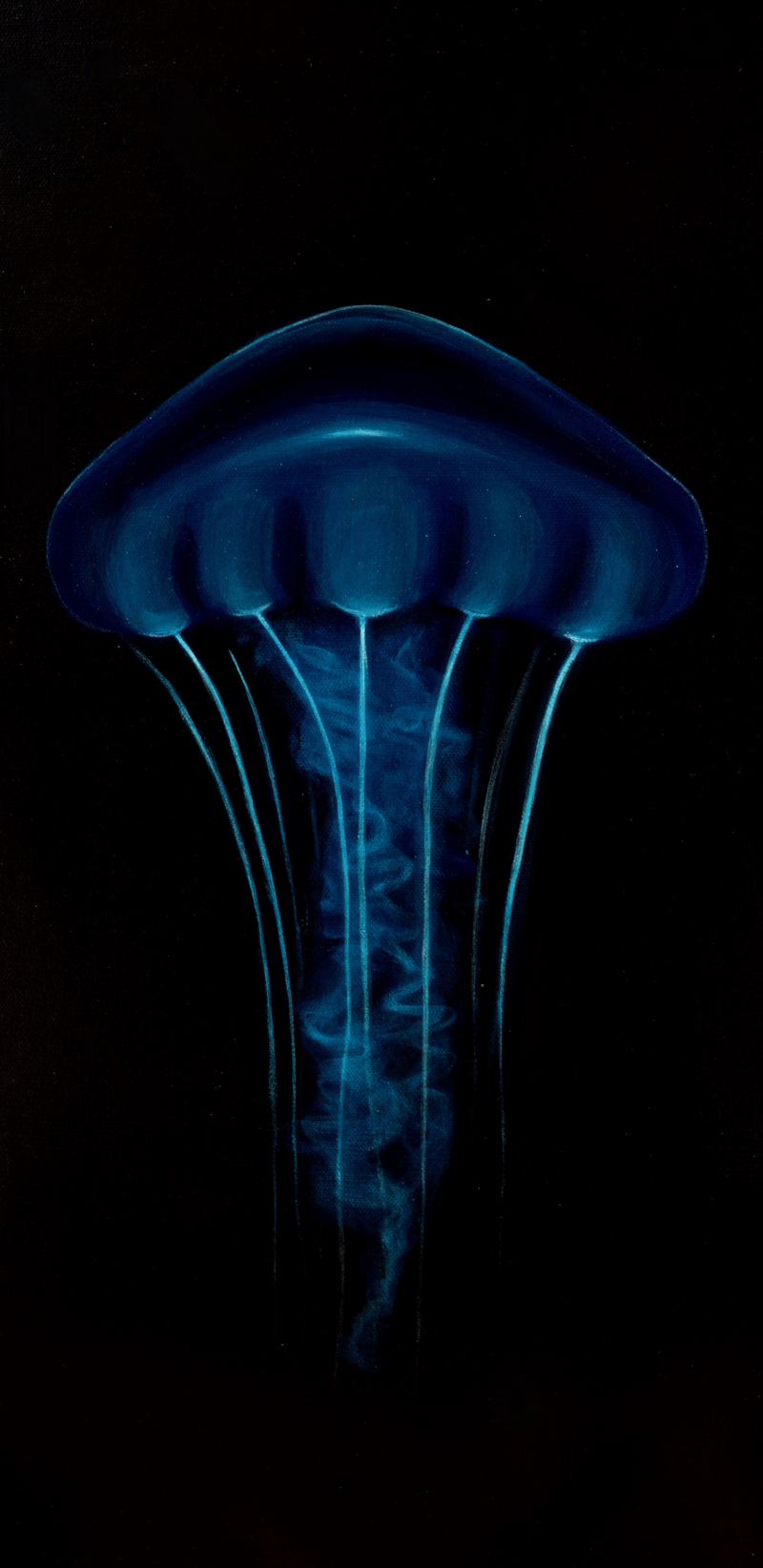
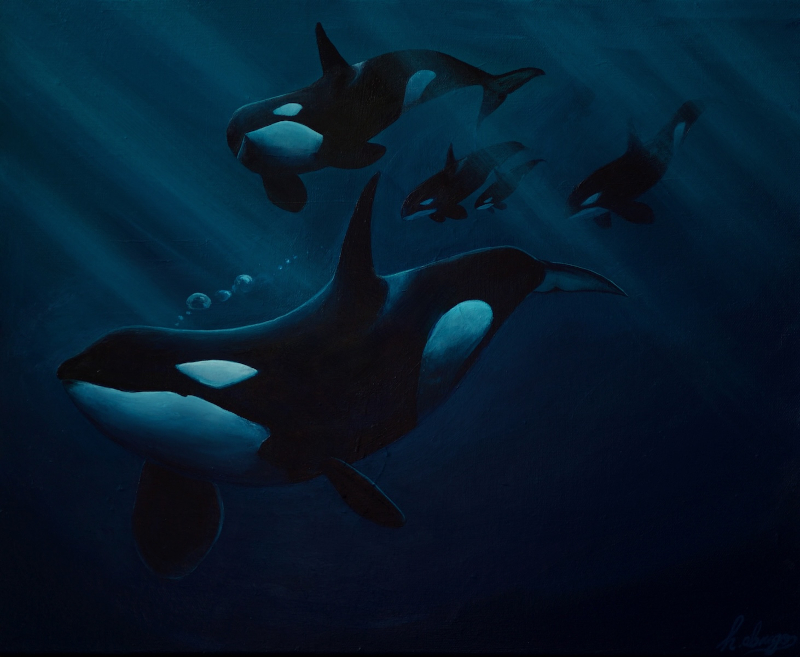
Ultimately, my goal is to prompt my audience to pause and consider their emotional connection to the natural world. We are such emotional creatures, and I think this is where a massive amount of power lies when it comes to observing a piece of art. When I am creating a piece, I am entering a very emotional state, focusing on reliving the way that the moment made me feel. This usually results in more vibrant colors, very dramatic lighting, and exaggerated perspective.
I am also finding that the larger the piece, the more impactful it is emotionally. Especially with my whales, you can't help but stop and let your mind wander for a moment and imagine what it would feel like to be next to an animal so large. The most impactful pieces really force a moment of evaluation — forcing us to reflect on what makes us feel. When I love, I love very deeply; I hope that my paintings can evoke even a fraction of the emotion I feel when I experience the ocean.
I am also finding that the larger the piece, the more impactful it is emotionally. Especially with my whales, you can't help but stop and let your mind wander for a moment and imagine what it would feel like to be next to an animal so large. The most impactful pieces really force a moment of evaluation — forcing us to reflect on what makes us feel. When I love, I love very deeply; I hope that my paintings can evoke even a fraction of the emotion I feel when I experience the ocean.

3. What is the inspiration you draw from your work as a marine biologist? Does your knowledge of astrophysics help with balancing your passions for nature and the ocean?
Almost all of my paintings are created from memory, capturing the most impactful moments that have shaped my perspective of the ocean and our relationship with it. As I mentioned previously, the power of emotion drives most of my paintings, and I have to put energy into creating time and space where I enter that state of manifesting those emotions. It takes work. Living in Hawai'i has completely immersed me in my inspiration and does make the process much easier.
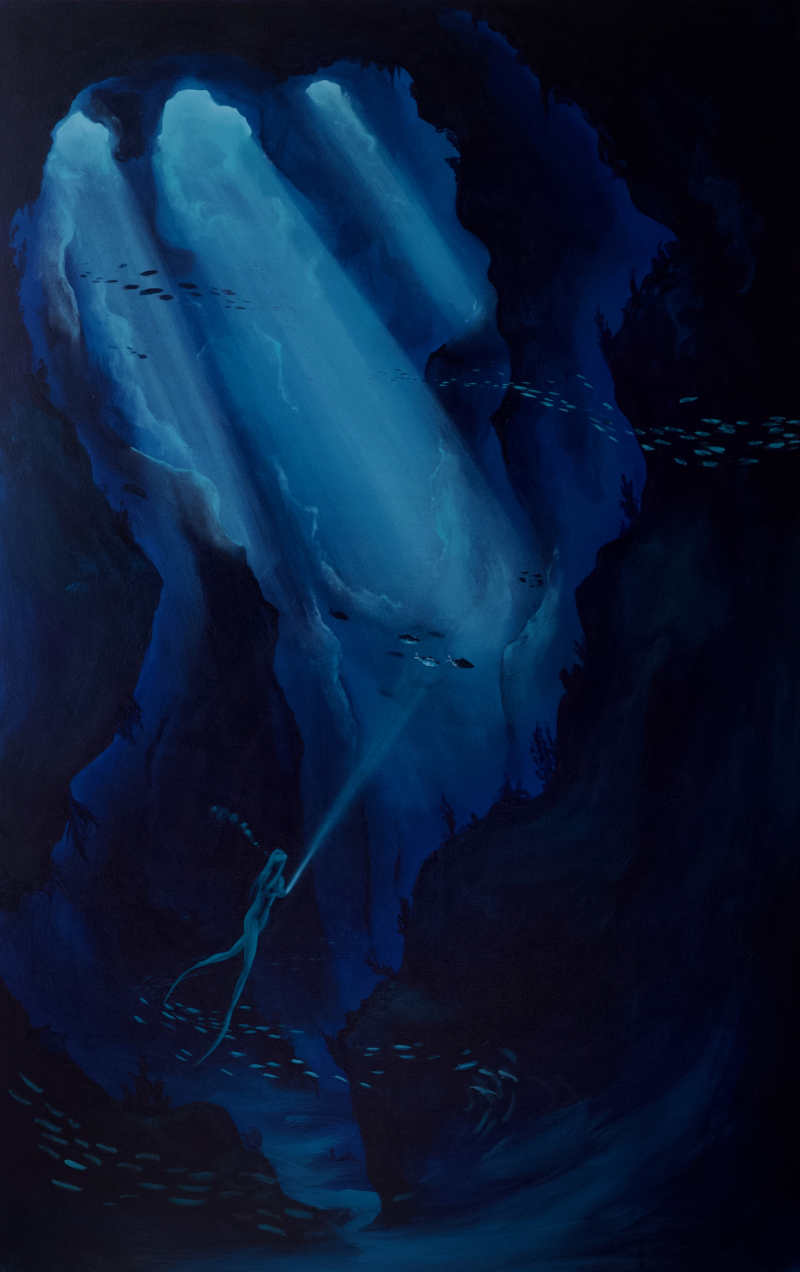
My decision to study astrophysics was a very intentional one. Since the day I started working toward my SCUBA certification when I was 12, I have been telling people: SCUBA diving feels like the closest thing I can get to being in outer space. Once I started working on my degree, I realized that understanding what is happening in outer space can help me bring everything together. The entire physical world is connected, and there is so much we don't understand. I want to help bring humanity just a little bit closer to the mystery of it all.
My decision to study astrophysics was a very intentional one. Since the day I started working toward my SCUBA certification when I was 12, I have been telling people: SCUBA diving feels like the closest thing I can get to being in outer space. Once I started working on my degree, I realized that understanding what is happening in outer space can help me bring everything together. The entire physical world is connected, and there is so much we don't understand. I want to help bring humanity just a little bit closer to the mystery of it all.
4. We are interested in your artistic journey. What made you become an artist, and do you feel that art has contributed to your scientific work?
There are many self-taught artists in my family, and I was always surrounded by different forms of art growing up. My dad is a painter, my grandfather was a painter, and so was my great-grandmother. My dad had an art studio in the backyard of my childhood home, and my grandfather — whose entire home was his studio — lived a couple blocks away from where I grew up. I was homeschooled as a child, and both my parents were incredibly supportive of integrating creativity and art into my learning process. My dad introduced me to acrylic painting when I was around 7 years old, and it feels like I haven't gone a single day without painting since then.
Painting my dreams as a child quickly became a way to enter the life that I fantasized about living. Then, when my grandpa passed away, I kept all of his art supplies, and I still use them to this day. It feels even deeper now — it has become a part of honoring my heritage. I never thought of it as becoming a career. Painting just became a way of life, and the financial support to keep creating began to manifest in incredible ways.
Bringing the two disciplines together was an unexpected challenge, and I am only just beginning to understand how deeply they can inform each other. The beautiful reality is, we never have to choose — everything is connected, and we are multi-faceted for a reason.
Painting my dreams as a child quickly became a way to enter the life that I fantasized about living. Then, when my grandpa passed away, I kept all of his art supplies, and I still use them to this day. It feels even deeper now — it has become a part of honoring my heritage. I never thought of it as becoming a career. Painting just became a way of life, and the financial support to keep creating began to manifest in incredible ways.
Bringing the two disciplines together was an unexpected challenge, and I am only just beginning to understand how deeply they can inform each other. The beautiful reality is, we never have to choose — everything is connected, and we are multi-faceted for a reason.
5. Your large-scale paintings of whales are very realistic and detailed. What fascinates you about whales and their role in the marine environment?
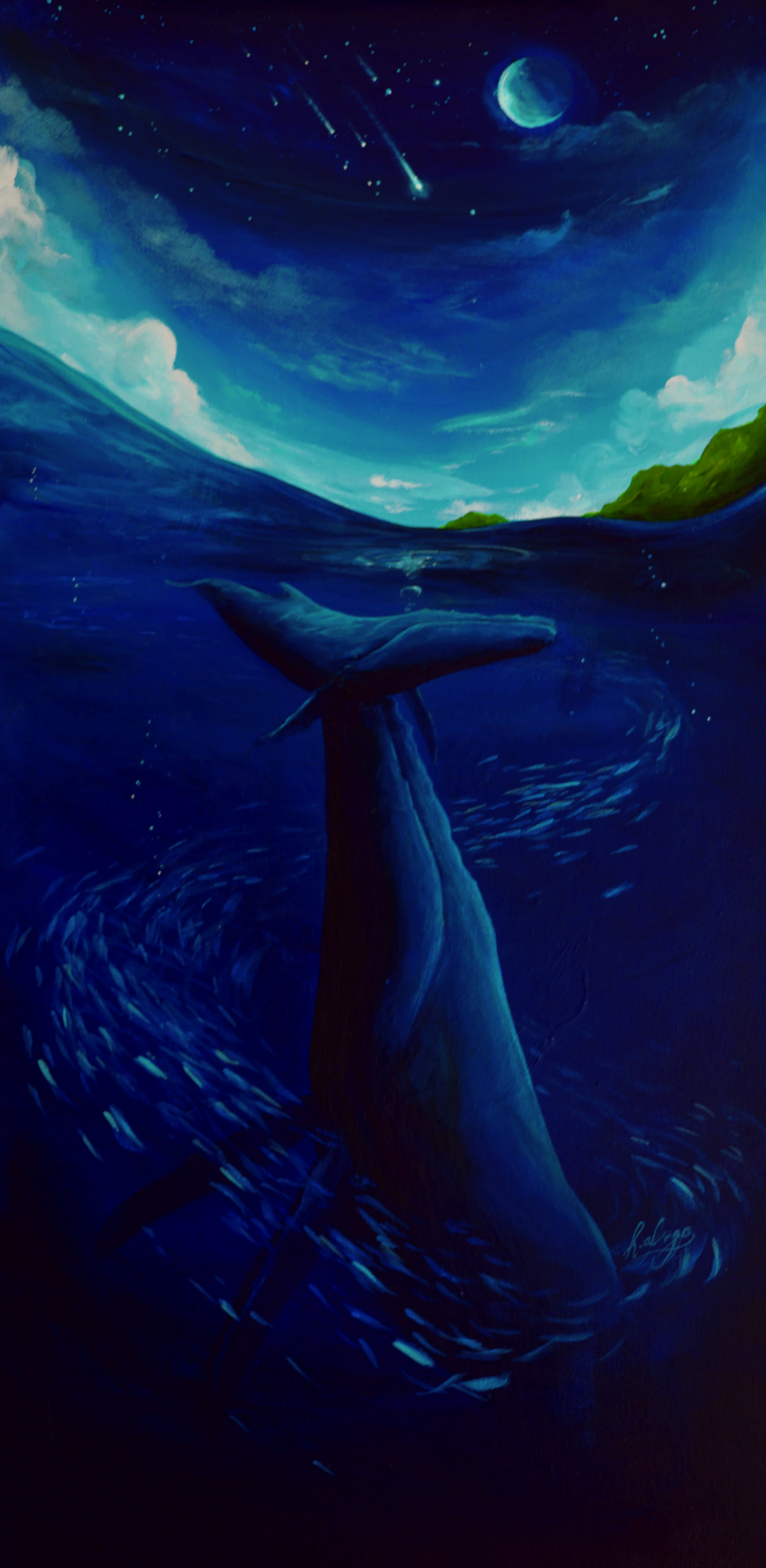
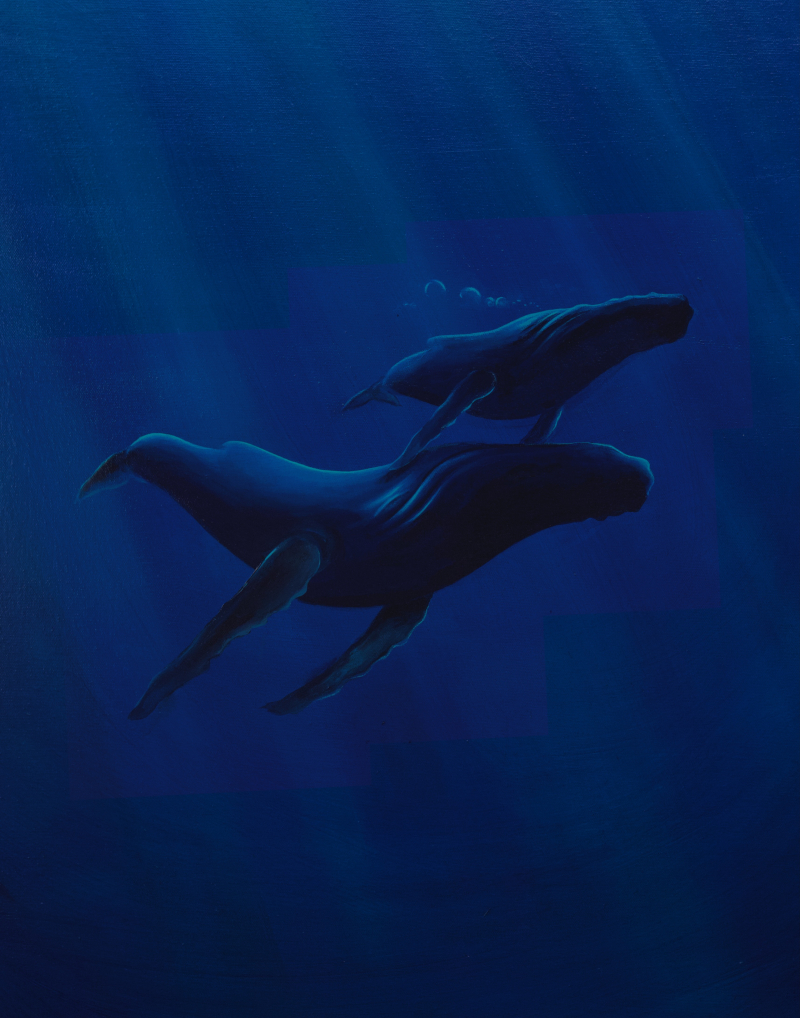
Since I was a young child, I have had a very spiritual connection to whales. I had vivid dreams of them frequently and I still do to this day. There is a reason why so many cultures and religions around the world hold cetaceans — whales, dolphins, porpoises — at such a sacred level. I started expressing this fascination for whales when I first started learning how to paint. The very first piece I ever created with my dad was of a mother Humpback whale and her calf, and I still have this piece hanging in my home.
Painting whales allowed me to further explore their energy and my fascination for them, long before I had access to knowing them in real life. As my style developed, the paintings grew larger. Before I even started sharing my work with the world, I craved larger and larger paintings — they just allowed me to dive deeper into that emotion. I quickly realized that they had the same effect on an audience as they did for me, and that has been a really fulfilling part of sharing my work with the world. Today, I have years of experience working with marine mammals in the wild and under human care, and I have an entire body of work documenting my emotional experience through it all. Whales seem to bring us back to our humanity, and there is so much yet to learn from them.
Painting whales allowed me to further explore their energy and my fascination for them, long before I had access to knowing them in real life. As my style developed, the paintings grew larger. Before I even started sharing my work with the world, I craved larger and larger paintings — they just allowed me to dive deeper into that emotion. I quickly realized that they had the same effect on an audience as they did for me, and that has been a really fulfilling part of sharing my work with the world. Today, I have years of experience working with marine mammals in the wild and under human care, and I have an entire body of work documenting my emotional experience through it all. Whales seem to bring us back to our humanity, and there is so much yet to learn from them.
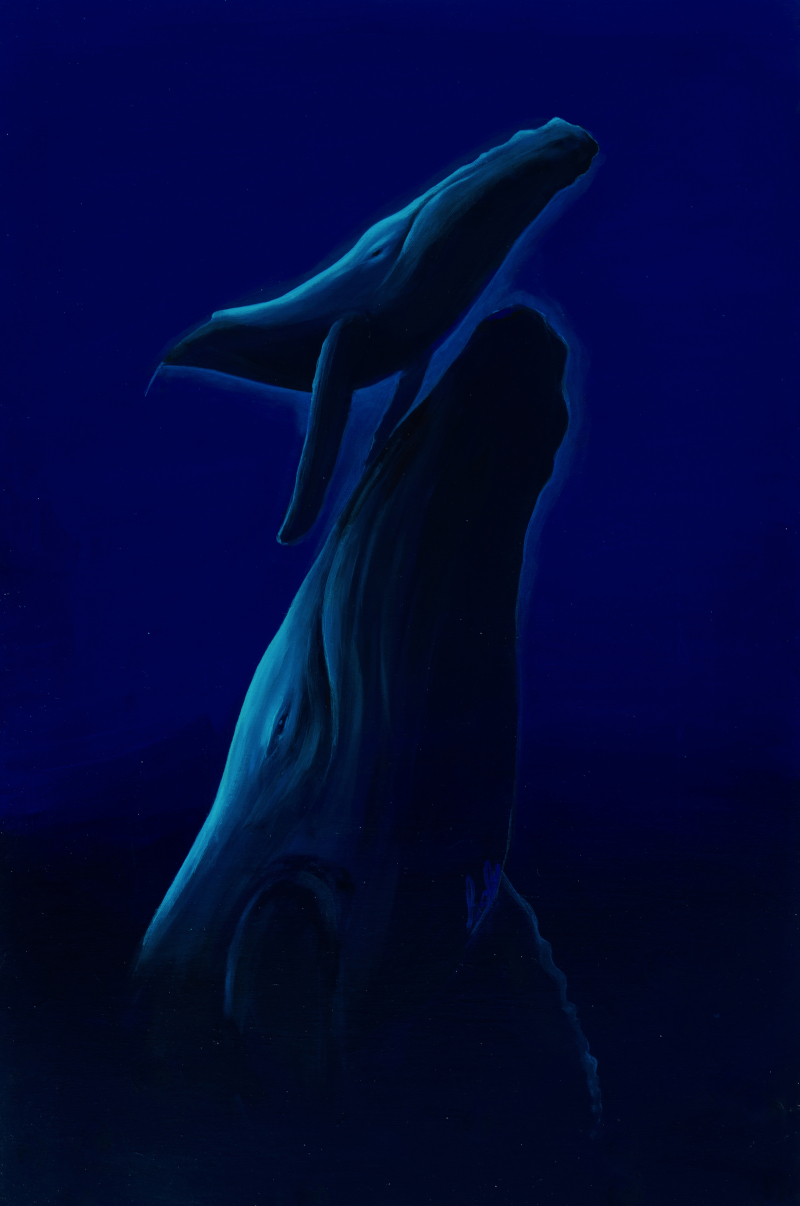
6. What do the different shades of blue stand for in your paintings?
Blue is a powerful color. I think it goes much deeper than just being a pretty color. Many viewers describe my pieces as "calming" or "relaxing," and many people well up at the sight of such a vibrant blue. Could we possibly consider the possibility that our body is responding to an ancient memory? Why do we respond the way we do to certain colors? There certainly is much science behind this, but I really do feel like there is a profound connection to the color blue that can awaken a deep connection to our blue planet that we may have lost touch with in the modern world.
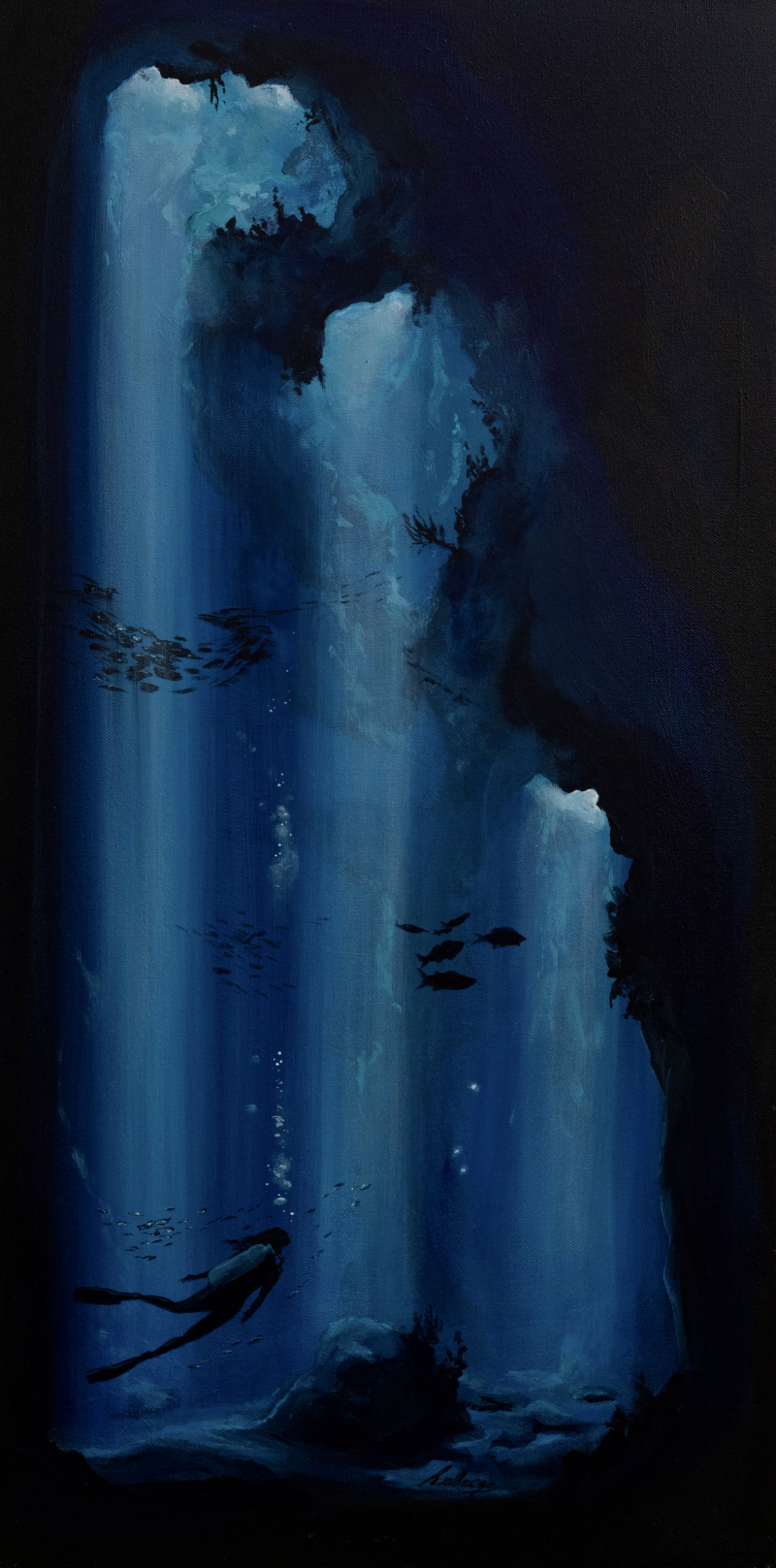
7. How would you describe the art community in Hawaii? Are you collaborating or exhibiting with other local artists?
I am still quite new to the art community on the island; I have lived on O'ahu for about a year now. I am excited to have made many wonderful connections and built a beautiful foundation. So far, I am delighted to find that there is a tight-knit community here. I am very excited to currently be working on new collaborations here in Honolulu that are very exciting advancements in my career, and I will be sharing them later this year.
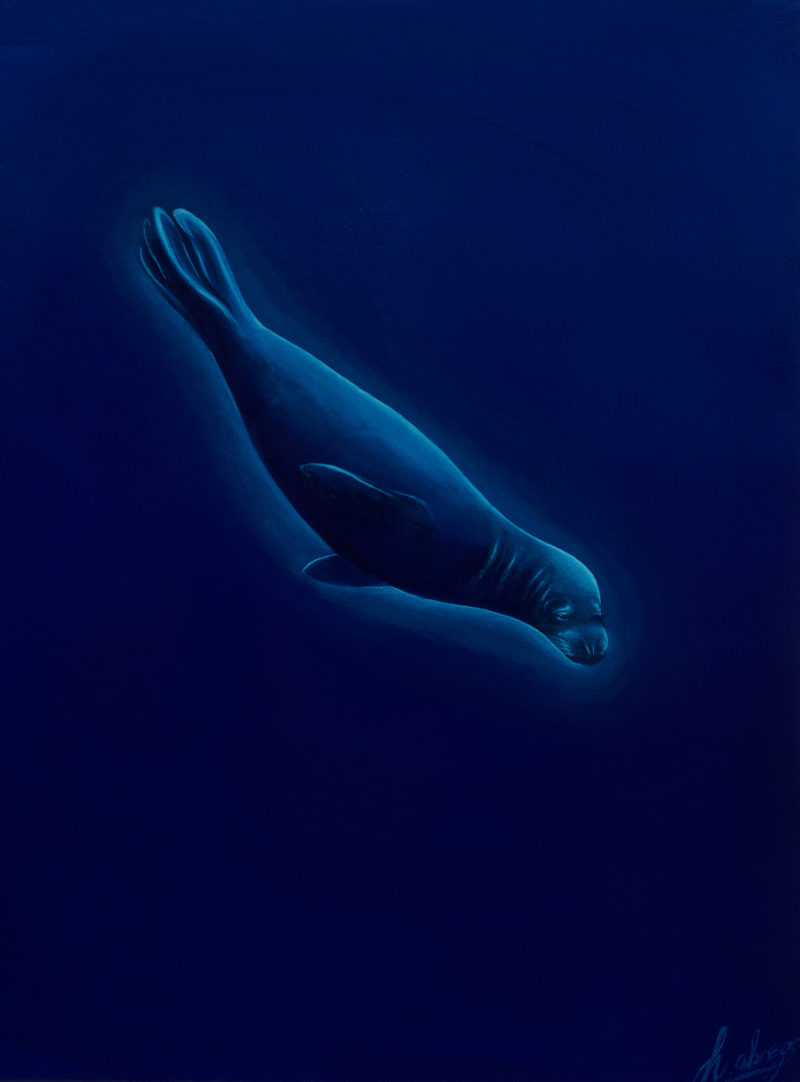
8. How can art help to understand and deepen the connection between the human and the natural world and make humans more aware of their responsibility towards the environment?
Art is a really powerful tool in conservation. It has the ability to reach people on an incredibly personal level, regardless of our background, beliefs, or perspective. It reconnects us to our humanity. Creating art is an innate human trait. Whether or not someone chooses to formally identify as an artist, we can all relate to the desire to create.
Throughout my career, I have stumbled upon a really beautiful trend of people looking at a painting and suddenly remembering a memory from their childhood, or a wonderful dream they had wished was real — or they may even feel connected to a loved one who has passed. We may not ever understand what energy moves through us when we look at a piece of art, but the presence of it is undeniable. It brings us home to ourselves, our humanity, and the unique gifts that we have within us. Participating in ocean conservation looks different for each and every one of us, and it is our right as human beings living on this planet to participate in conservation in the unique way we are called to do so. I really believe that art can help us learn what that looks like for us.
Throughout my career, I have stumbled upon a really beautiful trend of people looking at a painting and suddenly remembering a memory from their childhood, or a wonderful dream they had wished was real — or they may even feel connected to a loved one who has passed. We may not ever understand what energy moves through us when we look at a piece of art, but the presence of it is undeniable. It brings us home to ourselves, our humanity, and the unique gifts that we have within us. Participating in ocean conservation looks different for each and every one of us, and it is our right as human beings living on this planet to participate in conservation in the unique way we are called to do so. I really believe that art can help us learn what that looks like for us.
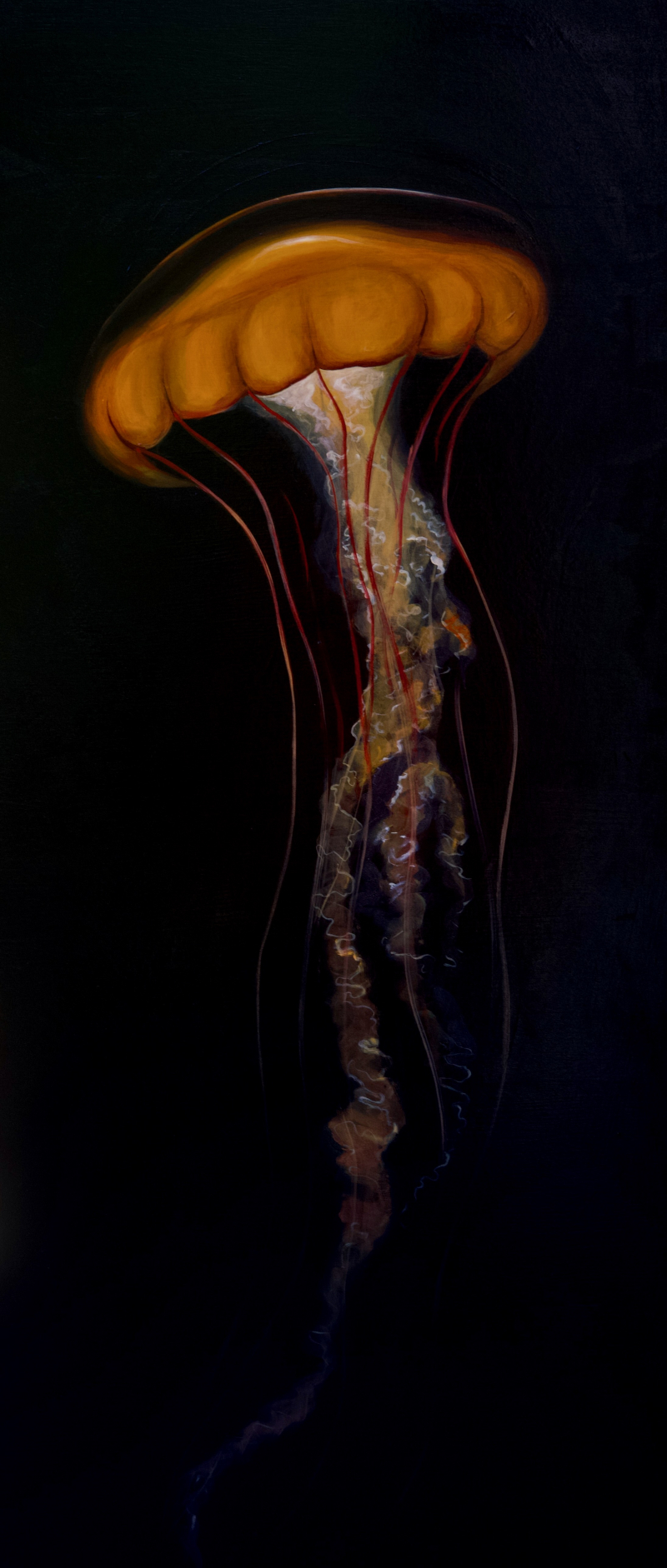
9. What have you learned from your studies and work as a scientist that you would like to carry forward?
Studying science is a practice rooted in curiosity, empathy, and creativity. These are all innate human traits that we all have access to regardless of our status or academic experience, and studying science has ultimately helped me find ways to better connect with humanity. The more I study the physical world, the closer I feel to understanding the power of community a little bit more. Our connection to nature and other humans transcends so many bounds that we feel so strongly in our current world. I want to use both science and art to heal our connection to our global community and to the natural world, and remind people of how powerful they really are.
10. What do you see as the greatest accomplishment of your career? Can you share your plans and projects for the future?
There are so many incredible experiences that I have had at such a young age, I truly am overwhelmed with gratitude for it all. I have worked hard and stayed deeply focused throughout my entire life to overcome massive obstacles to bring these things into my reality. I constantly strive to impress the 8-year-old version of myself; she really is my north star.
I have already built a life that has far surpassed the wildest dreams I had as a child, and that is my greatest accomplishment. Just in my 20s, I have built a life for myself in the Hawaiian Islands, surrounded by marine wildlife, my paintings, and extraordinary people. That is more than I could have dreamt of, and it is all overwhelming and beautiful. With the life that I have, my ultimate goal is to have a profound impact on as many humans as I possibly can, whether that be with my art, my work in science, or just a lovely conversation. All of the other stuff that comes with that is just a wonderful gift.
I have already built a life that has far surpassed the wildest dreams I had as a child, and that is my greatest accomplishment. Just in my 20s, I have built a life for myself in the Hawaiian Islands, surrounded by marine wildlife, my paintings, and extraordinary people. That is more than I could have dreamt of, and it is all overwhelming and beautiful. With the life that I have, my ultimate goal is to have a profound impact on as many humans as I possibly can, whether that be with my art, my work in science, or just a lovely conversation. All of the other stuff that comes with that is just a wonderful gift.
Follow Havilah on Instagram at @havilahabrego and visit her website at havilahabrego.com