
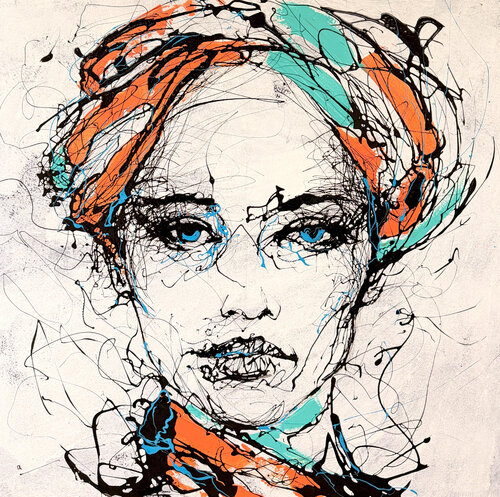
Ole Hedeager is a Danish drip painter who came to abstraction through a fit of rage. A former schoolteacher from a small village in Jutland, he spent years mastering classical figurative drawing before a moment of furious abandon — a roller, a white canvas, and a garden full of flung paint — cracked everything open. What emerged was a practice he calls figurative drip painting: portraits and faces surfacing from what appears to be pure chaos, born from what he describes as a "wrist dance" between control and surrender.
1. You began with classical drawing and precision-based work before moving into drip painting — what pushed you to leave control behind and embrace spontaneity in your practice?
It wasn't a decision. It was a fit of rage. I had spent six months on a single figurative painting — refined, perfected, everything I had poured into it. When I posted it online, it was met with almost total silence. I was devastated, and then furious. I grabbed a paint roller, covered the canvas in white, carried it out into the garden, and started flinging and pouring paint across it. In that moment I found something — or perhaps something found me. My whole life I had drawn with control. That evening I discovered that what I actually needed was on the other side of it.
2. Your drip technique walks a line between chaos and structure — how do you personally define that balance while you're in the act of painting?
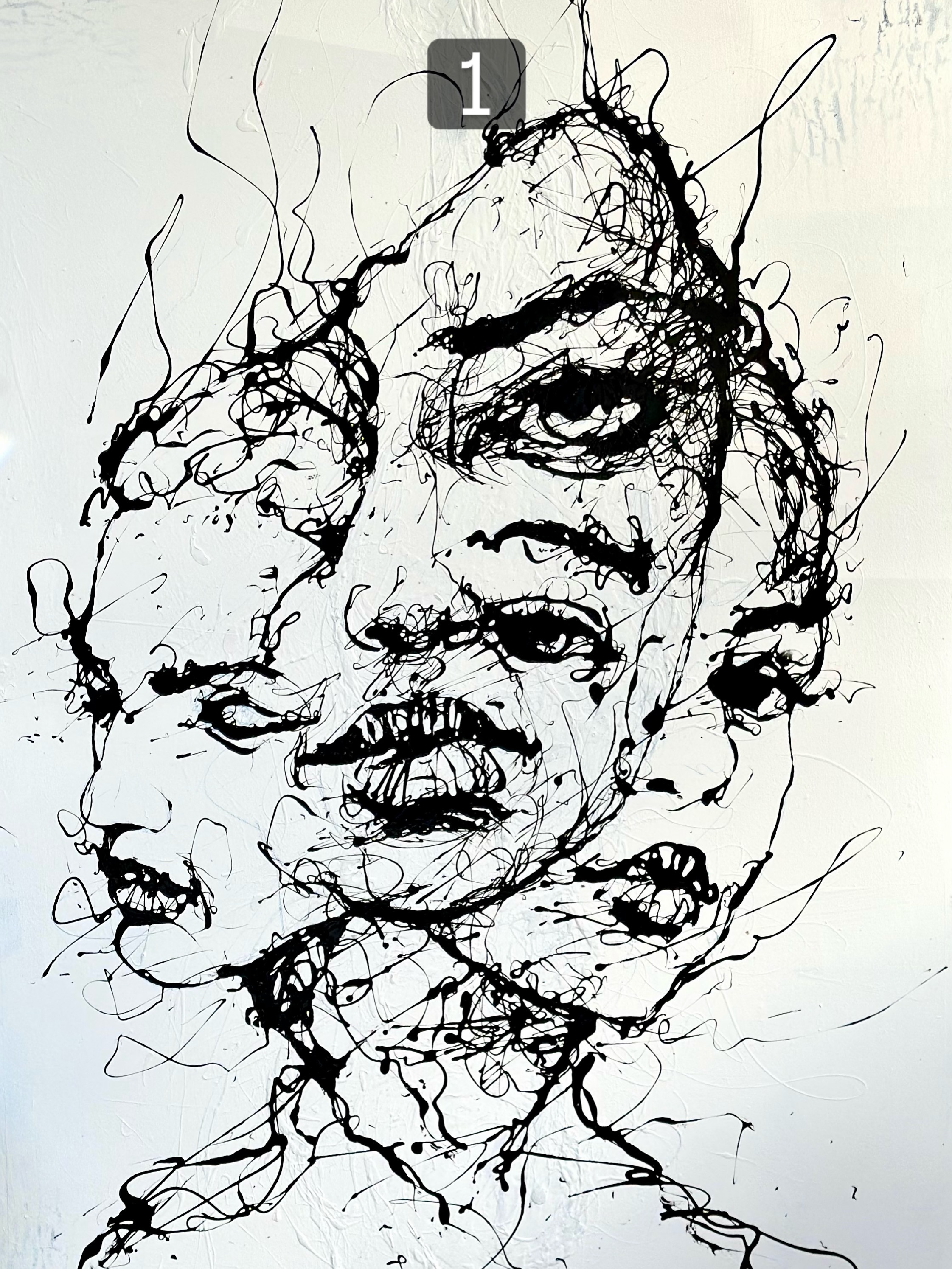
I know the composition before the first drop falls. That's the structure. But once the drop falls, it governs what follows. Each mark triggers the next — intuitively, like a musician improvising over a theme. I control the paint through my wrist; I call it a wrist dance. The rhythm reflects my emotional state in that moment. So the balance isn't something I calculate — it lives in the tension between a composition I've decided on and a process I deliberately let run free.

3. Unlike traditional drip painting, your work often forms figures and faces — what draws you to embedding the human presence within such an abstract method?
I came to painting through portraiture — I couldn't look at a face without immediately reconstructing it in line and shadow. That never left me. What I've developed is figurative drip painting, rooted in portrait art, where recognizable faces emerge from what looks like pure abstraction. The human face is where identity lives, and identity is at the center of everything I make. The abstract method is how I get there; the face is why I'm going.
4. You've described painting as a physical, almost full-body experience — how does the physicality of your process influence the emotional outcome of a piece?
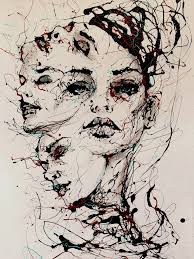
The canvas is on the floor. The body is bent for hours. The back aches. The paint dries differently depending on temperature and humidity. Matisse said he drew with his whole body — I paint with mine. The movement of the wrist carries whatever I'm feeling directly into the work; the rhythm is the emotion. A painting costs something in the body that made it, and I think that cost becomes part of its value. It's never something to apologize for.
5. Identity and transformation seem central to your work — how do these themes evolve across different paintings, and do they reflect your own personal journey?
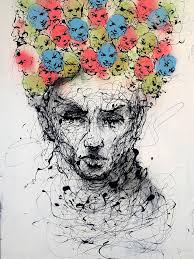
At the center of every painting is one word: identity. I draw on Kierkegaard — that life is lived forward but only understood backward. Identity isn't a destination; it's a perpetual process of dissolution and reformation. The drip itself — uncontrollable, irreversible, alive — is the perfect metaphor for that. And yes, it reflects my own path. I was a schoolteacher from a small village in Jutland. I reinvented myself at fifty. The work is about transformation because my life has been about transformation.

6. Your work is inspired in part by Jackson Pollock, but you've clearly pushed the technique in new directions — what do you feel you've added to the language of drip painting today?
Pollock's tradition is the starting point — paint poured, dripped, and flung onto a horizontal canvas rather than applied with a brush. What I've added is the human presence: the figure, the face, the portrait emerging out of what appears to be pure abstraction. Pollock moved away from the figure; I move the figure back in, without giving up the freedom of the method. That's the contribution I'd claim — drip painting that remembers the face.
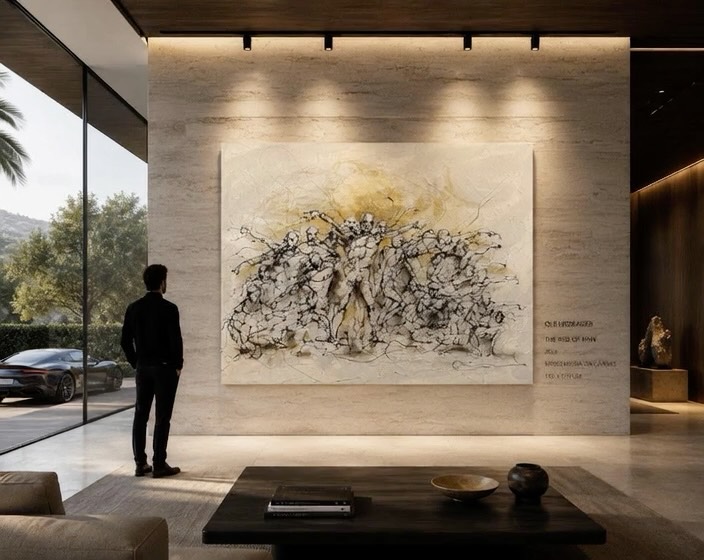
7. You create one-of-a-kind, large-scale works for collectors — how do you balance artistic freedom with the expectations of a client or interior space?
A commission isn't the enemy of creativity — from the Sistine Chapel to the boardroom, artists have always found something in other people's wishes and produced some of their best work in response. But it needs structure. I write things down: dimensions, palette, timeline, revisions. That framework is exactly what lets the freedom happen inside it. And I never take on a commission that I'd have to compromise my technique for. The collector is buying what only I can do — so the freedom and the expectation aren't really in conflict, as long as both sides are honest from the start.
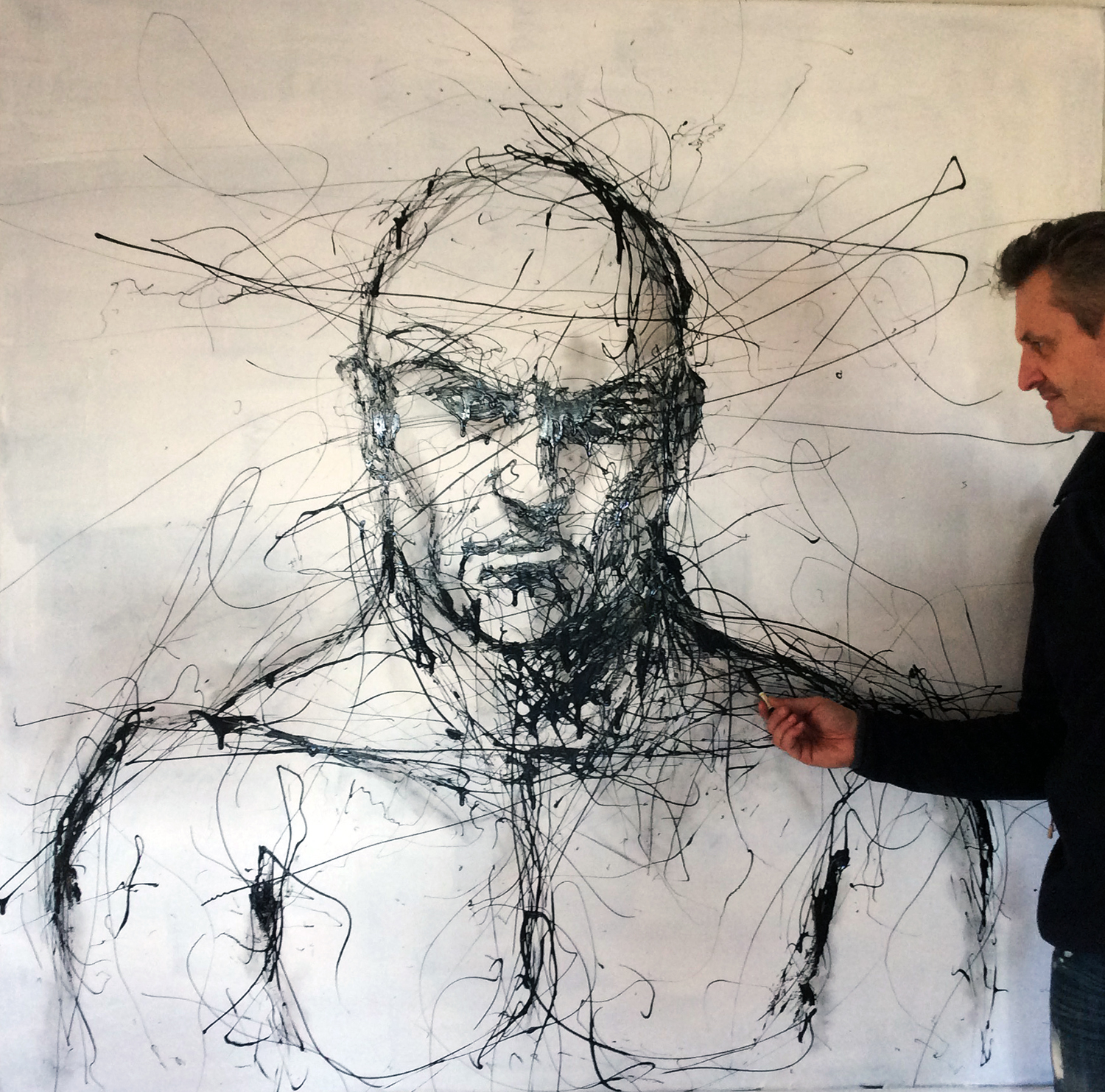
8. Having transitioned from teaching to full-time art, how has your background as an educator shaped the way you think about communication and connection through your work?
Teaching taught me that to explain something, you first have to truly understand it yourself — and that has never stopped being useful at the easel. It also taught me that communication isn't decoration; it's the work. My wife Mette and I were both teachers, and that shared instinct runs through how I share the process — showing the unfinished pieces, the studio, the wrist at work. I'm not just presenting finished objects to an audience; I'm inviting people in. An educator never forgets that the point isn't to be admired — it's to be understood, and to make a real connection.
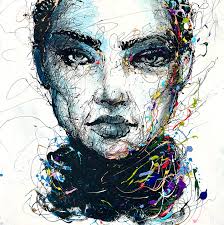
Follow Ole on Instagram at @olehedeager