
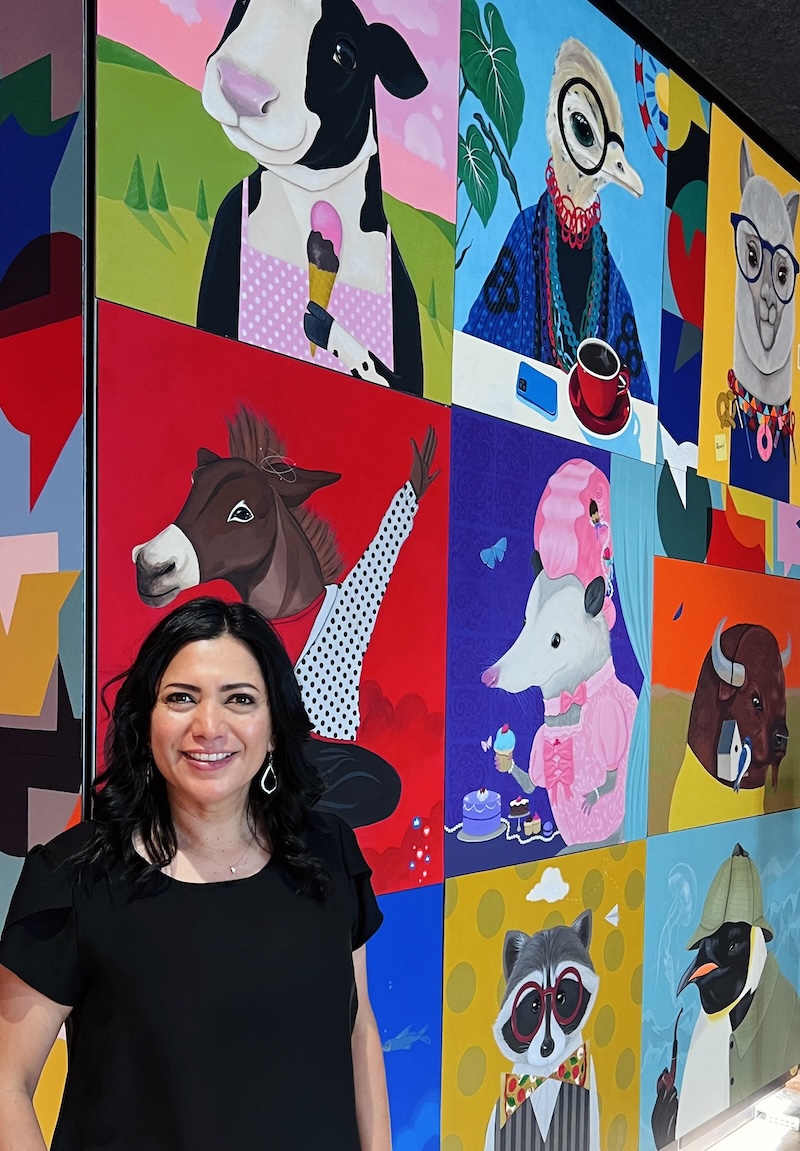
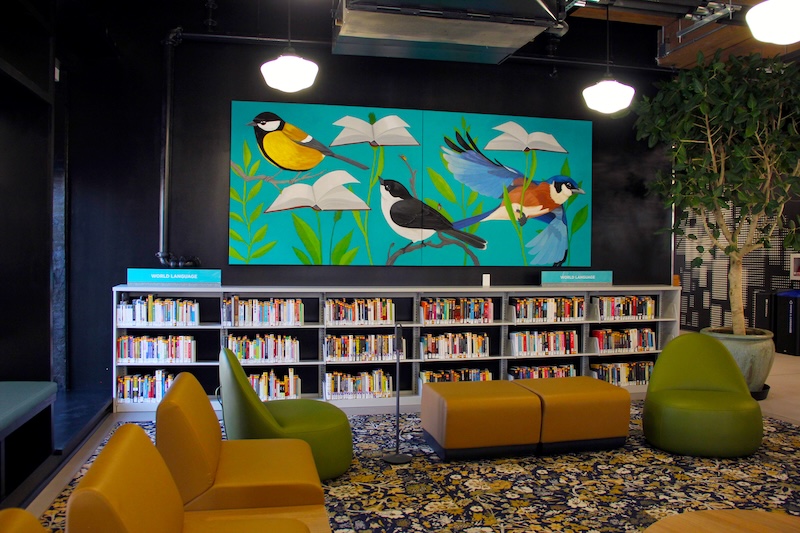
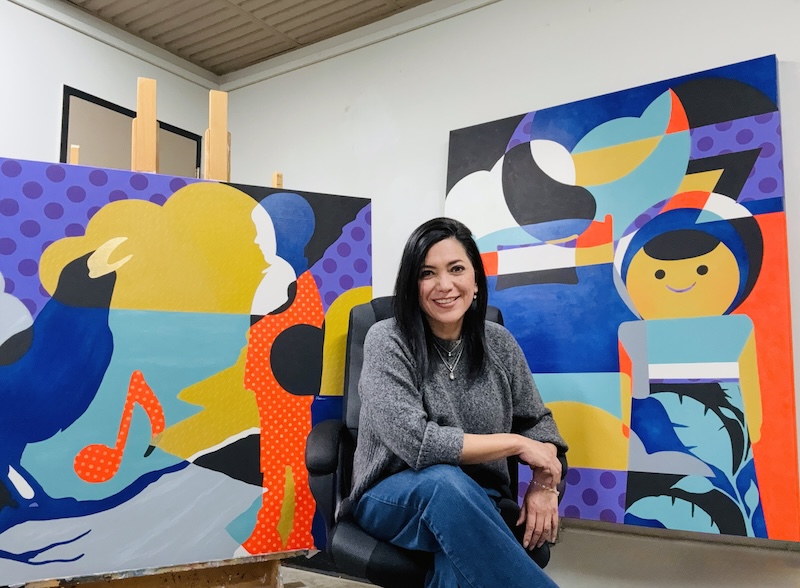
ilaamen Pelshaw creates vibrant, imaginative work that blends storytelling, illustration, and bold visual expression. Through colorful compositions and playful characters, her art captures both humor and emotion while inviting viewers into carefully crafted worlds full of personality and charm. Originally from Guatemala City, Pelshaw's background in graphic design and illustration continues to shape her distinctive artistic voice. Alongside her studio practice, she has transformed public spaces through murals, installations, and large-scale community artwork that bring color and creativity into everyday life.
1. Why do you think art is so important in our daily lives?
Art is important because it replenishes the soul; it shows us how to appreciate not only utilitarian things, but also those that feed our inner being.
Art helps us stop and take a moment away from the rush of everyday life. Some people spend days without thinking too much about art, but once they are having a bad day, the first thing they turn to is art, in any of its forms. For me, it happens to be visual arts, but lots of people feel replenished by listening to their favorite songs, going to see a good movie, listening to poetry, experiencing fashion, or all of the above.
The more in tune you are with art, the more you need it to fuel your daily routines.
Art helps us stop and take a moment away from the rush of everyday life. Some people spend days without thinking too much about art, but once they are having a bad day, the first thing they turn to is art, in any of its forms. For me, it happens to be visual arts, but lots of people feel replenished by listening to their favorite songs, going to see a good movie, listening to poetry, experiencing fashion, or all of the above.
The more in tune you are with art, the more you need it to fuel your daily routines.
2. How does creating art make you feel? Is it a meditative or emotional experience for you, or do you see it more as a creative outlet?
It is definitely meditative and also a form of expression. My brain is always thinking about themes to paint or stories to tell, so the ideation part is fun and creative. But once I have drawn the image, the process of painting becomes relaxing and meditative. Because it is such a mechanical process, it allows me to dive deep into a good audiobook or podcast. It is the perfect moment for a little relaxation and knowledge-seeking.
3. Which artist is your biggest inspiration?
So many! I really enjoy going to exhibitions, galleries, museums, and similar spaces. Another relaxing activity for me is searching for new artists or discovering new work from the artists I already follow.
Among the classics, I would say I love the colors of Henri Matisse, the line work of Henri de Toulouse-Lautrec, and the layouts and storytelling of Edward Hopper. From contemporary artists, I am fascinated by the work of Mar Figueroa, to mention a few.
Among the classics, I would say I love the colors of Henri Matisse, the line work of Henri de Toulouse-Lautrec, and the layouts and storytelling of Edward Hopper. From contemporary artists, I am fascinated by the work of Mar Figueroa, to mention a few.
4. I am in love with your fun and creative animal artworks. How did they become your main focus?
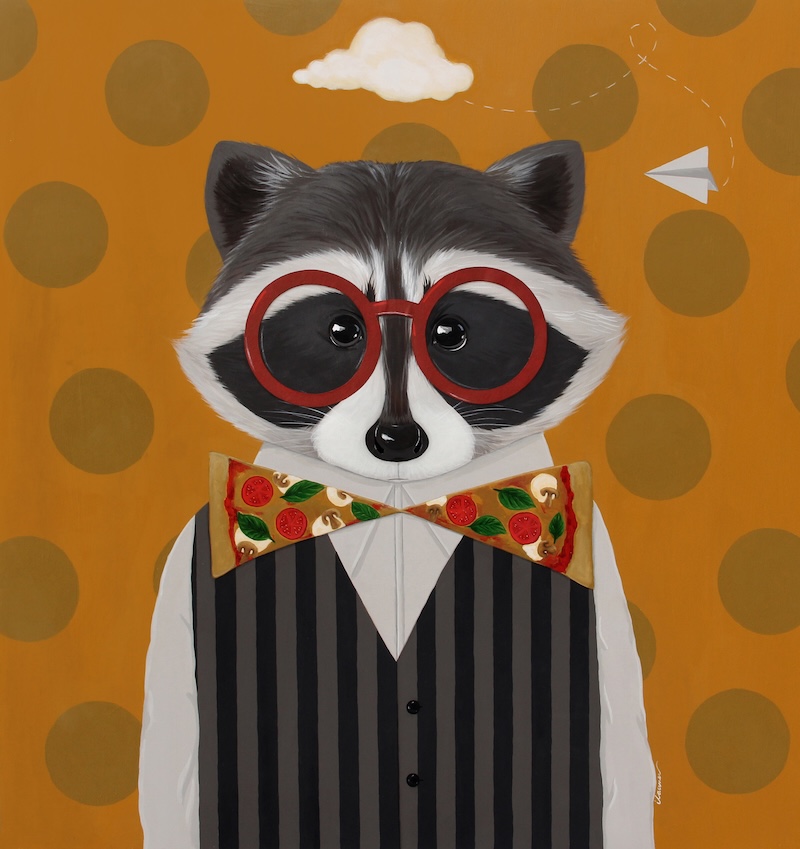
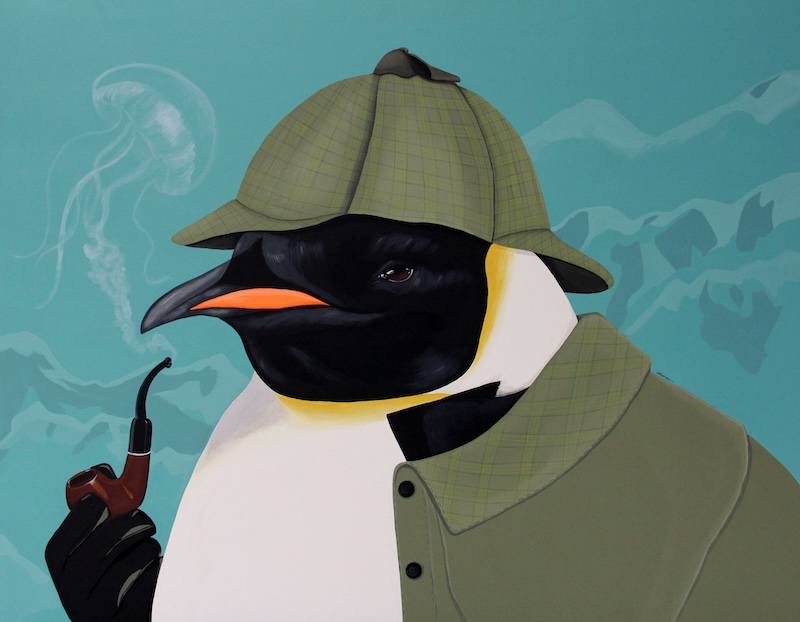
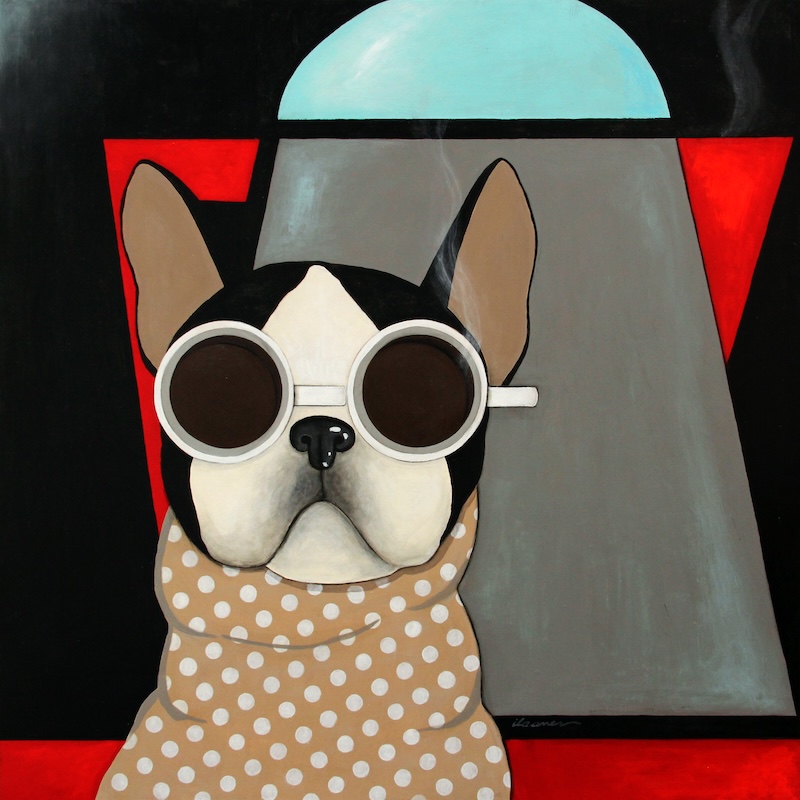
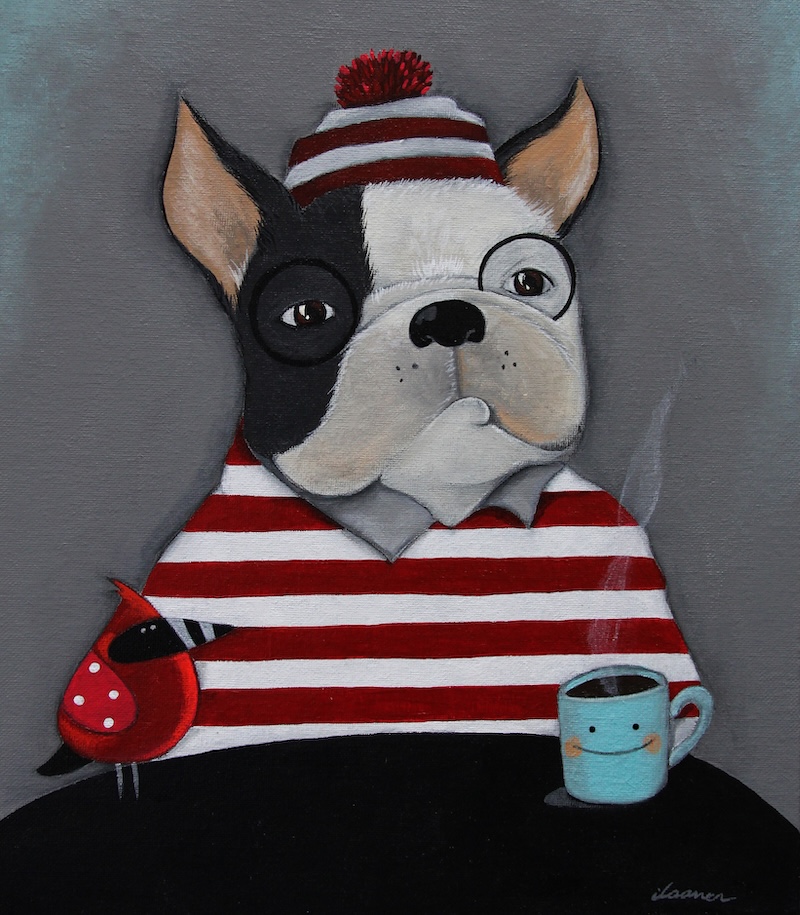
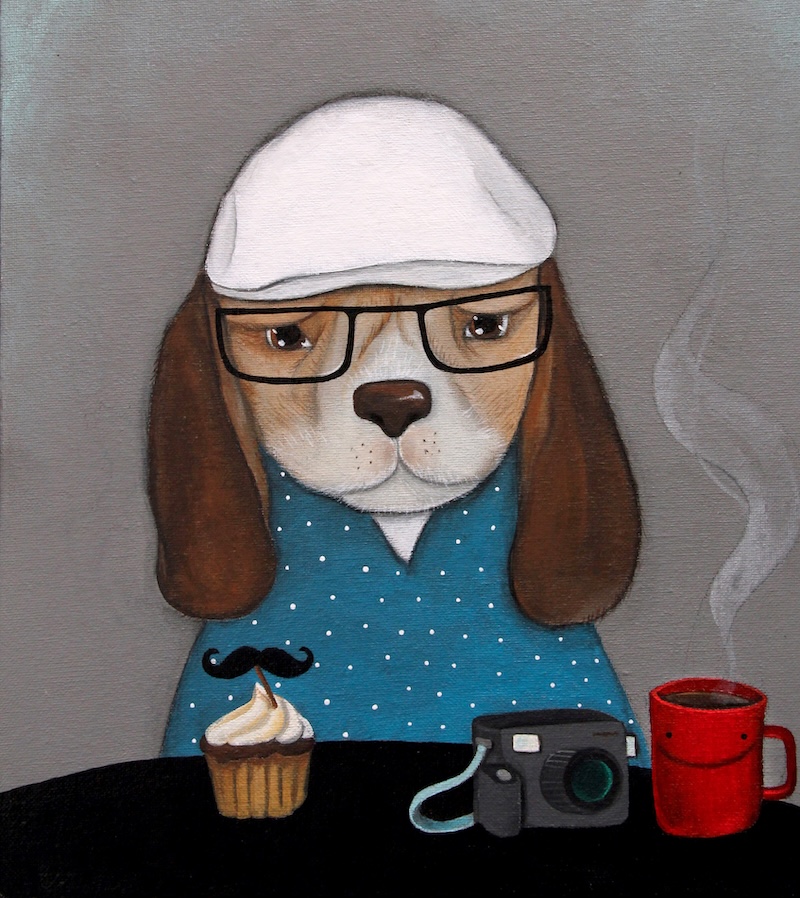
My background in graphic design and illustration influences the illustrative tone of that series. Everything started when I had recently decided to leave the corporate side of creativity and focus on making art. A friend of mine asked me to paint a portrait of his dog, and I wanted to create something witty and tailored to him. So, I took some of his characteristics — the glasses, his love for coffee, and his use of bow ties — and applied them to the likeness of his dog.
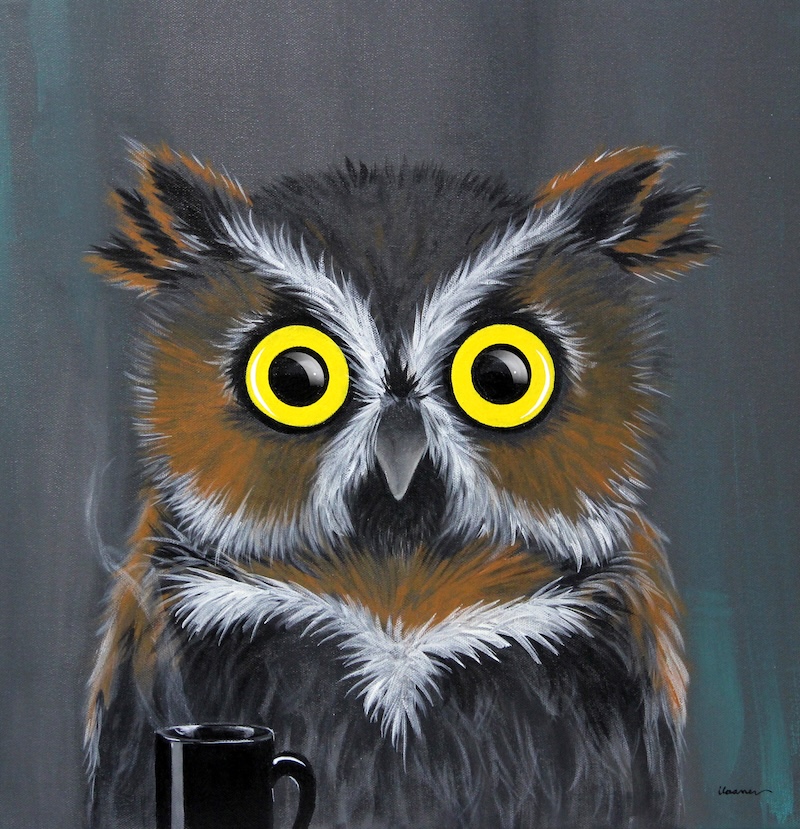
I liked the result and decided to start painting other animals. Around that same time, I was preparing for my first exhibition. I created a series of anthropomorphic animals, all of them drinking coffee. The series was well received, and because I also enjoy painting animals so much, I have continued exploring that theme ever since.
I liked the result and decided to start painting other animals. Around that same time, I was preparing for my first exhibition. I created a series of anthropomorphic animals, all of them drinking coffee. The series was well received, and because I also enjoy painting animals so much, I have continued exploring that theme ever since.
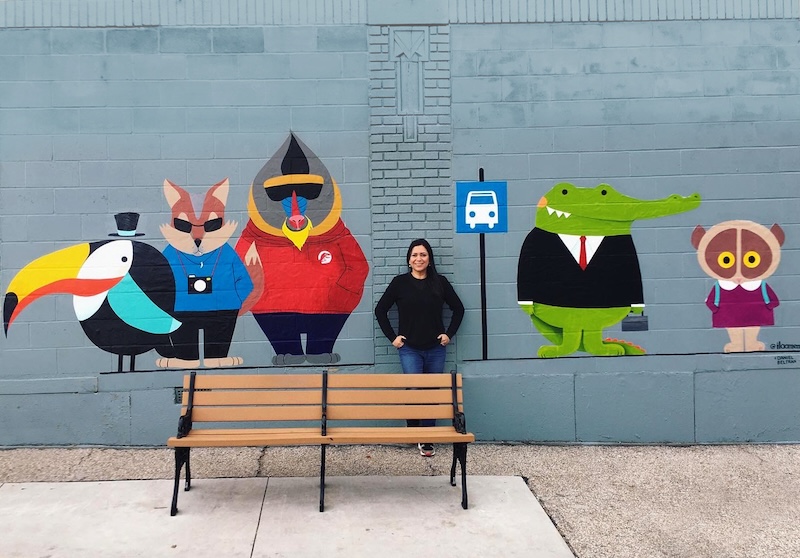
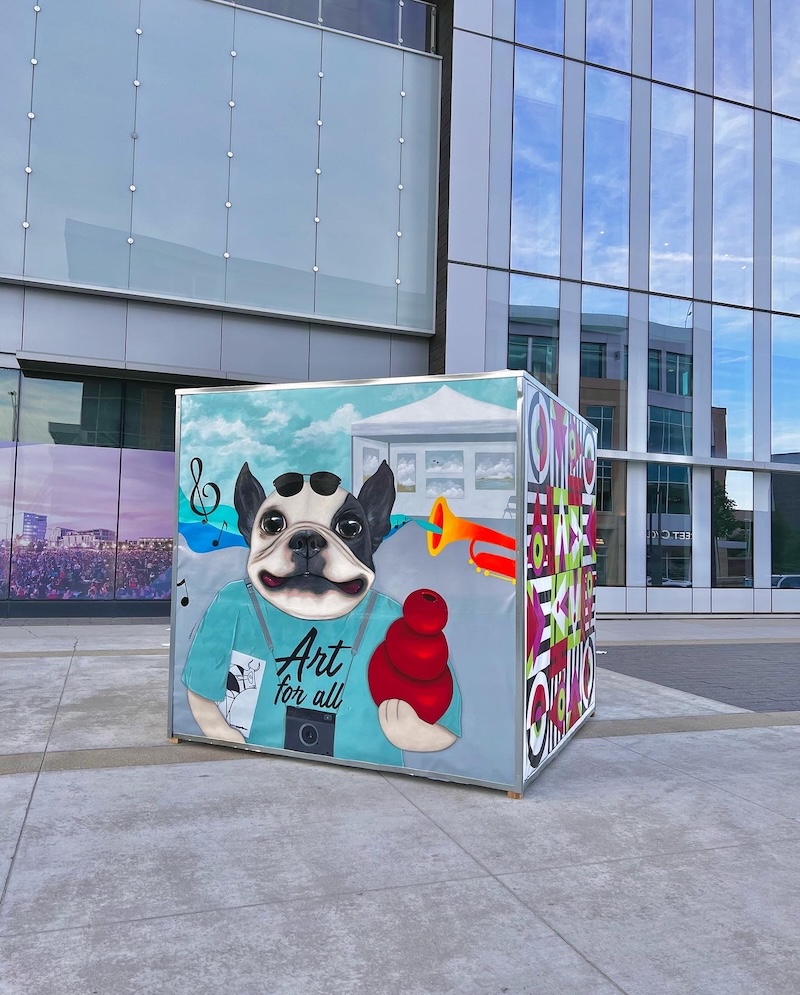
5. Besides your amazing paintings, you have transformed public walls, banners, bus stops, and vending machines into truly beautiful, colorful moments. What is the biggest difference between creating public art and paintings?
Public art is more challenging because it requires more preparation and planning, and you also need to be ready for changes in weather and the different considerations that come with painting outside most of the time, especially in areas where the weather can be very unpredictable. At the same time, public art gives you a bigger audience and the satisfaction of knowing that more people will get to enjoy your artwork. As for the creative side of it — thinking about the concept, selecting the colors, and creating the digital sketch — that part is basically the same.
6. Give us a glimpse into your process. How long does it take from the first idea to the finished project? What are the steps you have to take?
The first thing is the inspiration, and that can happen at any moment, usually when I am not thinking about it. So I keep notes on my phone and write down every time I have an idea for a series.
Once I decide what I will paint next, the first sketches are done with pencil and paper. After I select the style and layout, I create a digital sketch. Then I try different color palettes on the digital drawing, and once that looks good, I transfer it onto my canvas or panel. I usually have a polished digital version prepared before even getting to the easel.
Once I decide what I will paint next, the first sketches are done with pencil and paper. After I select the style and layout, I create a digital sketch. Then I try different color palettes on the digital drawing, and once that looks good, I transfer it onto my canvas or panel. I usually have a polished digital version prepared before even getting to the easel.
7. Tell us about your background and upbringing. Where did you grow up? Where are you now? When and how did you find your way to the artist life?
I was born and raised in Guatemala City. I studied graphic design at Rafael Landívar University, also in Guatemala. It was a five-year program, and all the courses were analog — no computers for the first four years. It had a strong focus on illustration and drawing. Then I worked as a designer and illustrator for 15 years in the corporate world, but I relocated from Guatemala to Omaha in 2015, and that was the fresh start that pushed me to decide to become an artist.
I had always dreamed of being an artist, but for some reason I didn't think it was a feasible path. Being in a position where I needed to start over was the perfect excuse to dive in fully. I started painting in 2016 and haven't stopped since.
I had always dreamed of being an artist, but for some reason I didn't think it was a feasible path. Being in a position where I needed to start over was the perfect excuse to dive in fully. I started painting in 2016 and haven't stopped since.
8. If you had to choose, which of your paintings is your favorite and why?
That is such a difficult question for me, but since we are focusing on my animal series, I will select one painting from that style.
In 2018, I created a painting inspired by the art of Frida Kahlo. It is a Chihuahua dog surrounded by cacti. That painting marked a milestone in my career as an artist for several reasons: it was included in an exhibition at Cactus Gallery in Los Angeles, so it was my first time — out of many — showing in L.A.
It also marked a very distinctive aesthetic and style that has continued since then, and it was selected as one of the winners of the 7th edition of Latin American Illustration by AI/AP.
In 2018, I created a painting inspired by the art of Frida Kahlo. It is a Chihuahua dog surrounded by cacti. That painting marked a milestone in my career as an artist for several reasons: it was included in an exhibition at Cactus Gallery in Los Angeles, so it was my first time — out of many — showing in L.A.
It also marked a very distinctive aesthetic and style that has continued since then, and it was selected as one of the winners of the 7th edition of Latin American Illustration by AI/AP.

9. I had the pleasure of meeting you and experiencing your work in person at the Other Art Fair in Los Angeles. How was that experience for you, and do you have any other art fairs coming up?
I enjoyed being part of The Other Art Fair in L.A. I was really impressed by the organization, the attendance, and the energy — it is an awesome fair. I will definitely consider returning for another edition.
For now, I don't have another fair scheduled because I am preparing for a solo exhibition, and that has kept me busy and focused.
The exhibition will open on May 29th, 2026, at The Union for Contemporary Art in Omaha. In case any readers are in the area, please come check it out.
For now, I don't have another fair scheduled because I am preparing for a solo exhibition, and that has kept me busy and focused.
The exhibition will open on May 29th, 2026, at The Union for Contemporary Art in Omaha. In case any readers are in the area, please come check it out.


10. What are your plans for the future?
My plans are to keep painting and keep getting better at it. I am already preparing for a new series, including the animals but with more narrative — so please keep an eye out for what is coming.
Another thing that is keeping me busy is a project my husband and I started last year. We are transforming an old potato chip factory into a creative space with art studios and galleries. The name is Clover24, and it is in Omaha. We started with 15 studios and 2 galleries, and we are now about to finish the second phase, bringing it to a total of 59 studios, 2 galleries, and 6 additional exhibition spaces. We hope to provide affordable studio spaces for artists and to make art more accessible to the community.
Another thing that is keeping me busy is a project my husband and I started last year. We are transforming an old potato chip factory into a creative space with art studios and galleries. The name is Clover24, and it is in Omaha. We started with 15 studios and 2 galleries, and we are now about to finish the second phase, bringing it to a total of 59 studios, 2 galleries, and 6 additional exhibition spaces. We hope to provide affordable studio spaces for artists and to make art more accessible to the community.
Follow ilaamen on Instagram at @ilaamen and visit her website at ilaamen.com