
There is a recurring fantasy in war: that art will be spared.
It is the moral tension embedded in The Rape of Europa, which traced how Allied bombing campaigns in World War II sometimes bent around museums, cathedrals, and cultural institutions in an attempt — uneven and inconsistent — to preserve what could not be replaced. Even then, cities like Dresden and Monte Cassino showed how fragile that restraint becomes when set against the machinery of total war.
We like to believe we have evolved beyond that contradiction. Today we have treaties, conservation protocols, blue shields on buildings, and international conventions that declare cultural heritage off-limits. But modern conflict rarely behaves according to cultural aspiration.
Nowhere is that tension more visible than in Iran.

What is often overlooked in discussions about Iran is not only what has been endangered — but what already exists there. In Tehran sits one of the most astonishing art collections in the world: the Tehran Museum of Contemporary Art, widely considered one of the most significant holdings of modern Western art outside Europe and North America.
This fact alone is startling to most people.
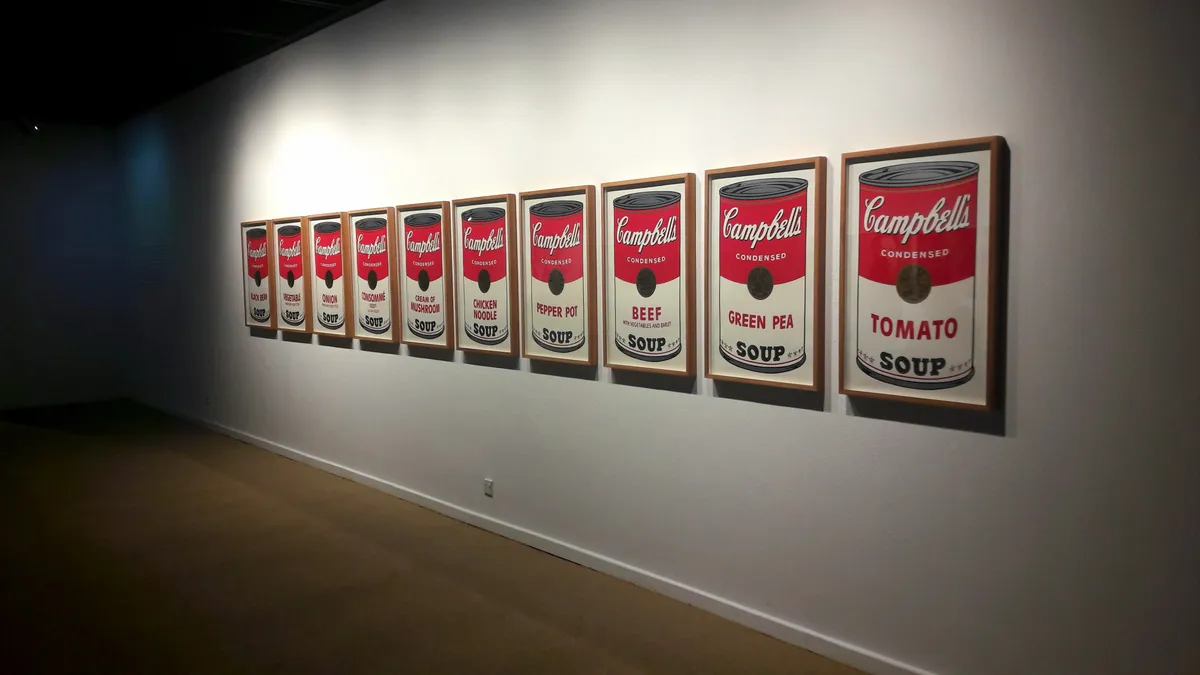
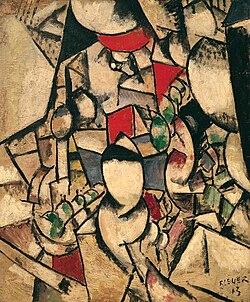
Assembled largely in the 1970s under Empress Farah Pahlavi during a period of rapid modernization and oil-fueled cultural investment, the collection includes works that read like a condensed map of modern art history. Andy Warhol is represented through his iconic screen-printed Marilyn Monroe series and Campbell's Soup imagery — emblems of mass media turned into cultural myth. Pablo Picasso appears through key modernist and post-cubist works that reflect his relentless reinvention of form. Jackson Pollock's drip paintings capture the moment abstraction became physical action, while Francis Bacon's distorted figures hold psychological collapse in paint. Mark Rothko's color fields — vast, vibrating planes of pigment — push painting toward pure emotion rather than representation.
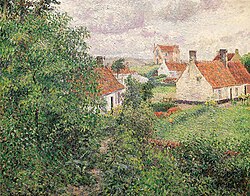
Alongside them are René Magritte's surrealist disruptions of reality, the kind that reframe ordinary objects into philosophical riddles, and Claude Monet's late Water Lilies works, where perception itself dissolves into light, water, and atmosphere.
Taken together, the collection is not simply impressive — it is almost encyclopedic. It compresses the Western canon of modern art into a single institution outside the West, a concentration that would be extraordinary anywhere, and is almost unbelievable in Tehran.
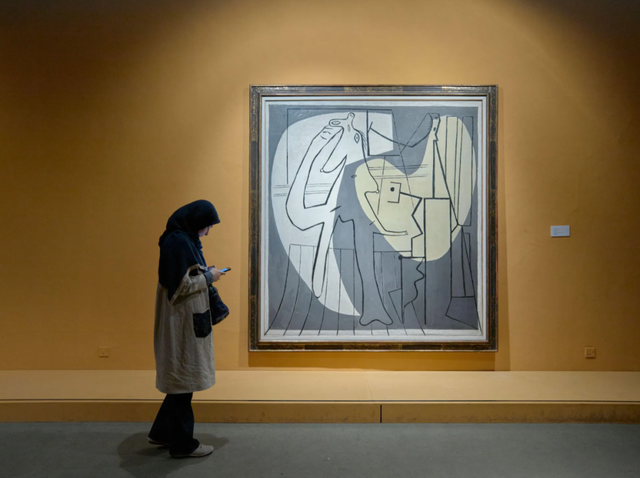
Works were removed from public view, placed into secure storage, and only occasionally displayed in tightly controlled exhibitions. The art was not dispersed or sold. It was preserved — but withdrawn from circulation.
This distinction matters. Because unlike the familiar imagery of war — shattered museum walls, looted galleries, burned archives — the Iranian case reveals a different modern condition: heritage that survives physically but disappears socially. It exists, but it does not circulate.
And this is where the comparison with earlier eras of war begins to break down.
In World War II, the question was whether armies would deliberately avoid cultural targets. In today's conflicts, including those affecting Iran and the broader region, the question is more complex: what happens when cultural sites are not directly targeted, but are still damaged through proximity, shockwaves, infrastructure failure, and the geometry of urban warfare?

In such conditions, protection shifts from prevention to triage. Museums close. Collections are moved into storage. Emergency protocols activate. But entire historic districts — where museums are not isolated sanctuaries but embedded parts of living cities — cannot be relocated.
Iran has followed this logic of preservation through withdrawal: securing artifacts when possible, closing institutions during periods of instability, and limiting exposure rather than relying on the restraint of others.
The result is a fragile equilibrium. A world-class collection exists, intact but largely unseen. Historic urban fabric survives, but under pressure. International frameworks designed to protect cultural heritage operate more as ideals than guarantees.
We tend to think of cultural loss as an event — bombed, burned, looted. But increasingly, it is a condition: prolonged invisibility, interrupted access, and preservation without presence.
A museum that cannot safely open is not erased. But it is functionally absent.
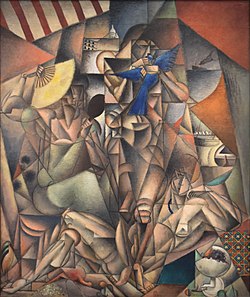
The irony is that one of the greatest modern art collections outside the West is not missing at all. It is simply waiting — sealed in a state of suspended visibility shaped by politics, history, and the uneven geography of conflict.
And perhaps that is the most unsettling inheritance of all: not the destruction of art in war, but its quiet removal from the world while still physically intact.