
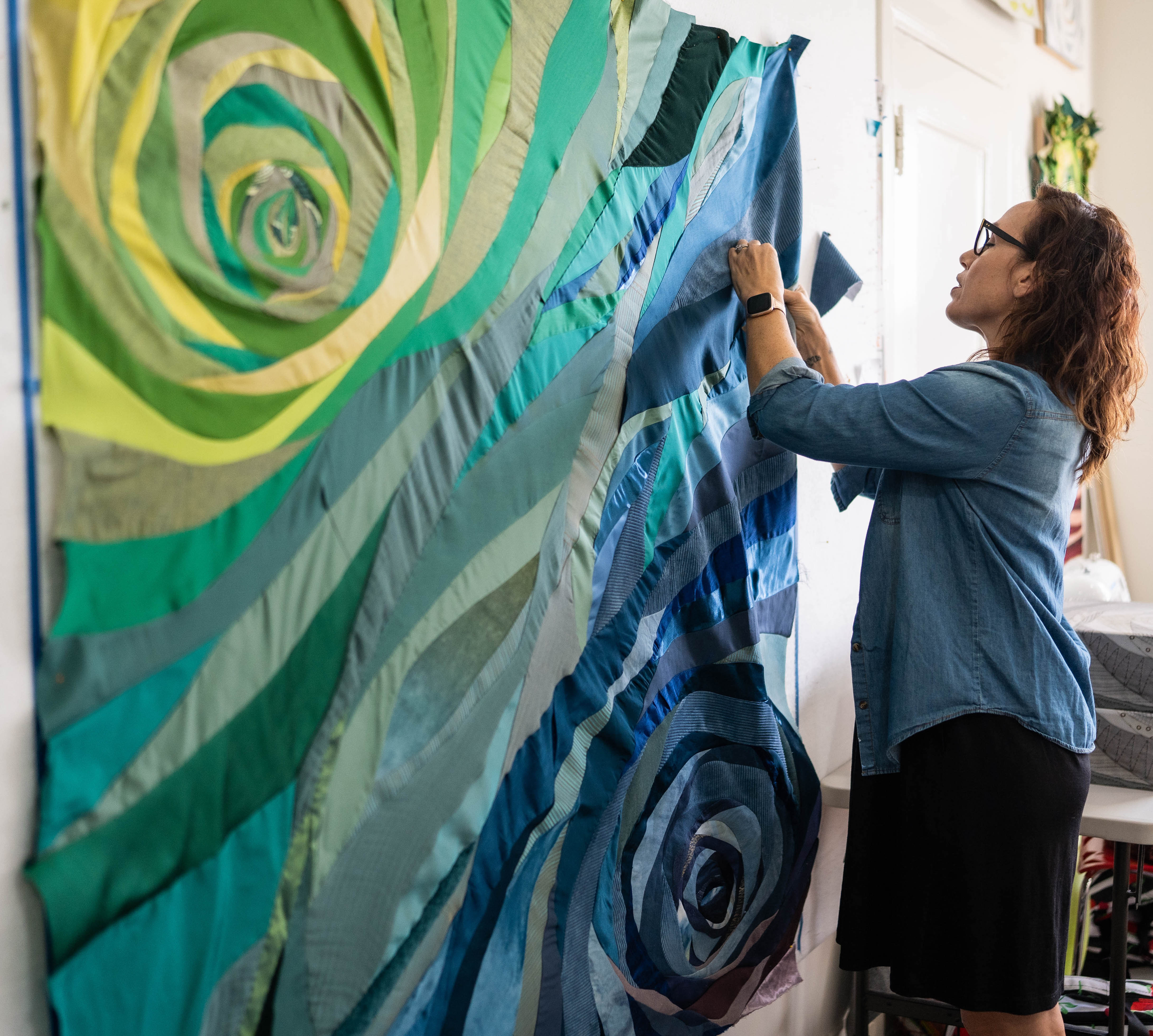
Liberty Worth is a fiber artist and educator based in coastal California who transforms discarded textiles — from luxury interior design samples to pandemic-era face masks — into improvisational abstract works of intimate visual power. Her practice is rooted in environmental urgency, color intuition, and the belief that creating beauty is its own form of agency. She has written above her studio desk: "To create is to defy despair."
1. Your work transforms discarded textiles into something intimate and visually powerful — how do you navigate the tension between environmental urgency and aesthetic beauty in your process?
First of all, thank you for this description. Making abstract work — especially textile work — is one of those things where, as an artist, I often find myself wondering if my message is being carried by the work. Using textile waste sometimes walks the line of futility and hope — trying to make beauty from ashes, but also I often am feeling the desperation of trying to be an individual person loving and caring for the planet in the face of monumental corporate greed and natural disaster.
I fall into this place where I find my desire to create beauty is the only answer, power, or agency I have in the face of all of this. I once heard a quote — I wish I remembered where — that I now have written above my desk in my studio: "To create is to defy despair." This is my only power. This is my only voice.
I fall into this place where I find my desire to create beauty is the only answer, power, or agency I have in the face of all of this. I once heard a quote — I wish I remembered where — that I now have written above my desk in my studio: "To create is to defy despair." This is my only power. This is my only voice.
2. You describe textiles as carriers of memory, history, and human touch — do you ever feel a responsibility to honor the unknown stories embedded in the materials you use?
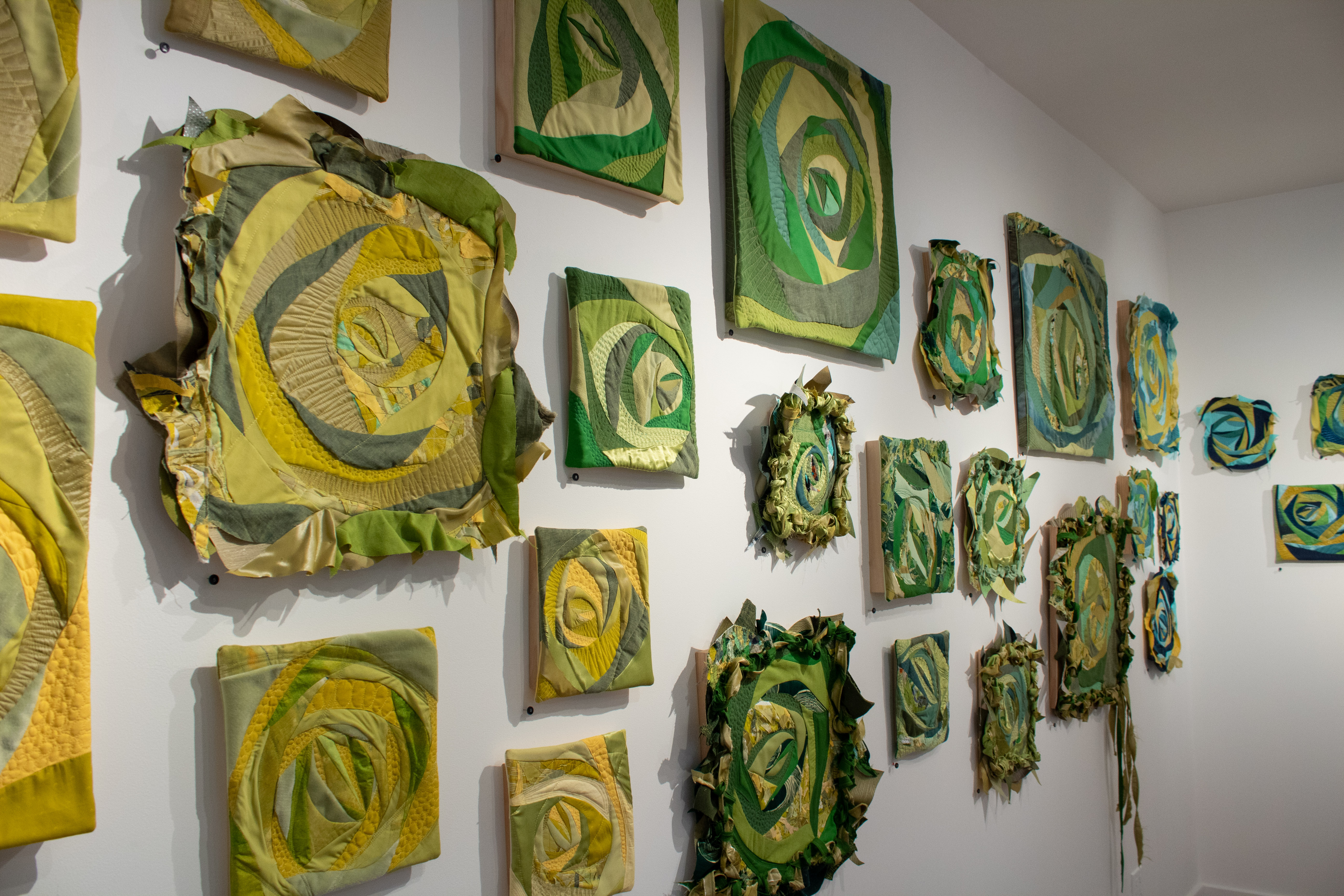
Absolutely. The fact that every piece of fabric that arrives in my path has gone through so many hands is something I think about often. Even brand-new fabrics that were being discarded by manufacturers have been created by skilled laborers, and I try to do my best to honor their labor by finding use for even the smallest scraps.
In my commission work, I also inherit and incorporate many fabrics that were clothing worn by people, and those ones are particularly important to honor well as I use them. I know where every one of my fabrics came from, and as I work with them, I hold space for the journeys they took to reach me and all the people who were a part of that journey.
In my commission work, I also inherit and incorporate many fabrics that were clothing worn by people, and those ones are particularly important to honor well as I use them. I know where every one of my fabrics came from, and as I work with them, I hold space for the journeys they took to reach me and all the people who were a part of that journey.
3. Your improvisational quilting method resists pre-planning — what does surrendering control in that way reveal to you, both creatively and personally?
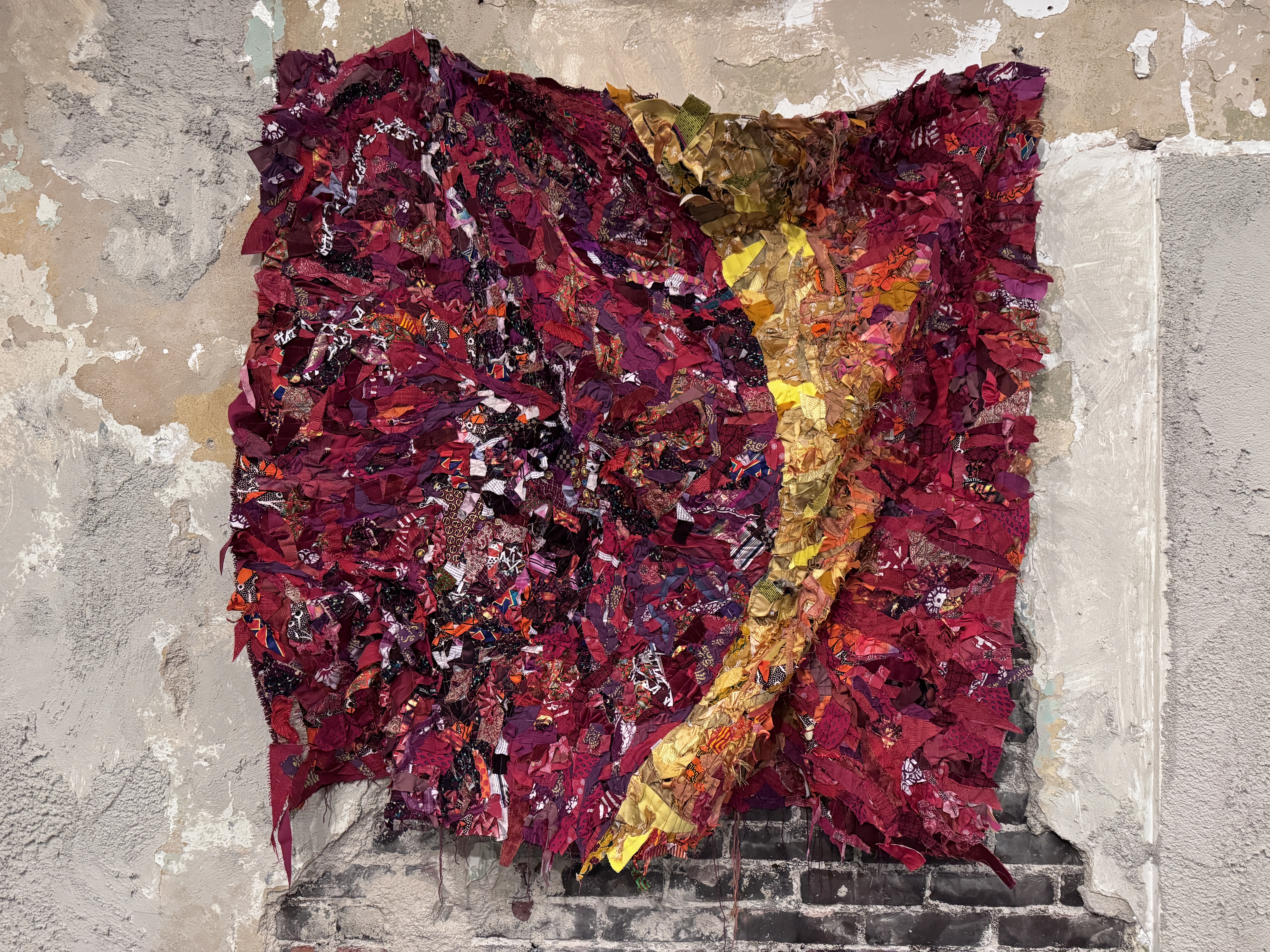
I love the mystery and process of the improvisation. I do not know how something will turn out — yet over the years I have developed a knowledge of my artistic voice and trust in my own ability to create spontaneously, so the biggest goal is to get out of my own way as I work, to find a place of flow. Often I'll make a sketch in my sketchbook with pen and watercolors, trying to encapsulate the idea I am going for. But nothing is ever made by exact pattern and I cannot recreate the exact same work again — even if I try. This leaves me with a feeling of adventure at the beginning of each project and often a sense of surprise at the end.
4. Color plays a dynamic, almost emotional role in your work — how do you intuitively decide on color relationships in the moment, and have those instincts evolved over time?
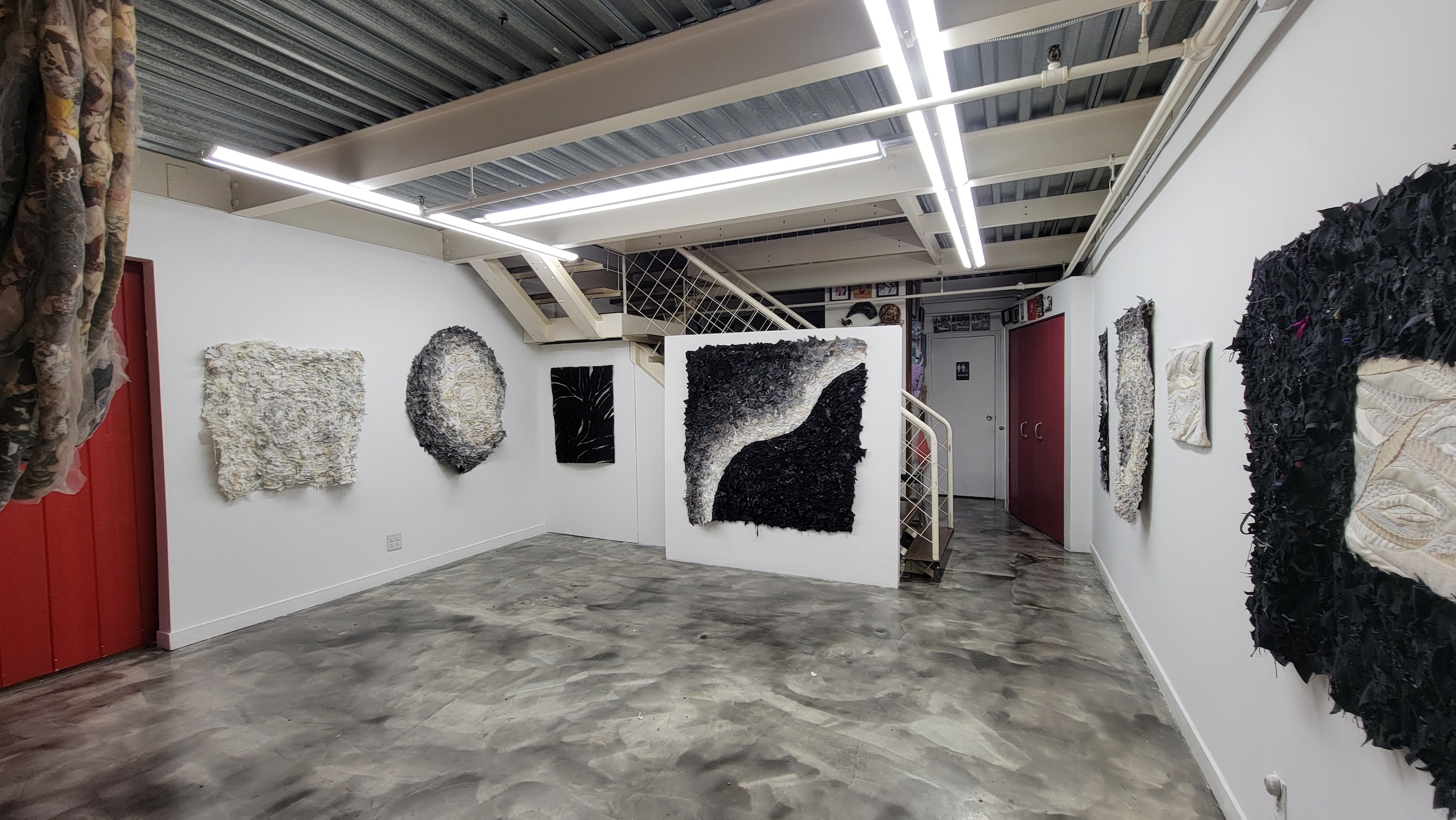
Color feels almost second nature to me. It is almost always a snap decision and I rarely second-guess myself. I think you captured my feelings well by using the word "intuitive" in your question.
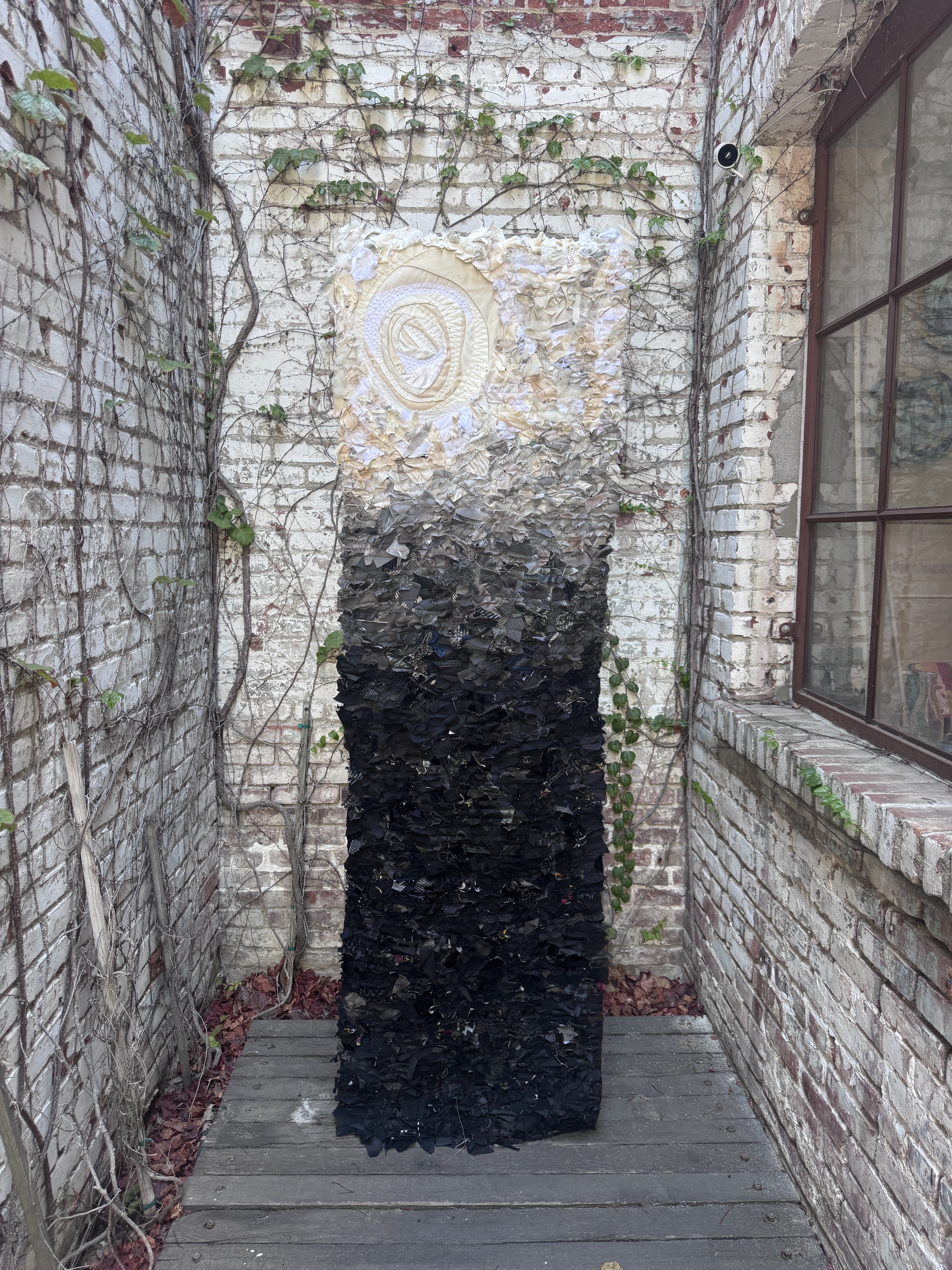
Some of the ways I treat color now are reflected in the paintings I made as a teenager beginning to dabble in art. But over the decades, I would say I have developed a more nuanced relationship with color. I spend so much time thinking about it — especially when I am working with fabric, since almost all of my work these days is scrap-based, so I'm not mixing paint or dye to get subtle shifts and shadow or gradient. It all depends on placement and how each piece is nestled next to other pieces. I love the idea of "pushing" a color, and often ask myself questions as I work: "Will the eye still read this as white if I put this yellow here?" Or: "How do I move smoothly from this color to that one when I have no obvious path?"
Some of the ways I treat color now are reflected in the paintings I made as a teenager beginning to dabble in art. But over the decades, I would say I have developed a more nuanced relationship with color. I spend so much time thinking about it — especially when I am working with fabric, since almost all of my work these days is scrap-based, so I'm not mixing paint or dye to get subtle shifts and shadow or gradient. It all depends on placement and how each piece is nestled next to other pieces. I love the idea of "pushing" a color, and often ask myself questions as I work: "Will the eye still read this as white if I put this yellow here?" Or: "How do I move smoothly from this color to that one when I have no obvious path?"

5. Living in coastal California clearly informs your visual language — how do you translate something as ephemeral as light, water, or movement into the physicality of fabric?
I work very hard to keep my eyes open to inspiration everywhere. That involves taking a lot of photos and sketching and doodling often — keeping my receptors open to "collect" wherever I am. Observation is such an important part of artmaking, and our environments affect us. There are shapes and symbols that have emerged in my sketchbook over time that inform how I treat fabric, paint, paper, or any medium I am working with. Sometimes they are specifically referencing a particular element, many times they are not — but I believe observing nature leads us to some of those familiar distilled shapes that emerge. Part of the fun of abstract thinking is making the leap from one form to another. Ascribing a shape to a memory helps me translate those intangibles to a form I can work with as a visual artist.
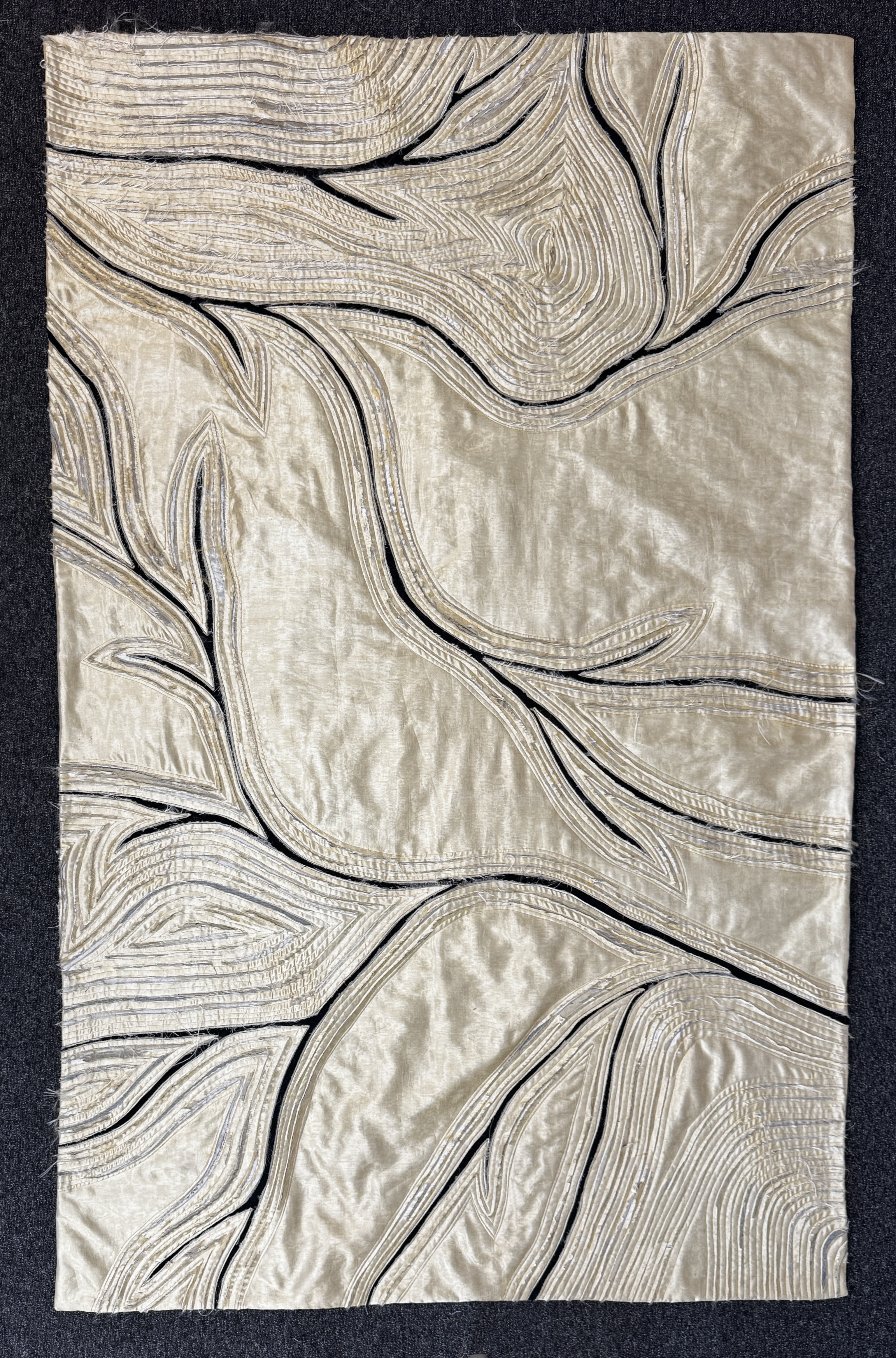
6. You incorporate materials ranging from luxury fabrics to discarded face masks — how does that range of sources influence the conceptual meaning of a finished piece?
Well, all of it is being thrown away as textile waste. I didn't start out incorporating trash and face masks into my work. I was initially just noticing the beautiful things that were going to waste — high-end samples from the interior design industry where I worked. But during the pandemic, it dawned on me that we were seeing a whole new kind of textile waste happening, and it was hard to look away after that. I found ways to collect and sterilize masks and figured using them would help drive home the message of what textile waste is.
I don't fool myself into thinking that I am any more than a tiny drop in the bucket of so much global waste. But at least I know I am doing something — creating something from a resource that was literally headed to landfill. The combination of all the levels of waste shows how prevalent the problem is.
I don't fool myself into thinking that I am any more than a tiny drop in the bucket of so much global waste. But at least I know I am doing something — creating something from a resource that was literally headed to landfill. The combination of all the levels of waste shows how prevalent the problem is.
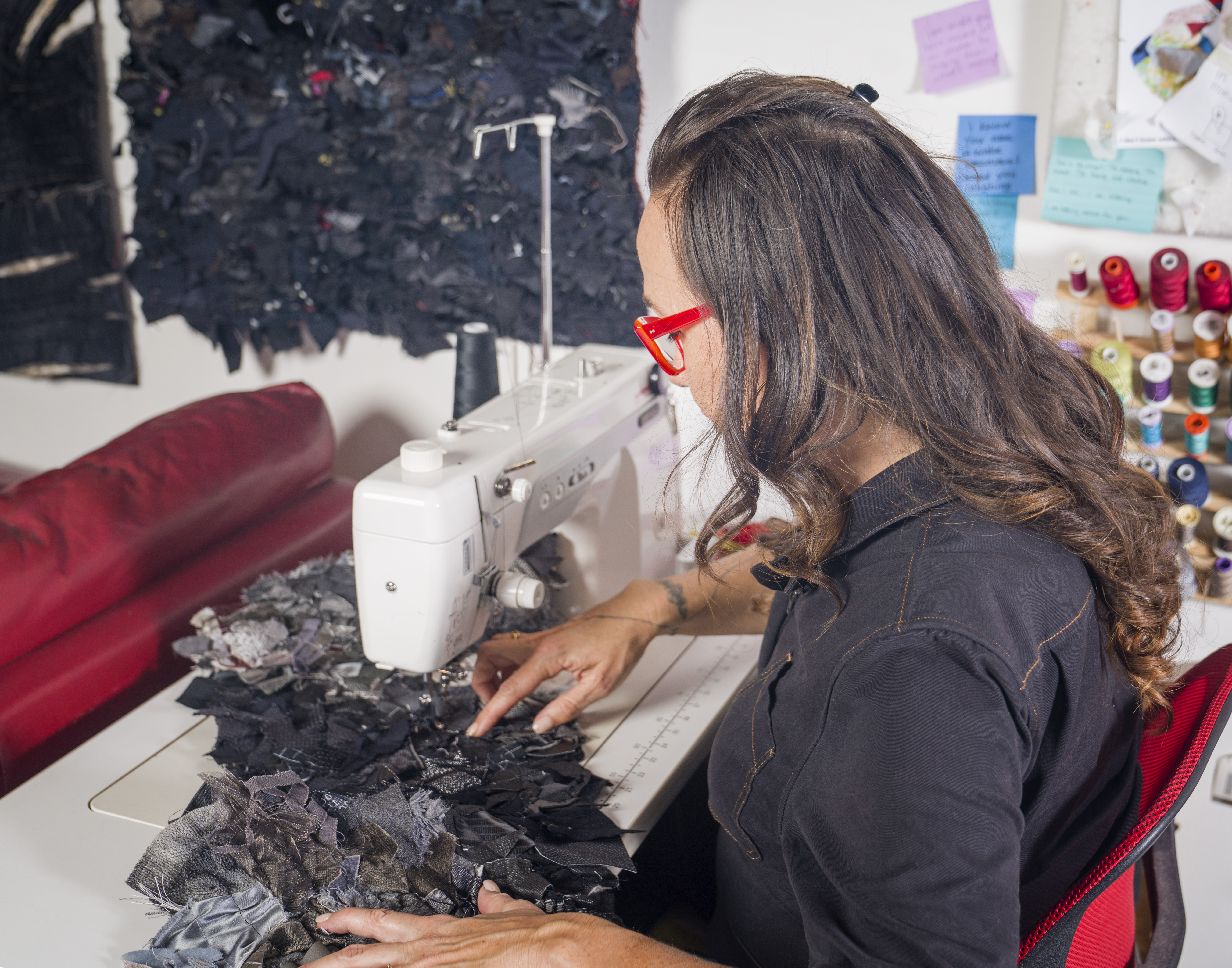
7. Collaboration has become a newer dimension of your practice — what have you learned from inviting others into the act of making, especially in terms of empathy and shared experience?
Though much artmaking is solitary, I have spent decades making commission artwork with customers as my initial inspiration or contributors — so in a way that is also collaborative.
Collaboration requires so much trust and commitment to the partnership. I learned back in my textile design days that I loved working as part of a team toward a shared goal. What I love about collaboration between multiple creative voices is that there is a shared surrender of control in service of the vision. Working with partners who trust me has pushed me into areas of challenge I likely would not have otherwise encountered. Maturing as an artist and knowing my own voice helps me know when to speak up, but learning to listen is key when working together as a team. I truly value other people's experiences and expertise, so remaining curious and open serves the project and the relationships well. It's a delicate balancing act, and empathy goes a long way.
Collaboration requires so much trust and commitment to the partnership. I learned back in my textile design days that I loved working as part of a team toward a shared goal. What I love about collaboration between multiple creative voices is that there is a shared surrender of control in service of the vision. Working with partners who trust me has pushed me into areas of challenge I likely would not have otherwise encountered. Maturing as an artist and knowing my own voice helps me know when to speak up, but learning to listen is key when working together as a team. I truly value other people's experiences and expertise, so remaining curious and open serves the project and the relationships well. It's a delicate balancing act, and empathy goes a long way.
8. As both an educator and exhibiting artist, how do your teaching experiences shape your own creative practice — and vice versa?
Being around young people — and curious people of any age — new insights always present themselves. Everyone has a unique perspective and I value learning about those around me. So many times I will be discussing something with a student and it will spark an idea in my own mind that I "put a pin in" and pursue later in my own practice. I think being an educator really helps keep it fresh. These days I often am traveling far to reach my students, so the perspectives are even more unique from my own.
There was a point when I was teaching high school art where I needed to come up with a curriculum for some independent study students, and I took some time to analyze my own professional process. I realized it would make the perfect curriculum to teach students how to independently manage and pursue their own ideas and projects. I'm not sure I would have landed on that process had I not been simultaneously practicing as a professional artist — but it really worked, and I've since turned it into a course I call "The Idea Factory" that I've taught in multiple cross-country and international settings. Honestly, the back and forth of creative connection works at building bridges across all types of barriers — I find myself honored and grateful to be in places where I interact with creatives of all types, and my life is so enriched because of it.
There was a point when I was teaching high school art where I needed to come up with a curriculum for some independent study students, and I took some time to analyze my own professional process. I realized it would make the perfect curriculum to teach students how to independently manage and pursue their own ideas and projects. I'm not sure I would have landed on that process had I not been simultaneously practicing as a professional artist — but it really worked, and I've since turned it into a course I call "The Idea Factory" that I've taught in multiple cross-country and international settings. Honestly, the back and forth of creative connection works at building bridges across all types of barriers — I find myself honored and grateful to be in places where I interact with creatives of all types, and my life is so enriched because of it.
Follow Liberty on Instagram at @libertyworthart and visit her website at libertyworthart.com