
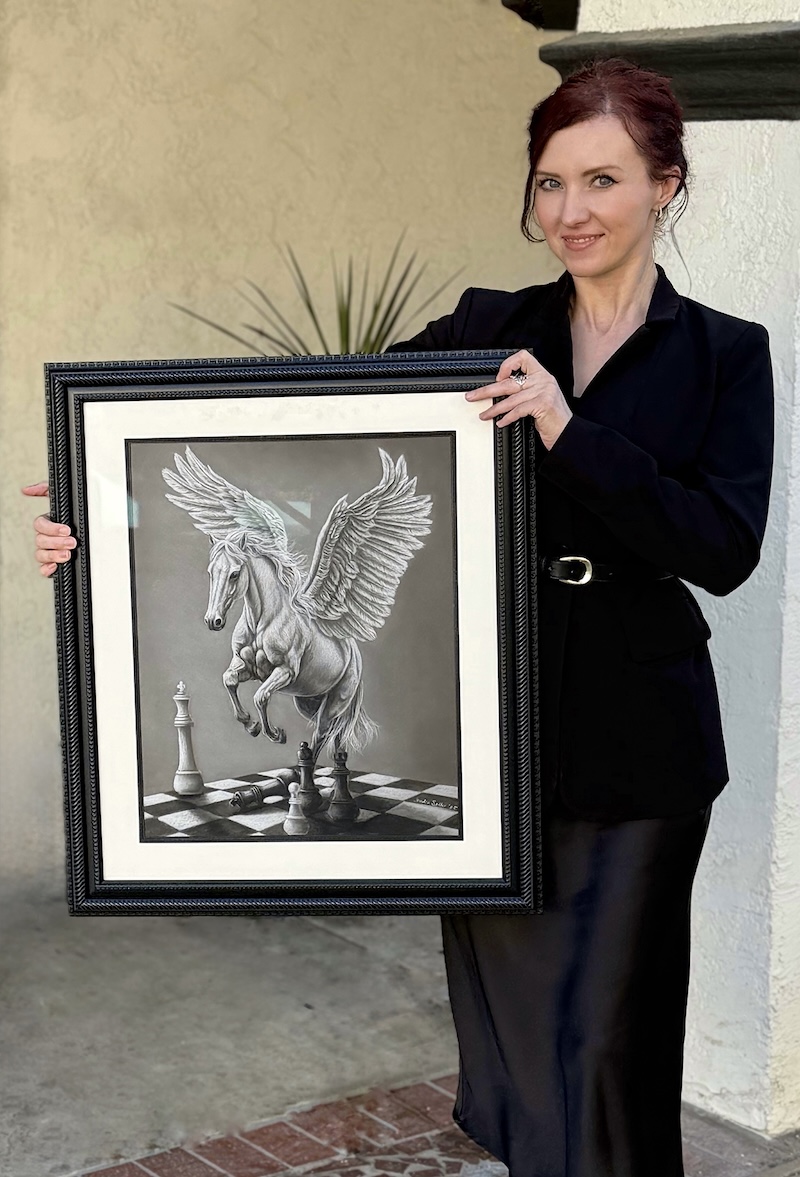
Nadia Setter creates breathtaking mythical worlds where animals, symbolism, and emotion intertwine. Through hyper-realistic pastel drawings filled with winged horses, ancient creatures, and dreamlike atmospheres, her work feels both deeply personal and timeless — as though each piece carries a story pulled from mythology, memory, and the subconscious. Originally from Saint Petersburg and now based in the United States, Setter's artistic voice was shaped by a lifelong fascination with mythology, classical art, and horses. What makes her art so captivating is the balance between technical precision and emotional depth — her creatures feel powerful yet vulnerable, magical yet believable.
And then when my pencil touches the paper, layer by layer, something that lived only in another dimension begins to breathe in this one. That moment when a creature emerges from the ground and looks back at me for the first time — that is when I feel it most. Like a wizard who opened a portal just wide enough to pull something ancient and alive through to our world.
What I love most is that I get to be the bridge between the invisible and the seen, between a message that is seeking to be delivered through the language of art to the specific person who needed to receive it today.
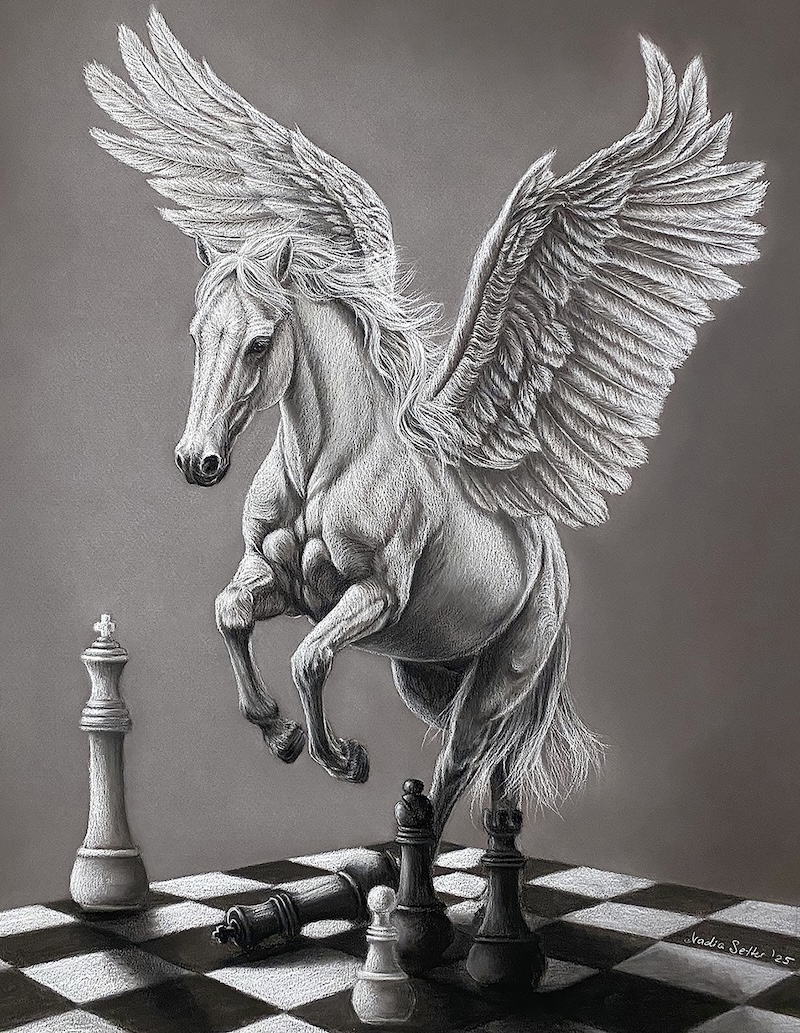
It is almost like the creature I am drawing becomes a mirror. The more detail I pour into it, the more it reflects something back at me that I did not know I was ready to look at.
So, I would say it is less of a creative outlet and more of a reflection. Something close to a regression therapy session, where my pencils take me somewhere words alone could never reach.
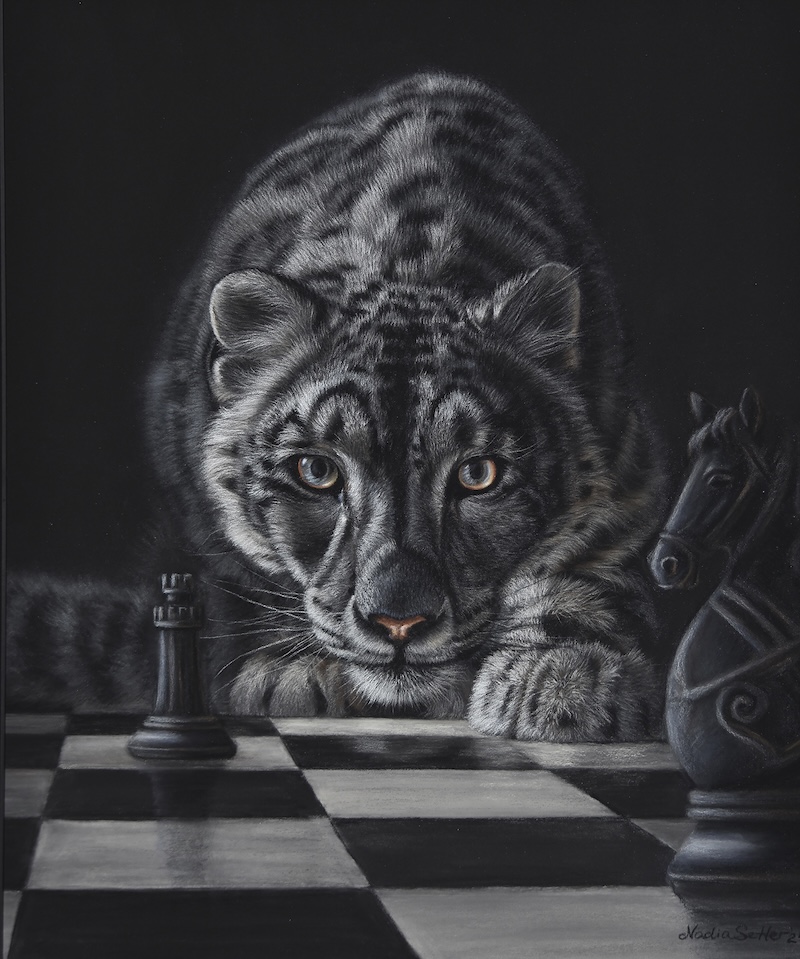
But if I have to name one living artist who stands out to me, it is Guillermo Garcia Lorca. What moves me about his work is how he places animals as carriers of psychological and mythological symbolism — primal instincts, hidden fears, and the complex nature of human emotion — all wrapped inside dreamlike, surreal landscapes painted with extraordinary technical precision. He works with the same territory I am drawn to: the threshold where ancient symbolism meets raw human feeling, where beauty and something slightly dangerous coexist in the same breath.

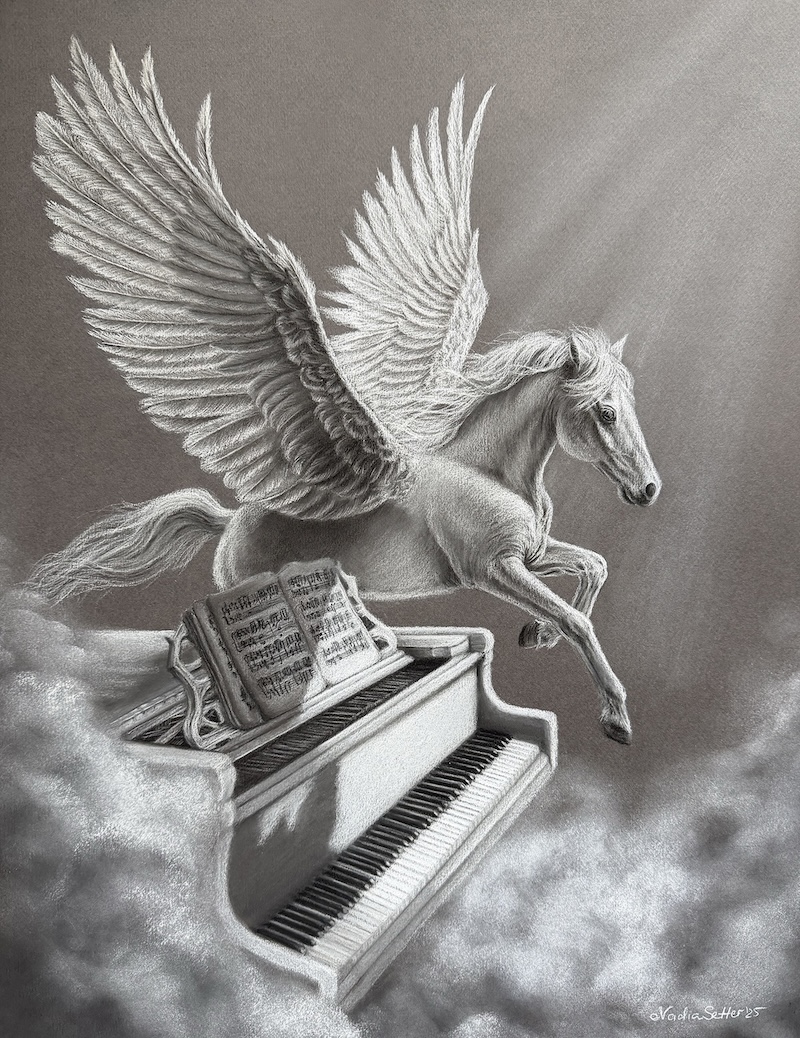
I always loved horses. One day my auntie brought me in front of Rubens' 'Perseus and Andromeda' and something shifted in me. There in the corner of that painting was Pegasus — and it felt like perfection. A horse with wings! I had never seen anything like it, and I could not look away.
From that moment I went deep into Greek mythology, and a whole world opened up. I discovered that every creature carried a symbolic background full of meanings that felt strangely personal. When these visions returned in adulthood, I finally had the language and the skill to bring them through.

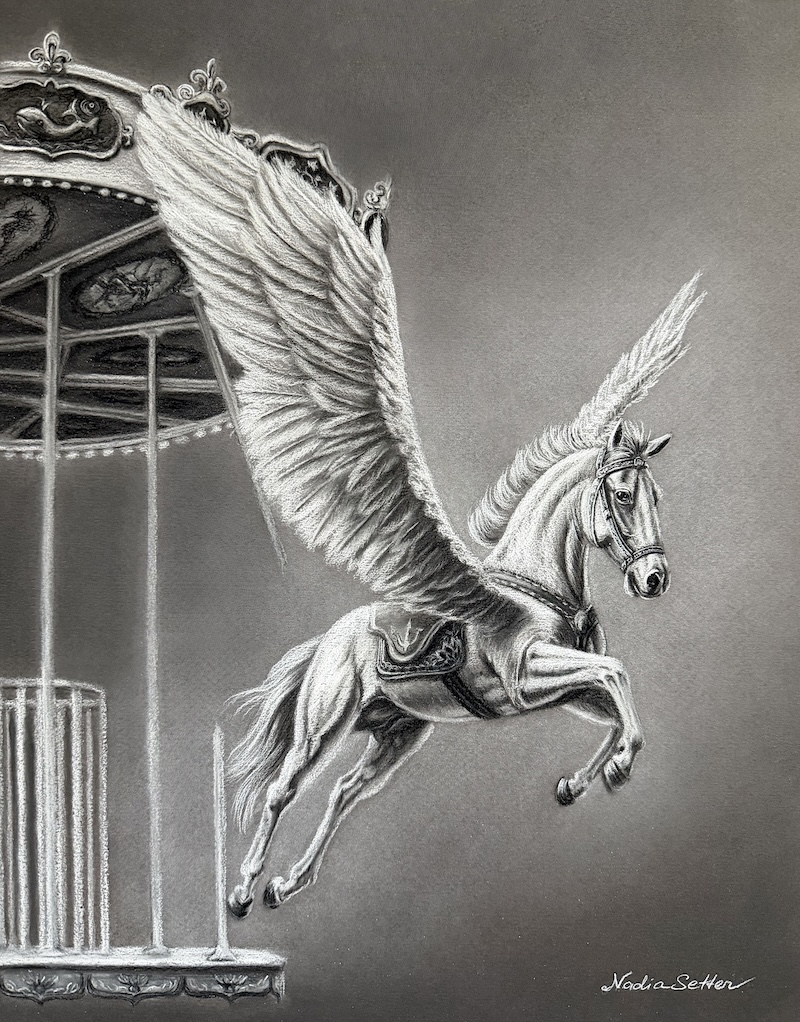
But what truly captivates me goes deeper than the visual. Horses develop a genuine emotional connection with their rider — they synchronize their heartbeat to the person they trust. I have experienced that firsthand. I am a rider myself, and I had a horse who could read my thoughts before I gave him any cue. No shift of weight, no signal — he simply knew. That kind of silent, wordless communication between two living beings is something I have never found anywhere else. And when I give them wings, it is the most honest thing I can say about what horses have always meant to me. In my imagination, they always carried something divine.
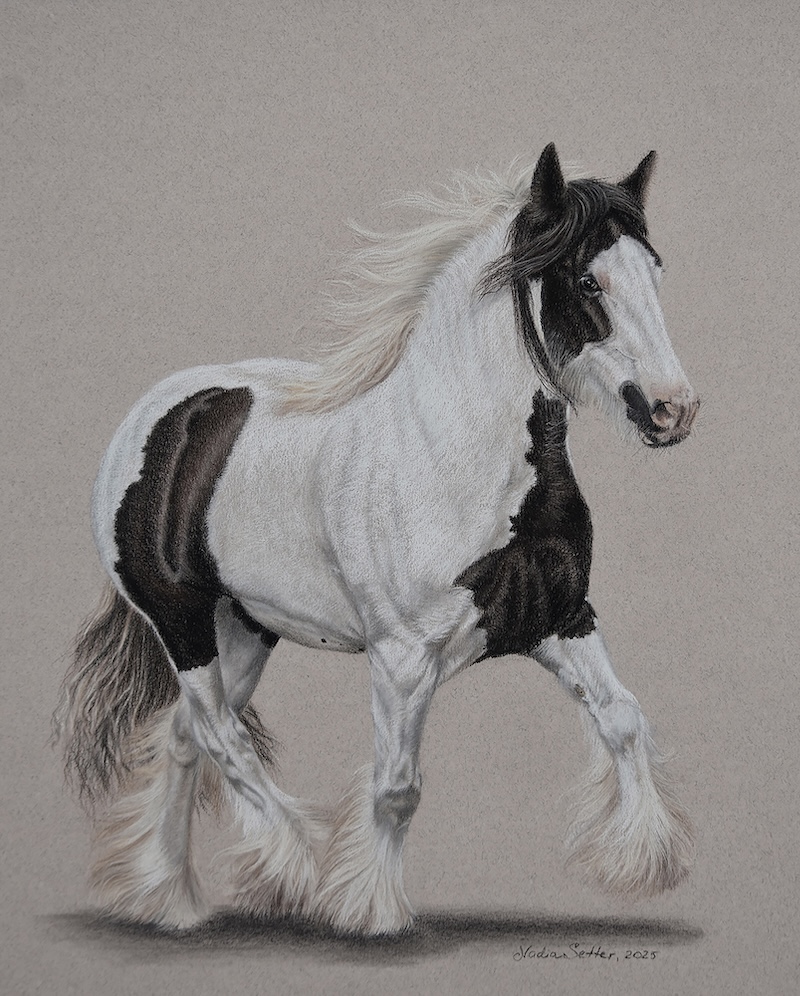
I won't pretend I am always patient during that stage. Sometimes the gap between what I can see in my mind and what is sitting in front of me on the surface feels enormous. But I have learned to trust the process. A single piece can take weeks.
And suddenly I was waking up in a wooden cabin at the edge of wilderness, stepping outside in the early morning to find a whole herd grazing in that transparent cold haze, right at my door. That kind of morning does something to you. It recalibrates everything.
Ranch work is immediate and humbling. You feed, you clean, you groom, you repair. And somewhere in that simplicity — distracted enough from the constant race, and finally slow enough to be present — my mind started to breathe differently. I groomed horses thousands of times, and through that intimate, repetitive closeness I built an almost intuitive knowledge of their anatomy. You cannot learn that from a reference photo. It lives in my hands before it ever reaches the pencil. I came to that ranch as an animal artist who loved horses and left as someone who understood them from the inside.

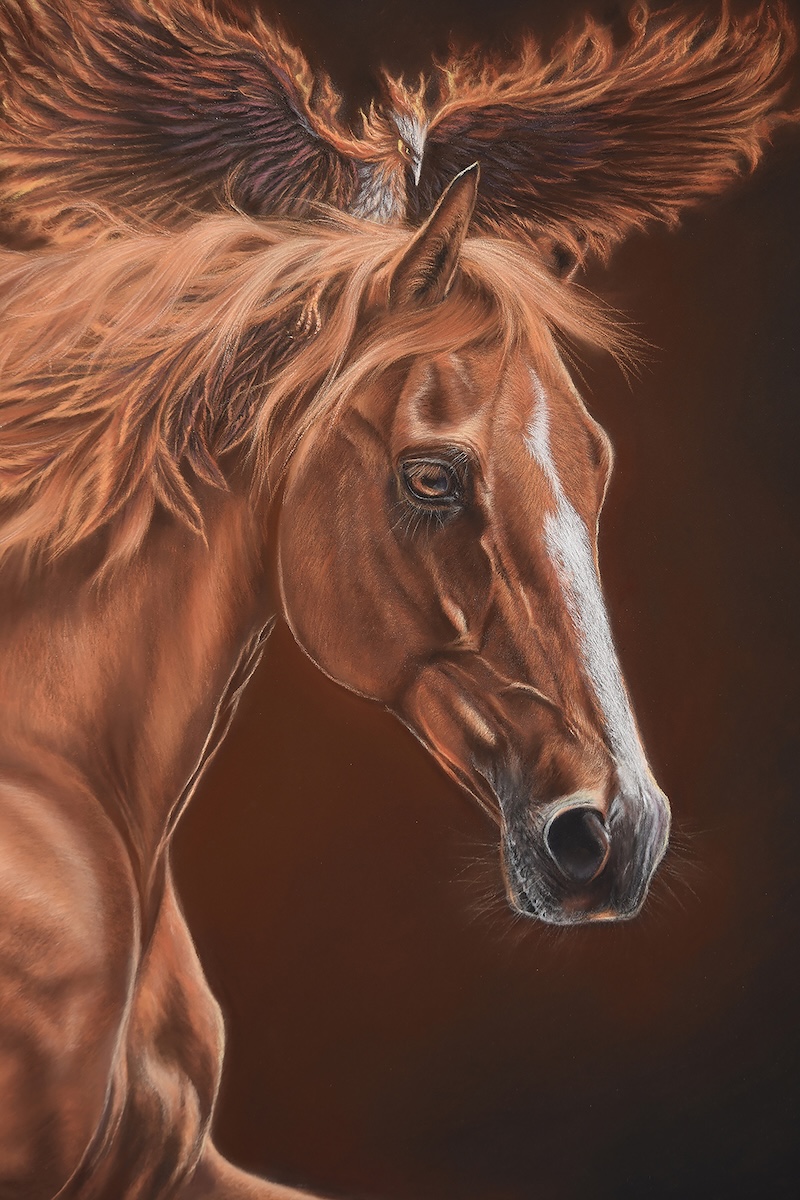
This is Red. A tall chestnut thoroughbred I met at the horse rescue ranch in San Diego. He had spent years pulling wagons on a racetrack until he became lame on all four of his legs. By the time he arrived at the rescue he was days away from being put down. He healed completely. I still find that hard to believe, but he did.
Red had a reputation. He was picky about his riders and would simply refuse to collaborate during lessons, and nobody could quite figure him out. But somewhere along the way he decided I was different. We rode together almost every day along the most picturesque trails, and he was the most responsive, reliable mount I have ever known. That particular kind of trust — the one that has to be earned from an animal who has every reason not to give it — is not something you forget.
I did not have to think about the concept of his portrait for long. I could see a phoenix erupting from his mane on windy days, in that exact shade of fire and copper of his coat. I just had to let it out. Red was supposed to die. Instead, he gently carried me through trails and taught me things about trust and character I had no words for yet. Thankfully, I could express it in the form of art.
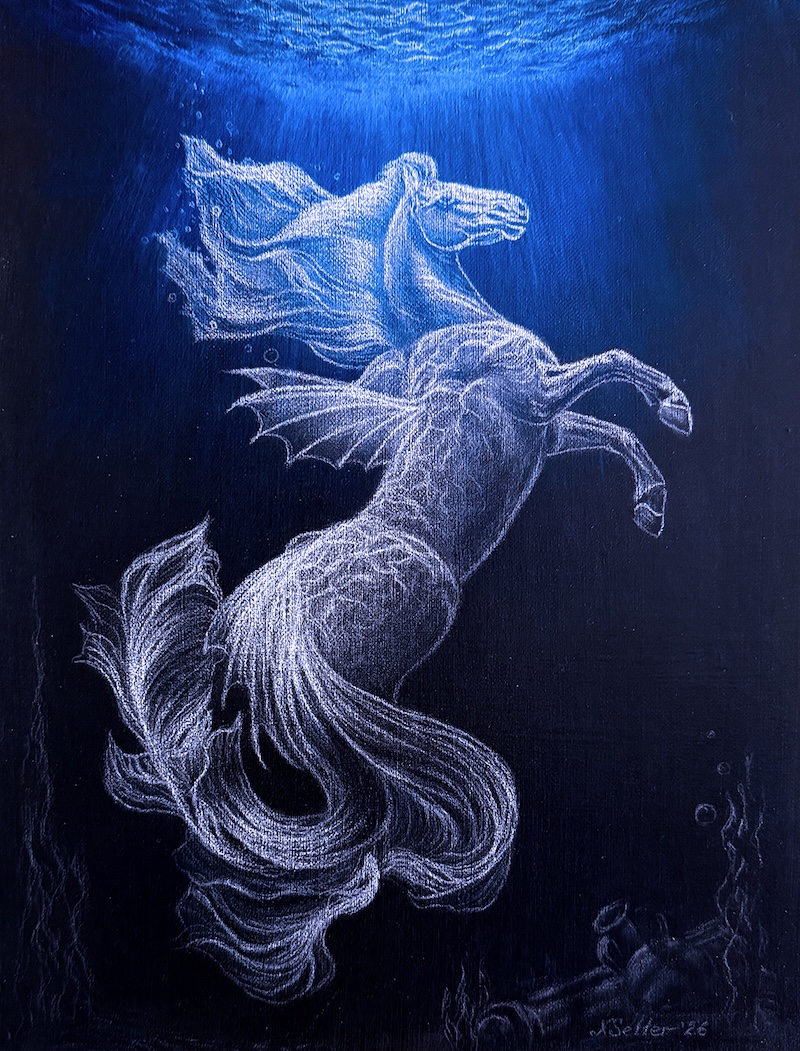
The first piece is already complete. The Hippocampus — guardian of water. Drawn in white pencil on anthraquinone blue canvas, illuminated by a single ray of light breaking through from above, as if the deep ocean itself decided to reveal a secret it had been keeping for centuries.
Three more creatures are waiting. I am not ready to say more than that. But the series is coming, and it is the most cohesive, ambitious world I have built so far.
Follow Nadia on Instagram at @nadia.setter and visit her website at nadiasetter.com