
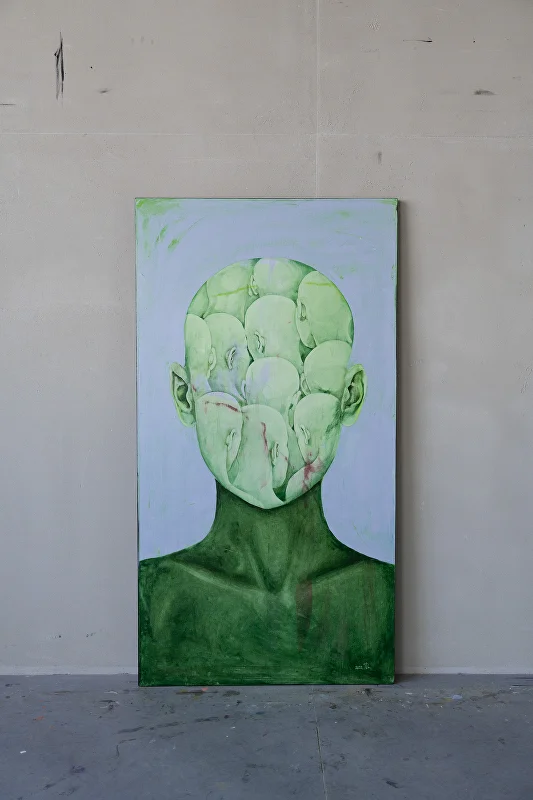
There is a quiet violence in the paintings of Palaiciuc Tatiana, the Moldovan contemporary artist widely known as Pon Arsher. Her figures do not scream. They do not perform their pain for the viewer. Instead, they hold it, absorb it, multiply it, and allow it to press against the surface of the canvas like a memory trying to escape the body.
Born in Chișinău, Moldova, Pon Arsher is a self-taught artist whose work has become instantly recognizable for its emotional intensity and psychological depth. Her paintings often present the human form as a vessel filled with other bodies, faces, gestures, and fragments of thought. A single head may contain a crowd. A torso may become a chamber of hidden figures. Skin becomes architecture. The body becomes a room. The mind becomes a landscape of overlapping selves.
What makes her work so compelling is the way she visualizes interior life without reducing it to simple symbolism. These are not merely portraits of sadness, anxiety, or vulnerability. They are portraits of complexity. Her figures seem caught between exposure and concealment, between the desire to be understood and the instinct to protect what is most private. The viewer is invited close, but never fully allowed in.
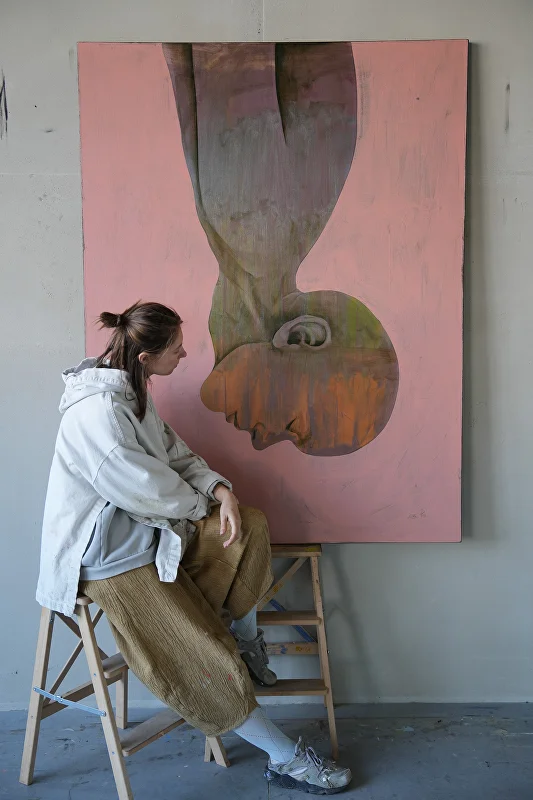
Pon Arsher's layered compositions are central to her visual language. Smaller figures are often nested inside larger ones, suggesting the many versions of a person that exist simultaneously. Childhood, fear, longing, memory, shame, desire, restraint, and tenderness all appear to coexist within the same body. The result is a kind of emotional anatomy. Rather than painting what a person looks like from the outside, she paints what it feels like to live inside oneself.
Her use of color adds to this sense of psychological atmosphere. Pale greens, muted blues, bruised purples, soft yellows, and faded pinks give the work a dreamlike quality, but the dream is never fully peaceful. The colors feel delicate, almost fragile, yet beneath them is a heavy emotional pressure. Her surfaces often appear worn, rubbed, stained, and weathered, as though the image has been pulled from some private archive of feeling.

There is also a striking tension between realism and abstraction in her work. The human forms are recognizable, but they are rarely stable. Faces dissolve into other faces. Bodies merge, bend, or become containers for other bodies. The anatomical and the symbolic exist together. This balance allows Pon Arsher to externalize hidden emotional states in a way that feels both deeply personal and universally legible.
Her figures often lack direct eye contact, or their faces are obscured, turned away, inverted, or absorbed into larger forms. This refusal of easy confrontation makes the work more haunting. The subject is present, but not fully available. The painting asks us to consider how much of any person remains unseen, even when they are standing directly in front of us.
In some works, the body appears burdened by the weight of others. In others, it seems made entirely from fragments of itself. This recurring imagery suggests that identity is not singular. It is accumulated. It is inherited. It is wounded and rebuilt over time. Pon Arsher paints the self not as a fixed image, but as a living structure under constant internal pressure.
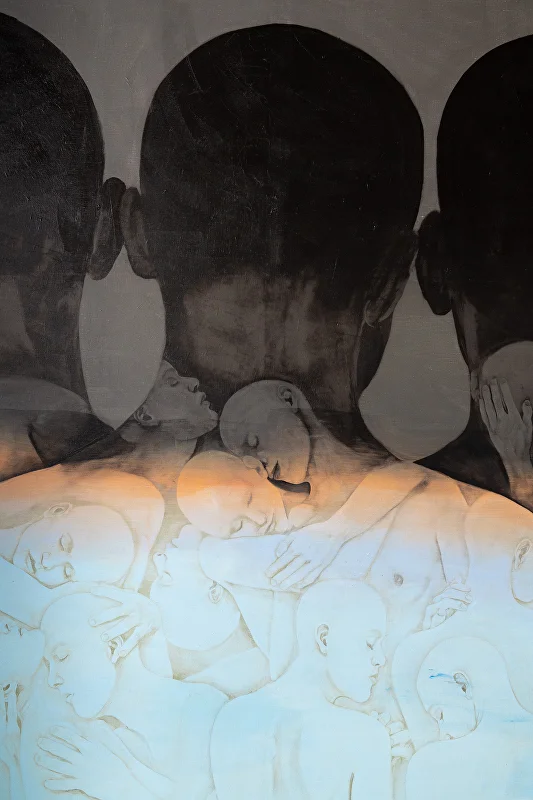
Her background as a self-taught artist is important to understanding the honesty of the work. As a child, she found comfort in silence and drawing, choosing image-making as a private language before it became a public one. That early relationship to art still seems present in the paintings. They feel less like statements and more like confessions made in visual form. They do not explain themselves. They reveal themselves slowly.
Since beginning to share her art online in 2017, Pon Arsher has built a large international audience drawn to the raw emotional clarity of her work. In an age where images are often consumed quickly, her paintings resist speed. They reward looking. They ask the viewer to pause, to sit with discomfort, and to recognize the strange intimacy of seeing another person's inner life rendered with such tenderness.
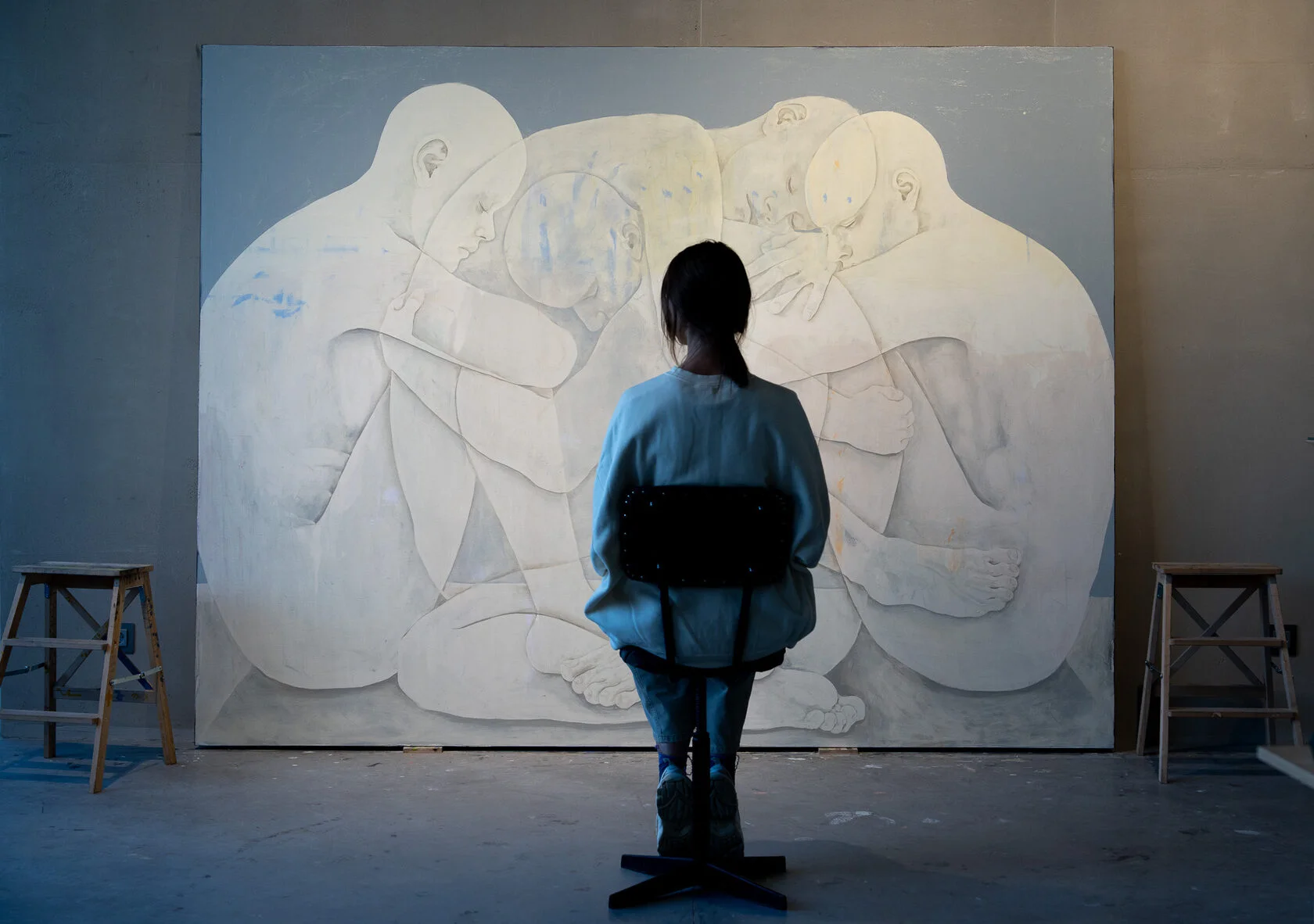
Her growing presence in galleries and major curation platforms reflects the power of a visual language that feels both contemporary and timeless. The work belongs to a larger conversation about mental health, vulnerability, embodiment, and the fragmented nature of identity, but it never feels didactic. Pon Arsher is not illustrating concepts. She is building emotional worlds.
There is something almost surgical in the way she opens the figure, but there is also compassion. The bodies in her paintings are not broken simply for spectacle. They are opened because they contain multitudes. They hold private histories. They carry invisible burdens. They reveal the quiet truth that every person is more crowded, more tender, and more complicated than they appear.
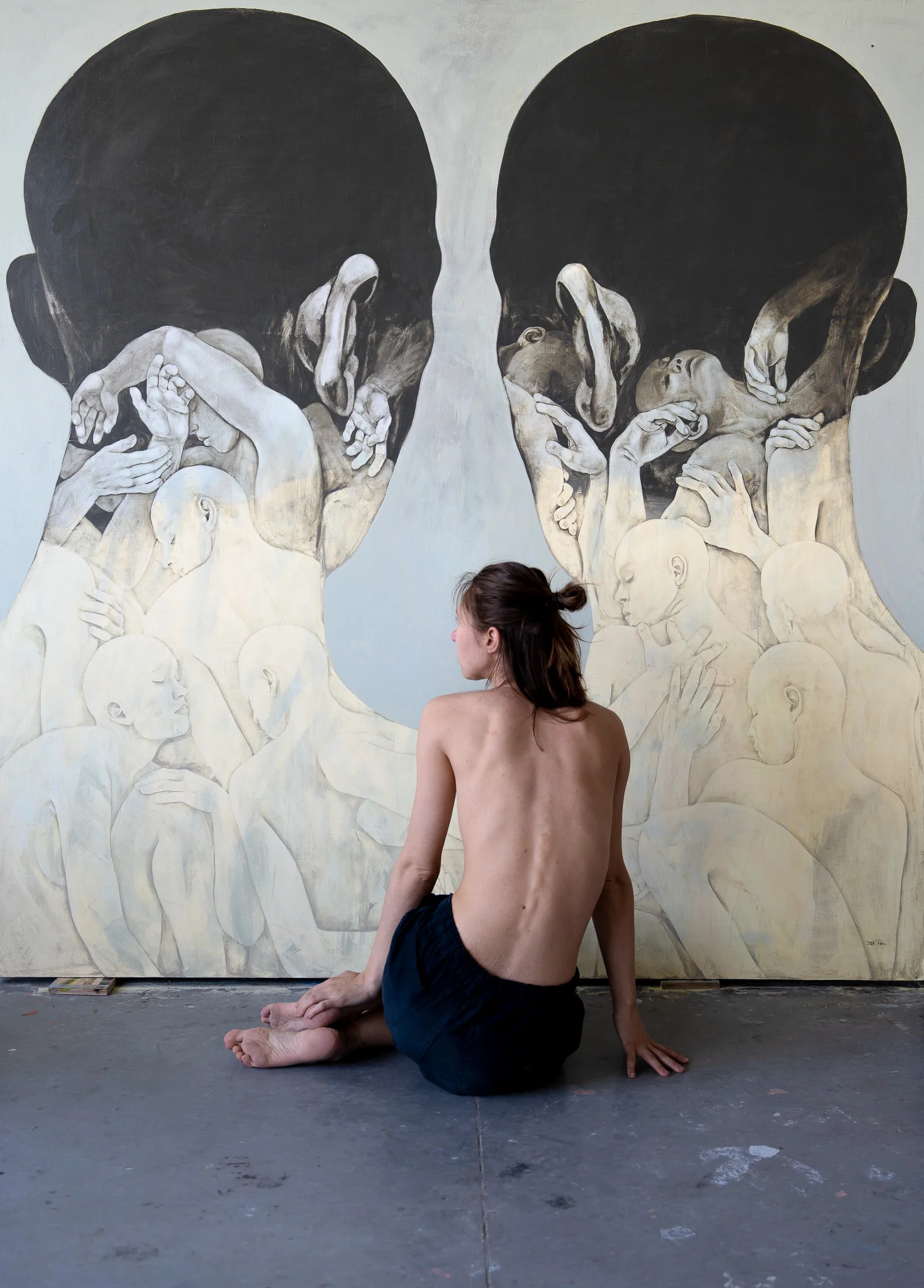
Pon Arsher's art is powerful because it gives form to what is usually hidden. Her paintings remind us that the human face is never just a face, and the human body is never just a body. Each one is an archive of thoughts, fears, memories, and selves. In her hands, portraiture becomes an excavation of the inner world, and vulnerability becomes a form of visual strength.
Follow Pon Arsher on Instagram at @ponarsher