
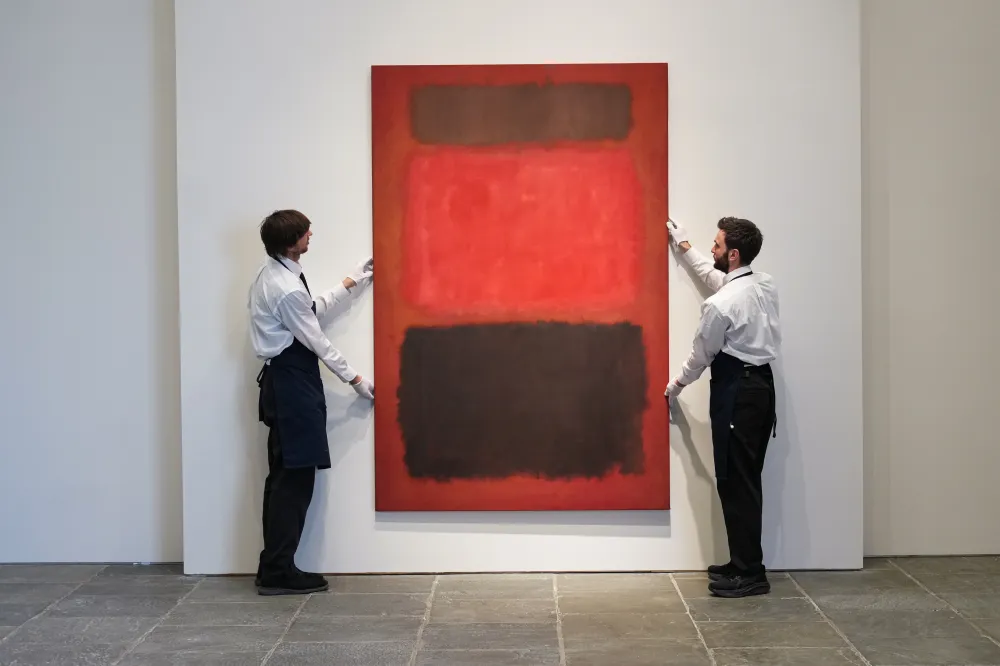
The recent sale of Mark Rothko's Brown and Blacks in Reds for $85.8 million at Sotheby's is the kind of art world headline that invites the usual eye rolls. A few blocks of color. A nearly eight-foot canvas. A price tag larger than the budget of some museums. To skeptics, it is another example of the art market losing its mind. To those who understand Rothko, it is something else entirely. It is a reminder that simplicity can still carry the weight of the human soul.
Rothko's paintings are often described as minimal, but that word can be misleading. Minimal suggests absence. Rothko is not about absence. He is about reduction. He strips the image down until there is almost nothing left between the viewer and feeling itself. No figures. No landscape. No narrative scene. Just color, scale, silence, and vibration. His paintings do not tell you what to think. They wait until you start listening to yourself.
That is why Rothko remains important. In a culture drowning in noise, his work still offers confrontation through quiet. The floating rectangles, the deep reds, the bruised blacks, the luminous oranges and violets are not decoration. They are emotional architecture. Stand in front of a Rothko long enough and the painting begins to change. Or maybe you do. The surface seems to breathe. The edges soften. The color becomes less like pigment and more like atmosphere. What looked simple from a distance becomes overwhelming up close.
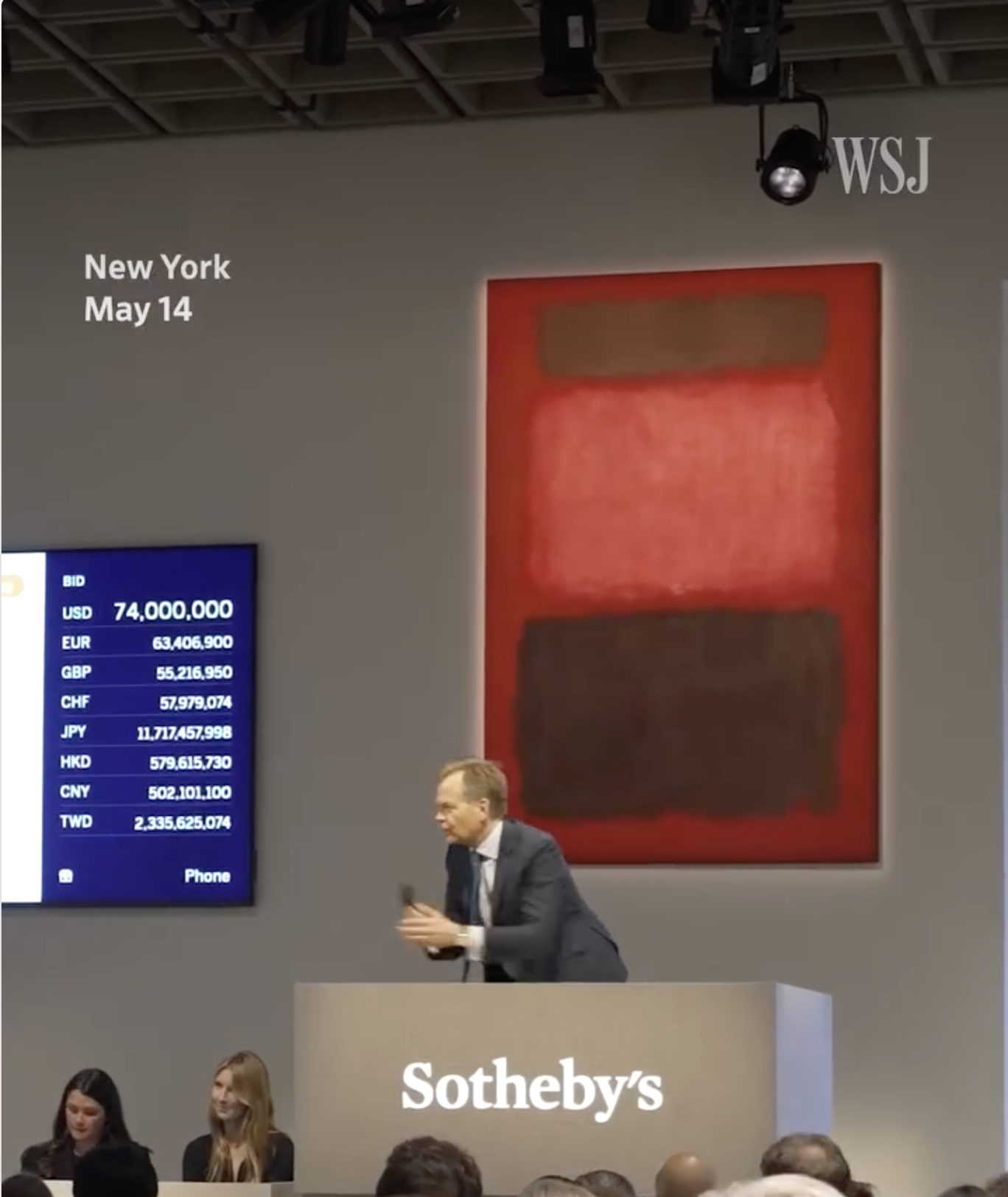
The $85.8 million Sotheby's sale also matters because it was not merely a luxury transaction. Brown and Blacks in Reds, painted in 1957, comes from one of Rothko's most powerful periods, when his mature color field language had fully arrived. Sotheby's described the work as nearly eight feet tall and one of only twelve large-scale paintings he made that year. Its first owner was Joseph E. Seagram & Sons, a connection that places it near the orbit of the famous Seagram Murals, among Rothko's most haunting achievements.
His canvases are often mistaken for formal exercises, but they are closer to chapels than design objects. The Rothko Chapel in Houston makes this explicit, but the impulse is present throughout his work. His best canvases feel like doorways into grief, awe, memory, mortality, and stillness.
That is also why the market price, however staggering, is not the most interesting thing about the sale. The money tells us Rothko is valuable. The work tells us why. Collectors may compete for possession, but Rothko's real power resists ownership. You can buy the canvas. You cannot buy the experience it produces in another person.
The paradox of Rothko is that his paintings appear empty until they become too full to ignore. They ask almost nothing from the viewer except time, and time is precisely what modern life refuses to give. In that sense, Rothko's minimalism is radical. It slows us down. It denies spectacle. It rejects the easy reward of recognizable imagery. It demands that we meet the work halfway.
That is why Rothko endures while so much louder art fades. His paintings understand that human emotion is not always best expressed through detail. Sometimes the deepest truths arrive as fields of color. Sometimes sorrow is red. Sometimes silence is black. Sometimes a painting with almost nothing in it can contain everything.

The recent sale may be a market event, but Rothko's importance is not measured in millions. It is measured in the strange hush that falls over a viewer standing before one of his canvases, suddenly aware that color can feel like memory, that emptiness can feel inhabited, and that art does not need to explain itself in order to change us.